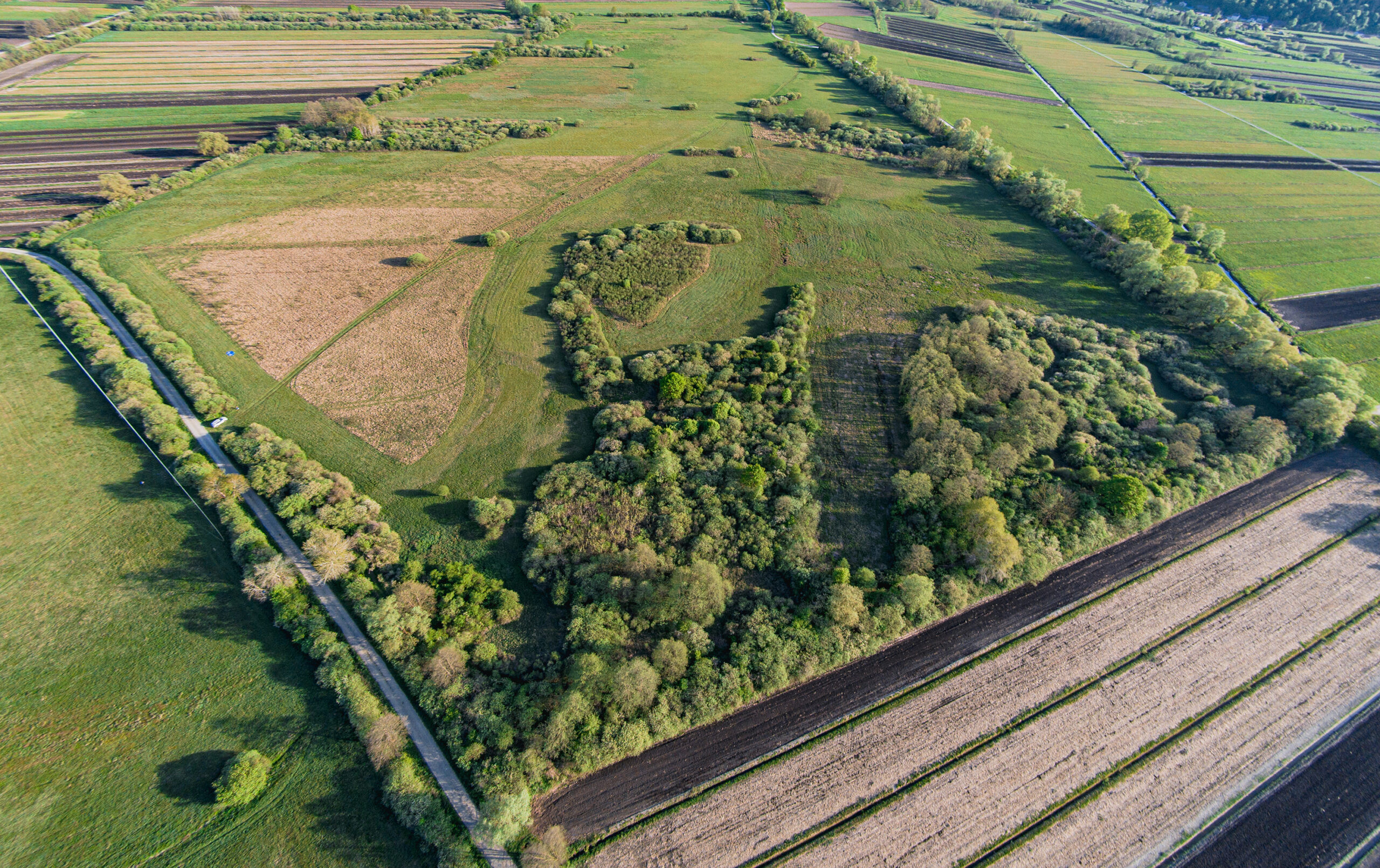
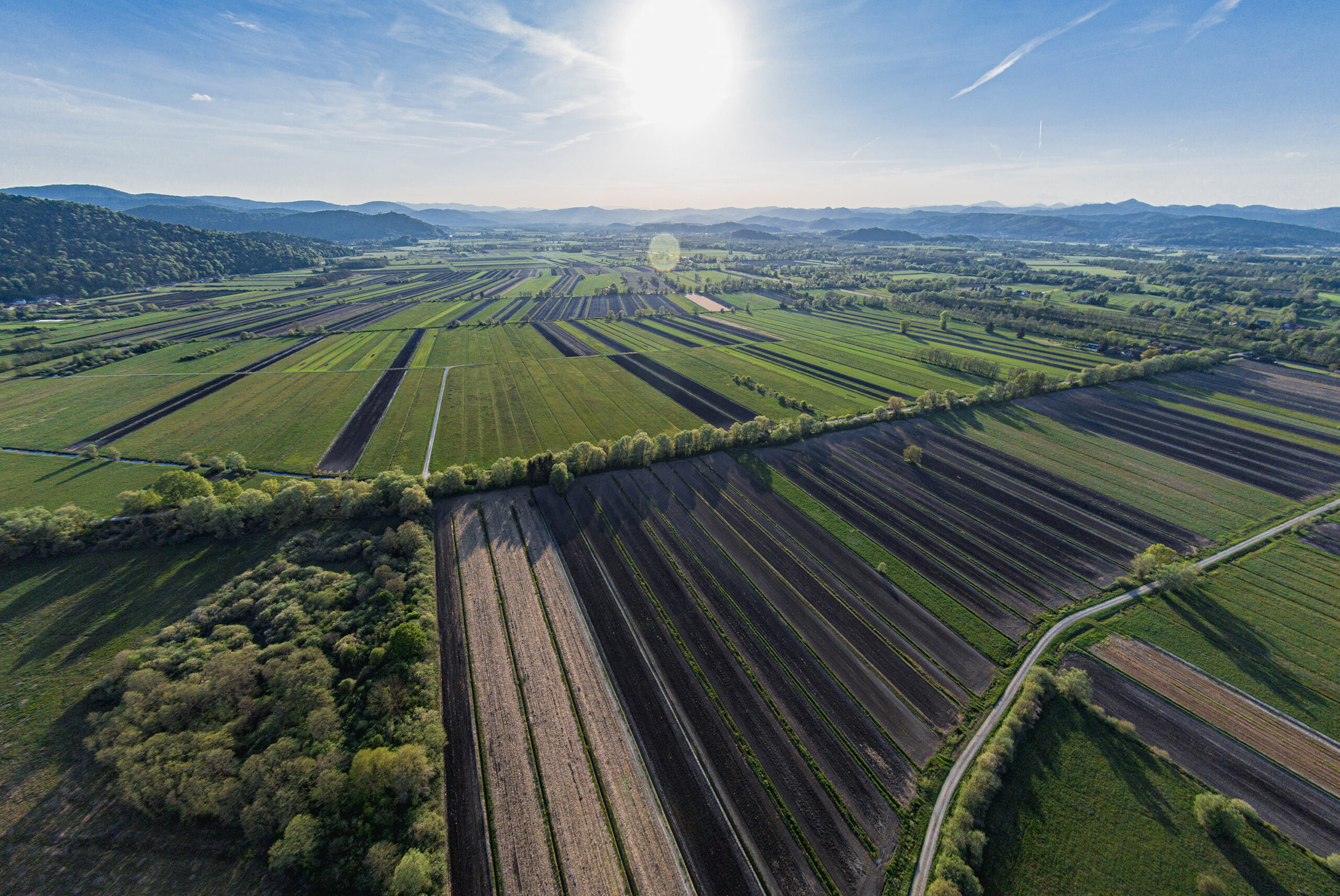
In one of the previous articles we told you how the Ljubljana Marshes transformed from an utter, terrifying wilderness into one of the most altered, artificial, and unnatural landscapes in Slovenia, all in less than 200 years. What was once an immense, untamed wetland became a patchwork of drainage canals, cultivated fields, roads, and geometric plots carved out by human ambition.
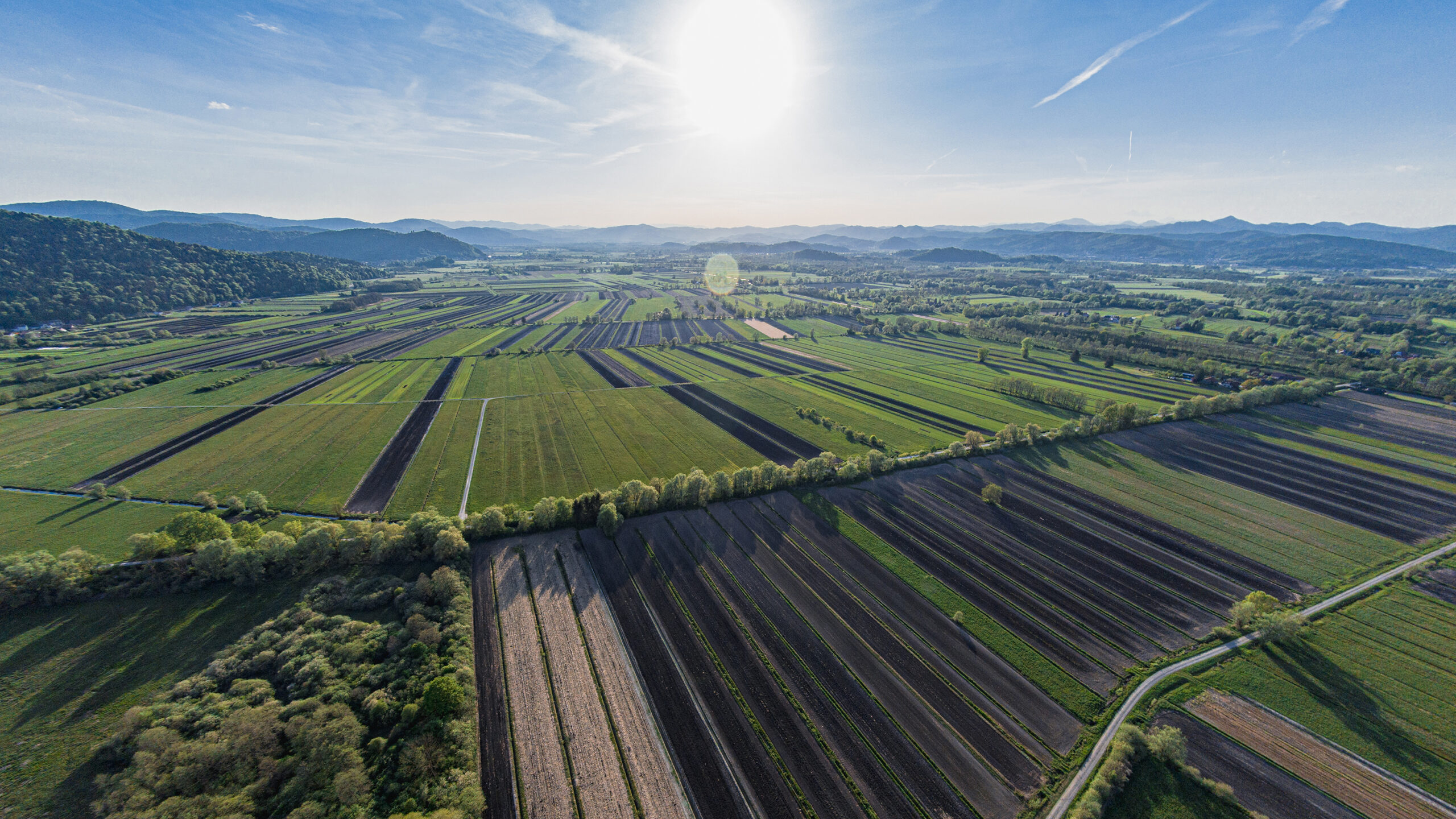
This land of rectangles is almost entirely human-made. Almost. A few sorrowful remnants of the once vast wetlands, formerly among the largest in Europe, can still be found scattered across the Marshes. There is a fragment of floodplain forest called Kozler’s Thicket. A peculiar raised bog survives on Kostanjevica Hill. Peat that once covered over a hundred square kilometres has been reduced to two or three meagre patches. Only two of the rivers on the Marshes remain untamed and unchannelled: the Ižica and the Ljubija. A handful of preserved seefensters still exist as well, those strange watery “window” springs that emerge at the edges of alluvial fans, and a couple of sad, forgotten marshy areas on the fringes of the Marshes. These isolated fragments are tiny echoes of a landscape that once stretched uninterrupted to the horizon.
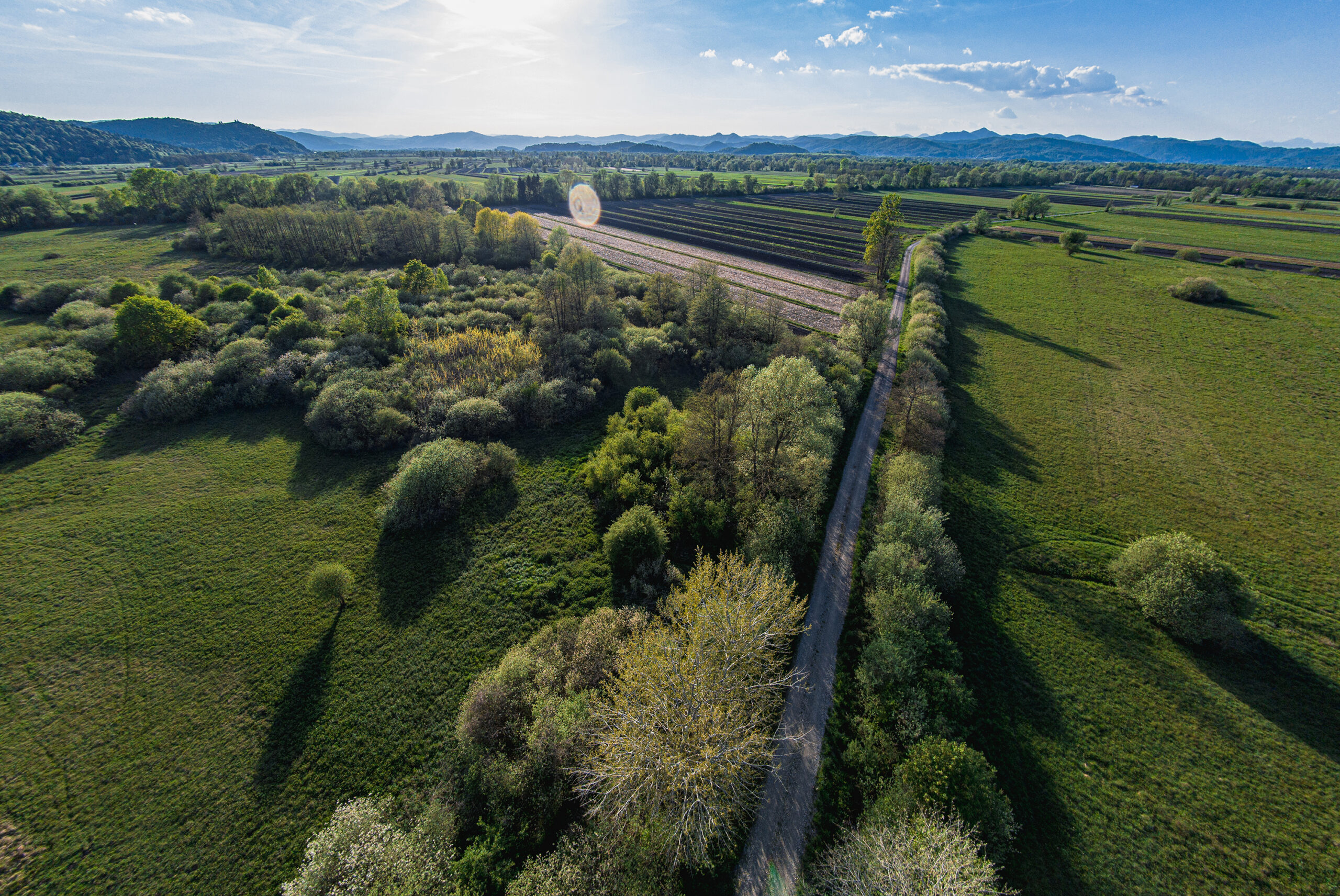
The Ljubljana Marshes may appear pristine and natural at first glance, but the truth is that nature here has been profoundly devastated.
The idea of protecting this land, and indeed protecting nature in Slovenia at all, first emerged in 1920 in a memorandum issued by the Department for the Protection of Nature and Natural Monuments of the Museum Society in Ljubljana. At the time, the idea was almost ludicrous. Our relationship with the land was binary: land was either useful or useless, something to be exploited or improved. Yet a group of determined nature enthusiasts identified three types of landscapes and ecosystems that deserved protection.
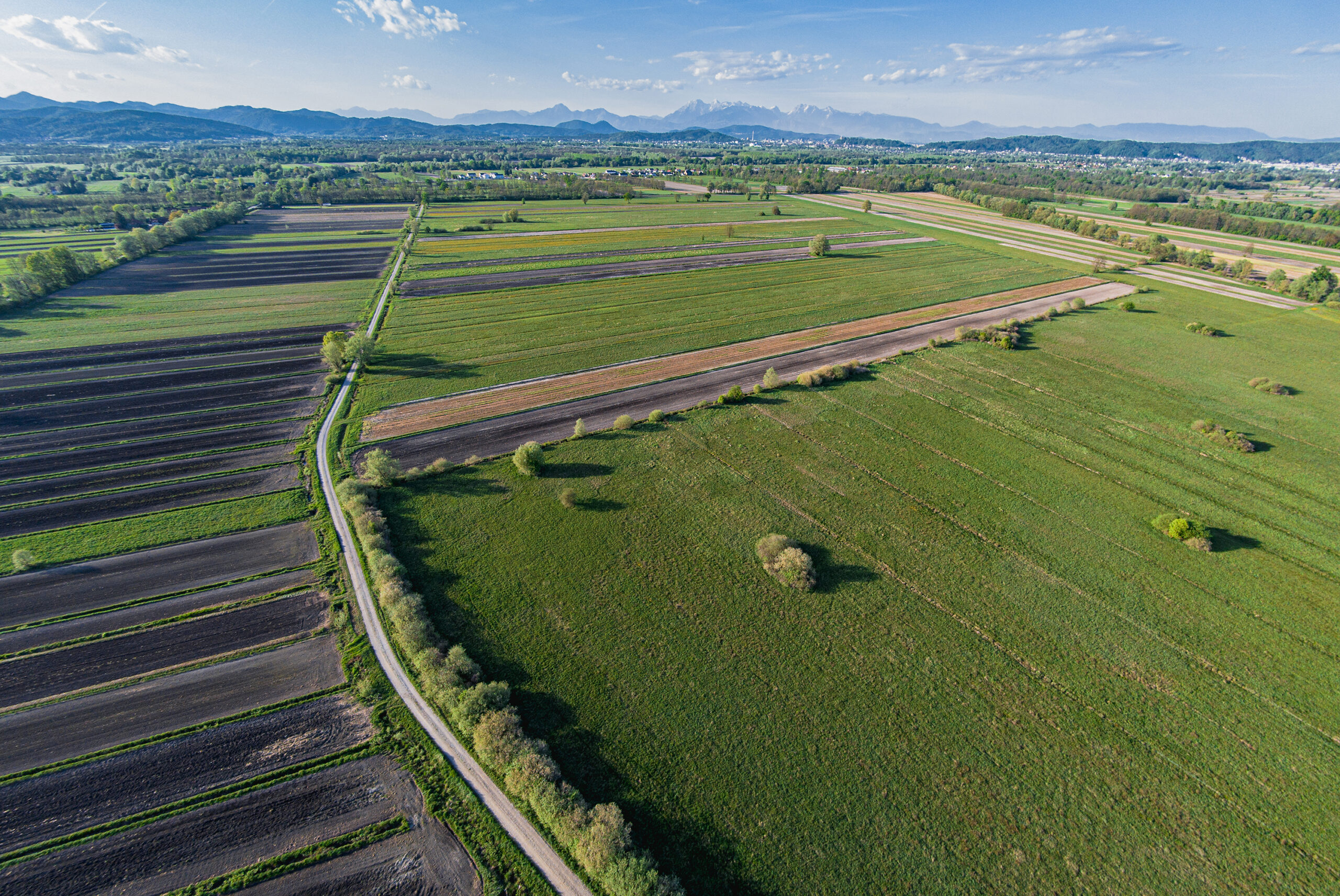
Alpine, forest – and marsh.
The pristine beauty of the Julian Alps soon came under state protection. In 1924, the Alpine Conservation Park was established in the Valley of the Triglav Lakes, eventually growing into Triglav National Park in 1961. Primeval forests on Pohorje, around Kočevje, and on Snežnik followed. The Krokar Forest Reserve near Kočevje and the Ždrocle-Snežnik Forest Reserve are now even part of a transnational UNESCO World Heritage Site.
But the Ljubljana Marshes?
The folly of transmogrifying the Marshes into a vast agricultural breadbasket persisted. The peat “reserves”, once estimated to last for “more than 600 years”, were cut and burned within only a decade or two. The network of drainage canals expanded enormously – there are more than five thousand kilometres of canals criss-crossing the Marshes. And the retreating remnants of the true marsh were going, going … gone.
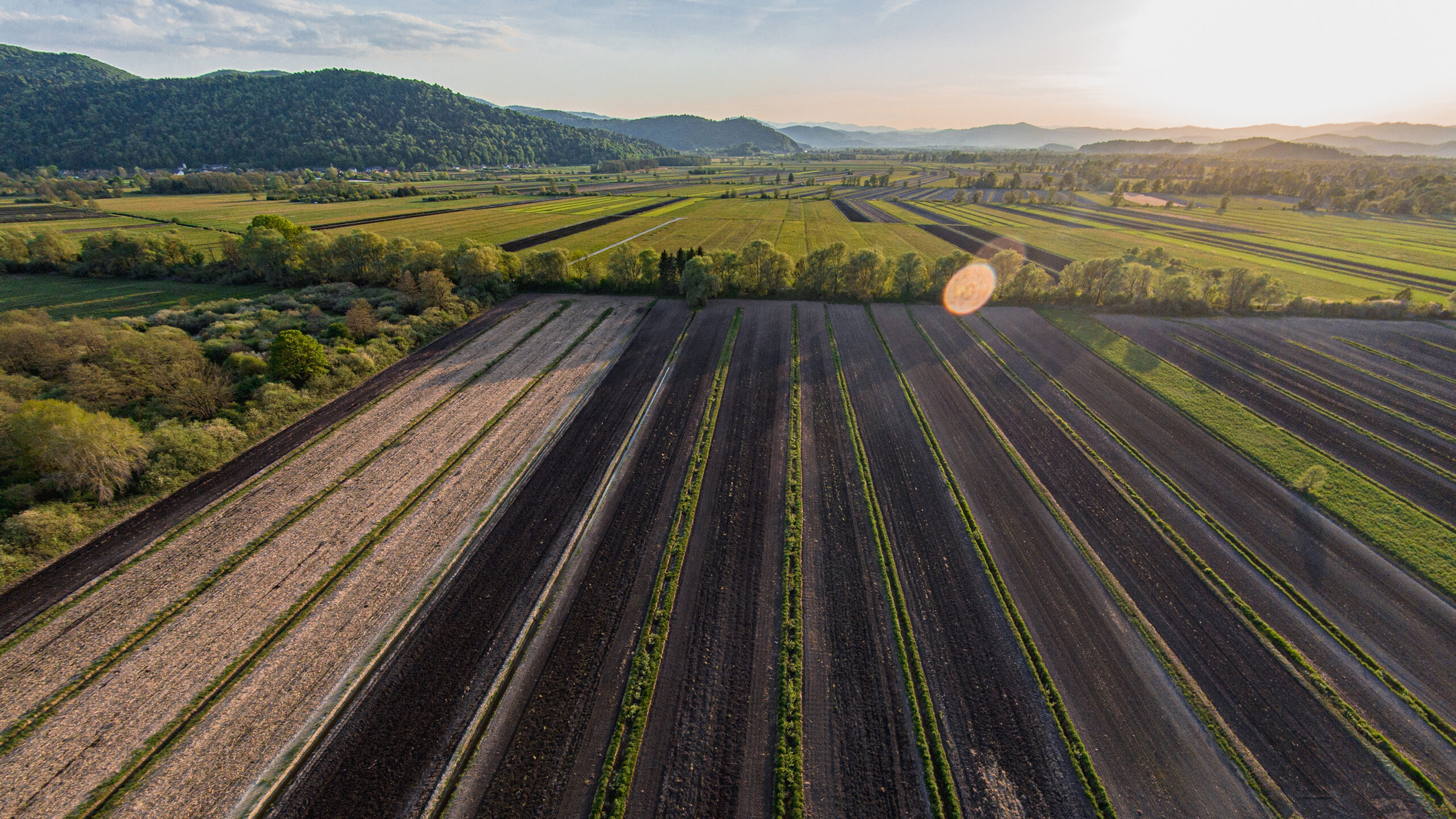
Even the most characteristic ecosystem of the pre-industrial Marshes, also the most fragile and biologically valuable one, was itself partly shaped by human hands. Wet meadows and wet pastures were not untouched wilderness, but landscapes gently influenced by centuries of traditional way of land management. Yet that influence used to be subtle and balanced, a delicate dance between people and nature. Spring floods would retreat, people would arrive with scythes to cut grass for litter and fodder, and then autumn floods would once again blanket the land in soft water. Plants, insects, birds, and mammals all shared this unusual landscape with humans – an uneasy truce, but a truce nonetheless.
Before colonisation and large-scale drainage, wet meadows and wet pastures covered almost the entire 150 square kilometres of the Ljubljana Marshes, as shown by this chart of land use from 1825:
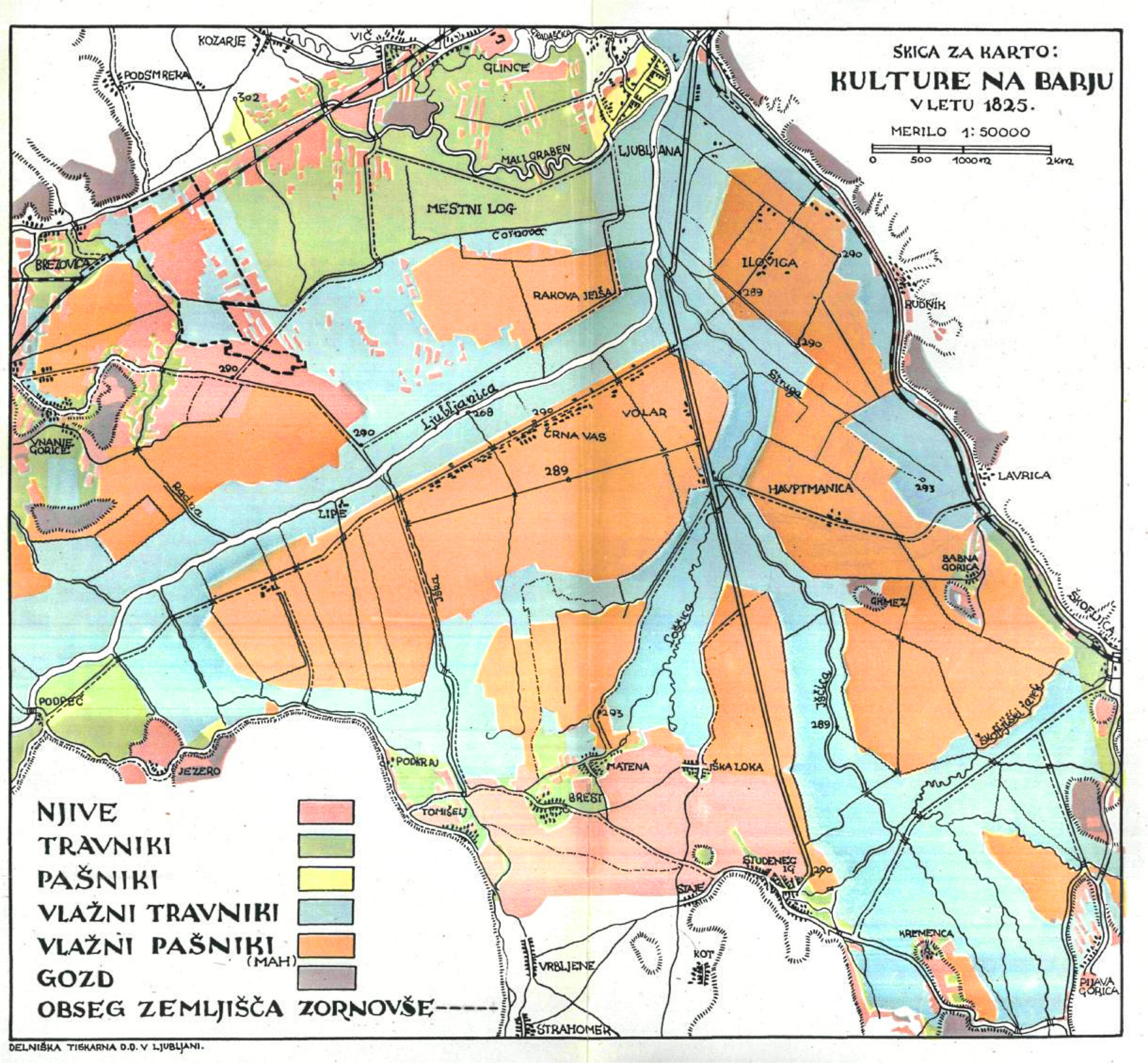
There were thousands upon thousands of acres of these fragile ecosystems. And they were the first to fall once people arrived to improve the land with unwavering determination and heavy machinery. In less than a century, wet meadows and wet pastures were sliced into rectangles, drained, covered in manure, aggressively cultivated, and ultimately transformed into vulgar plots of maize grown for pigs.
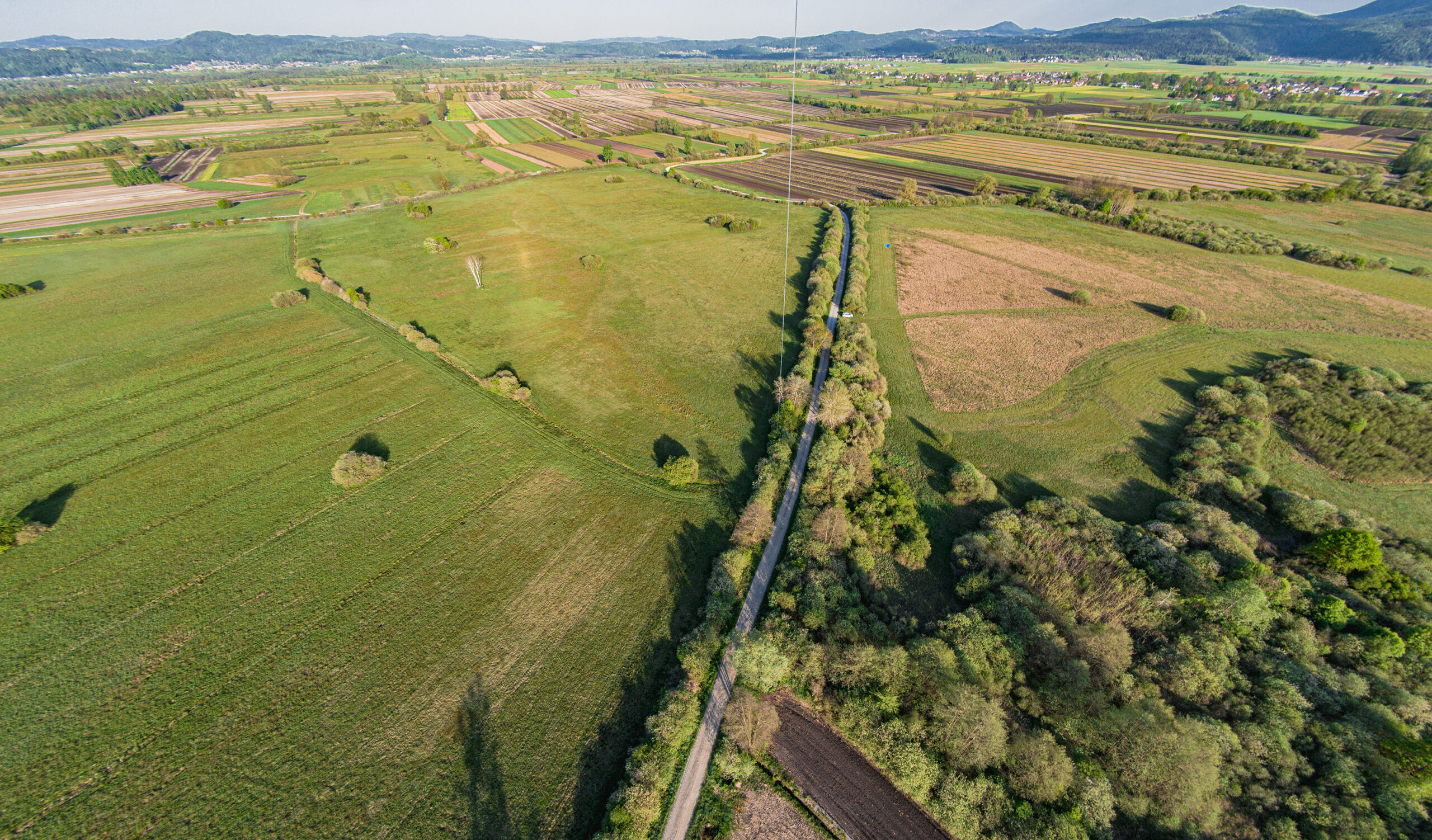
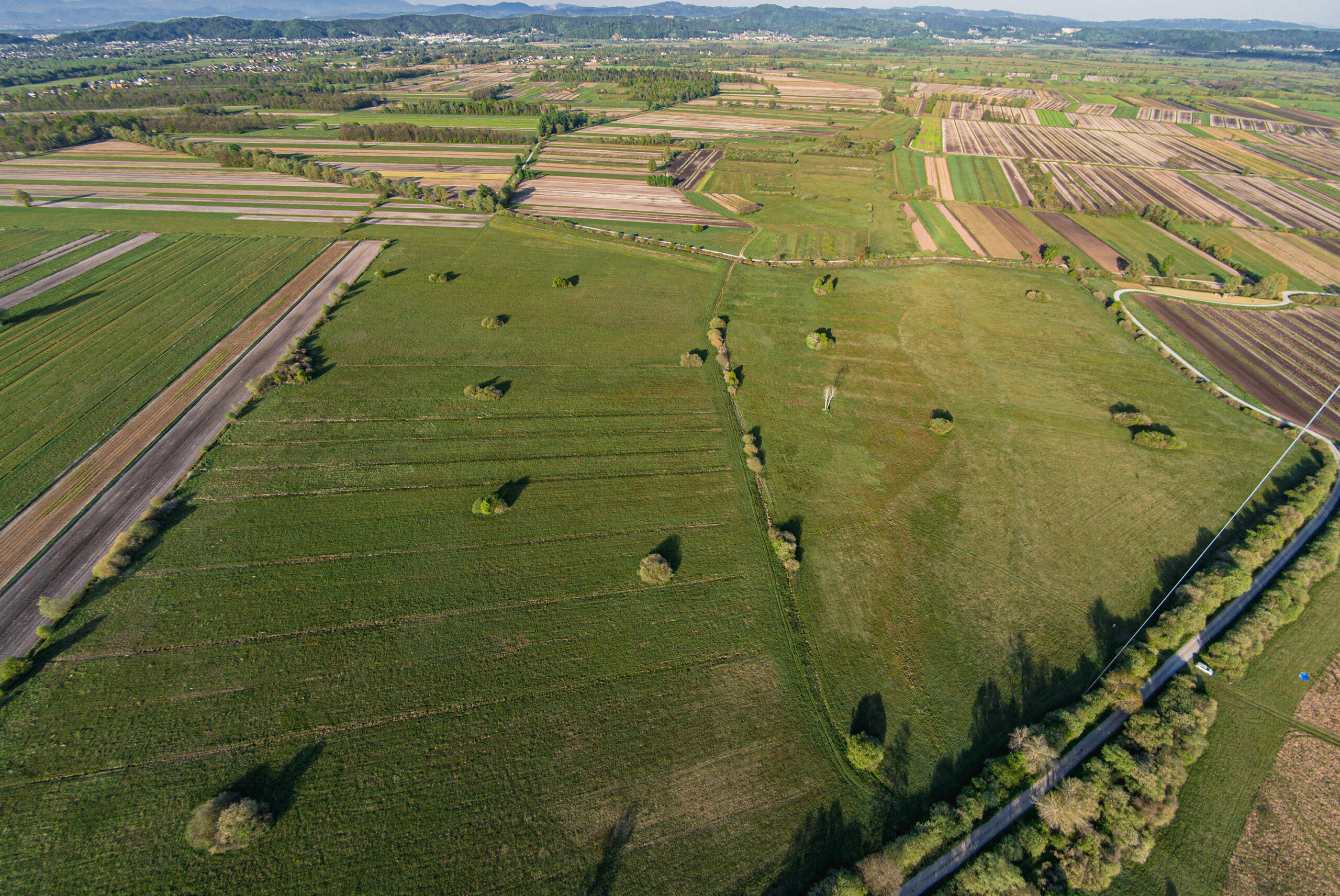
What was left of those pristine meadows – not left, to be honest: what has been painstakingly reconstructed and restored from the least damaged fragments – is measured in drops.
On 635.000 square meters of land in the middle of the Marshes.
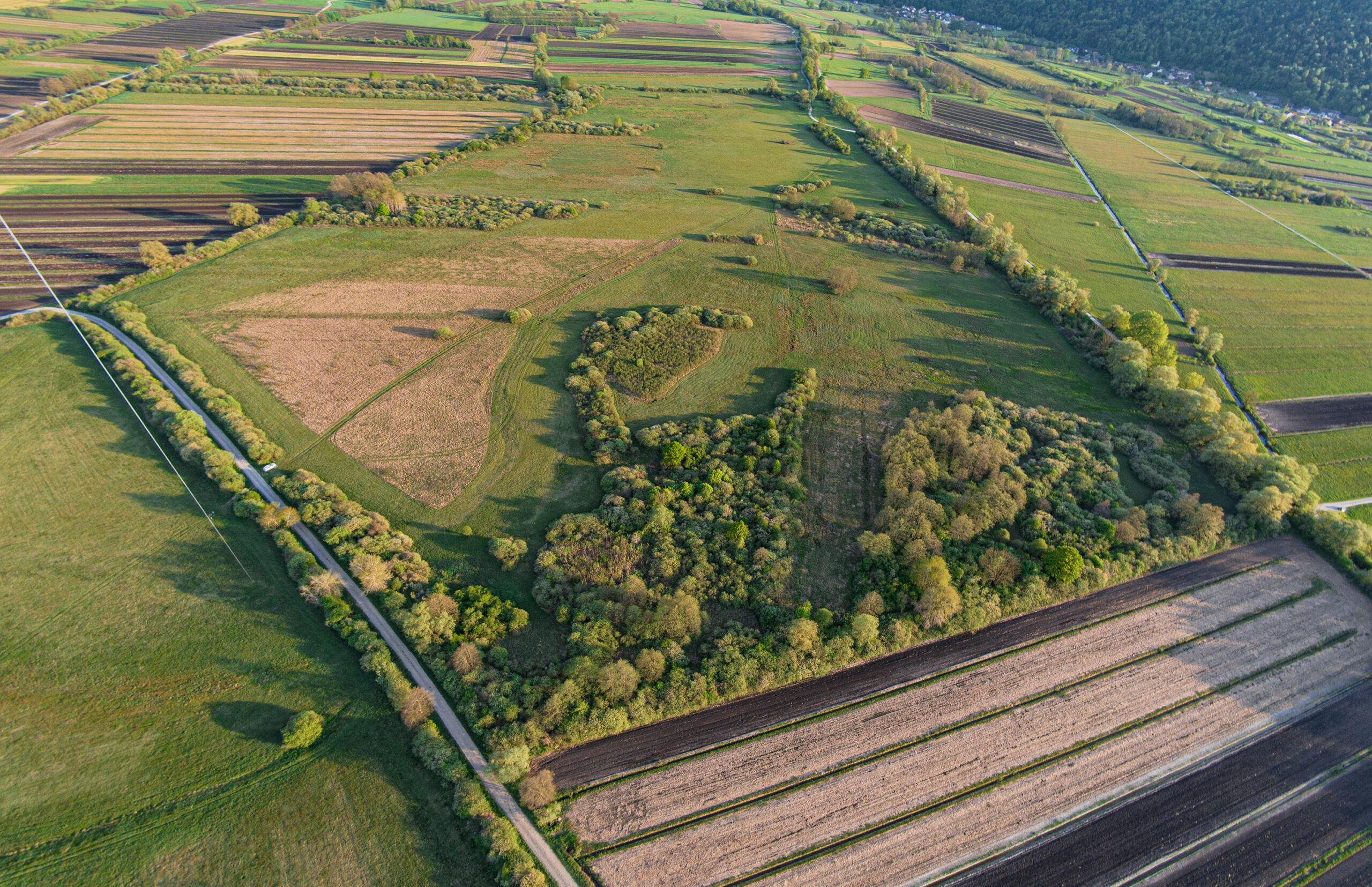
Welcome to the Iška Moor Nature Reserve.
Iška Moor – a new name, the place was called Veliki and Vrbovski tali before conservationists and birdwatchers took over stewardship of the area -emerged through the tireless efforts of DOPPS-Birdlife Slovenia, the country’s largest nature conservation NGO. Since the 1990s they have worked continuously on this patch of wetland: clearing overgrowth, purchasing land, restoring habitats, managing the ecosystem, and creating the Corn Crake Trail. Iška Moor was officially declared a nature reserve in 2008.
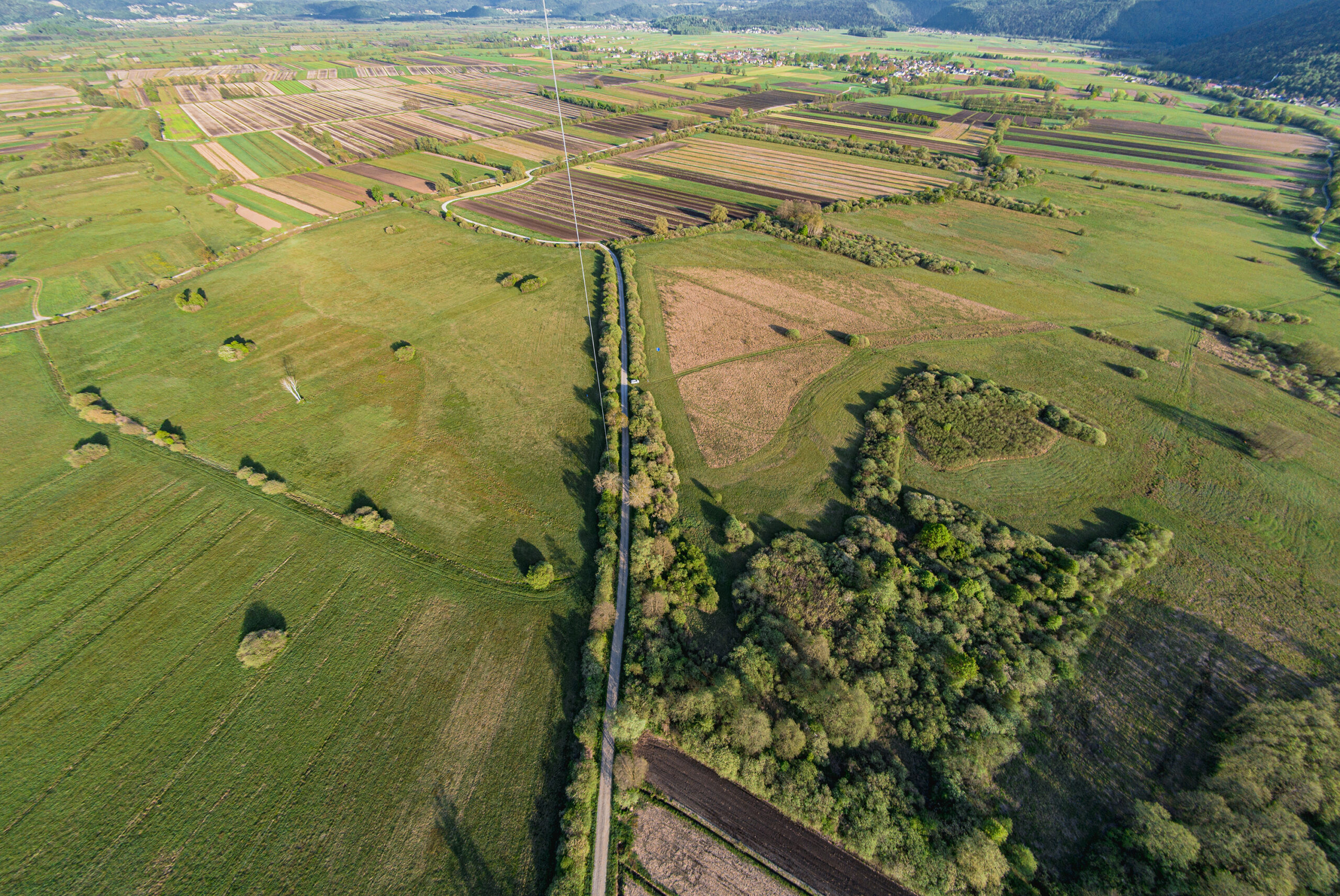
And it is a marsh of Eden. Or perhaps a Noah’s marsh, because creatures moved in almost immediately once their new wet green sanctuary was ready and the purple moor grass spread across the damp soil. Birds returned in astonishing numbers even the elusive corncrakes and curlews. Butterflies flourish, including the rarest of them all, the false ringlet. Dragonflies and damselflies skim the water, while countless insects buzz and crawl through the grasses. European tree frogs croak themselves hoarse on warm evenings. Rabbits and deer find shelter here for brief repose, wild boars wander through from time to time, and every now and then a brown bear leaves its footprints in the mud.
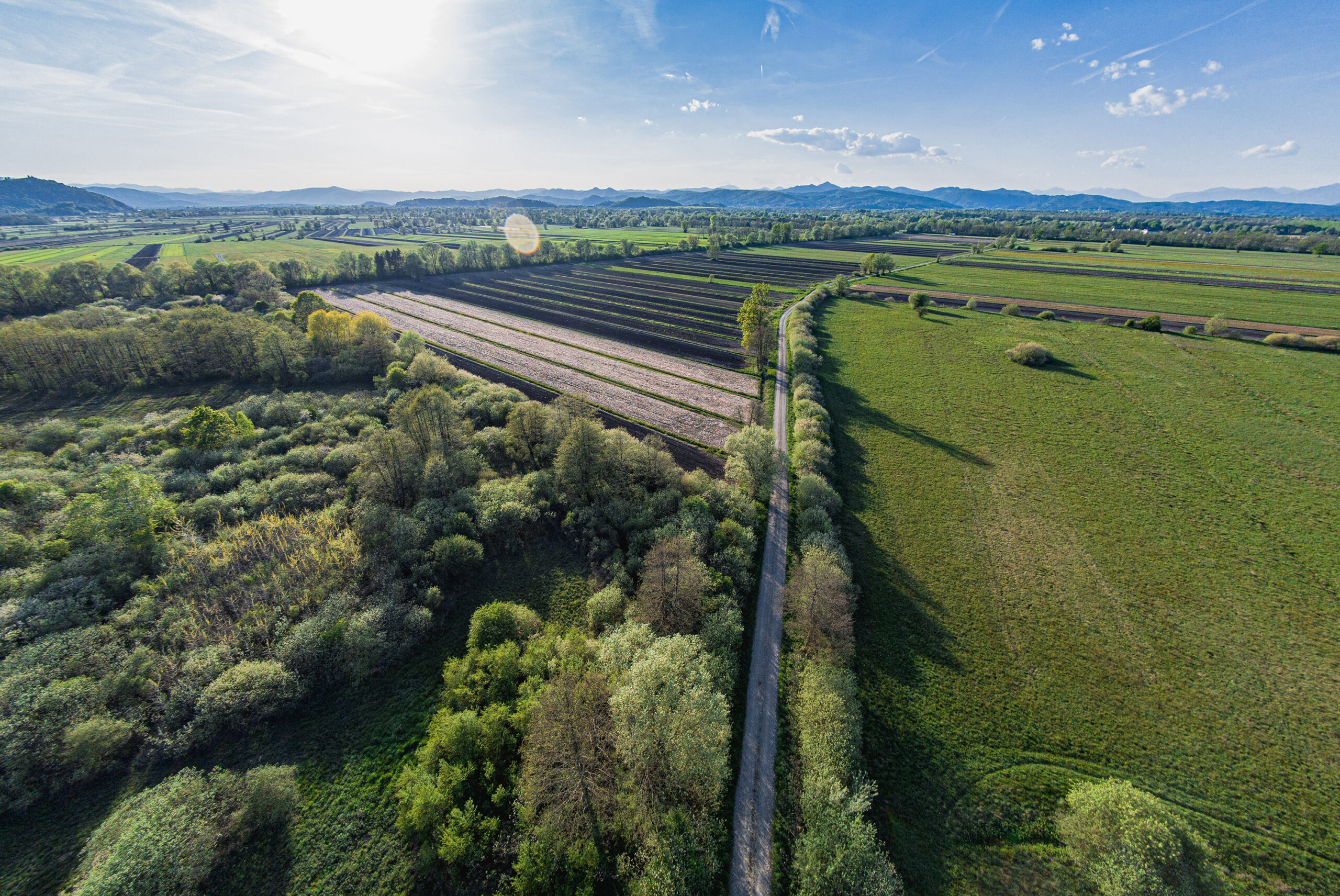
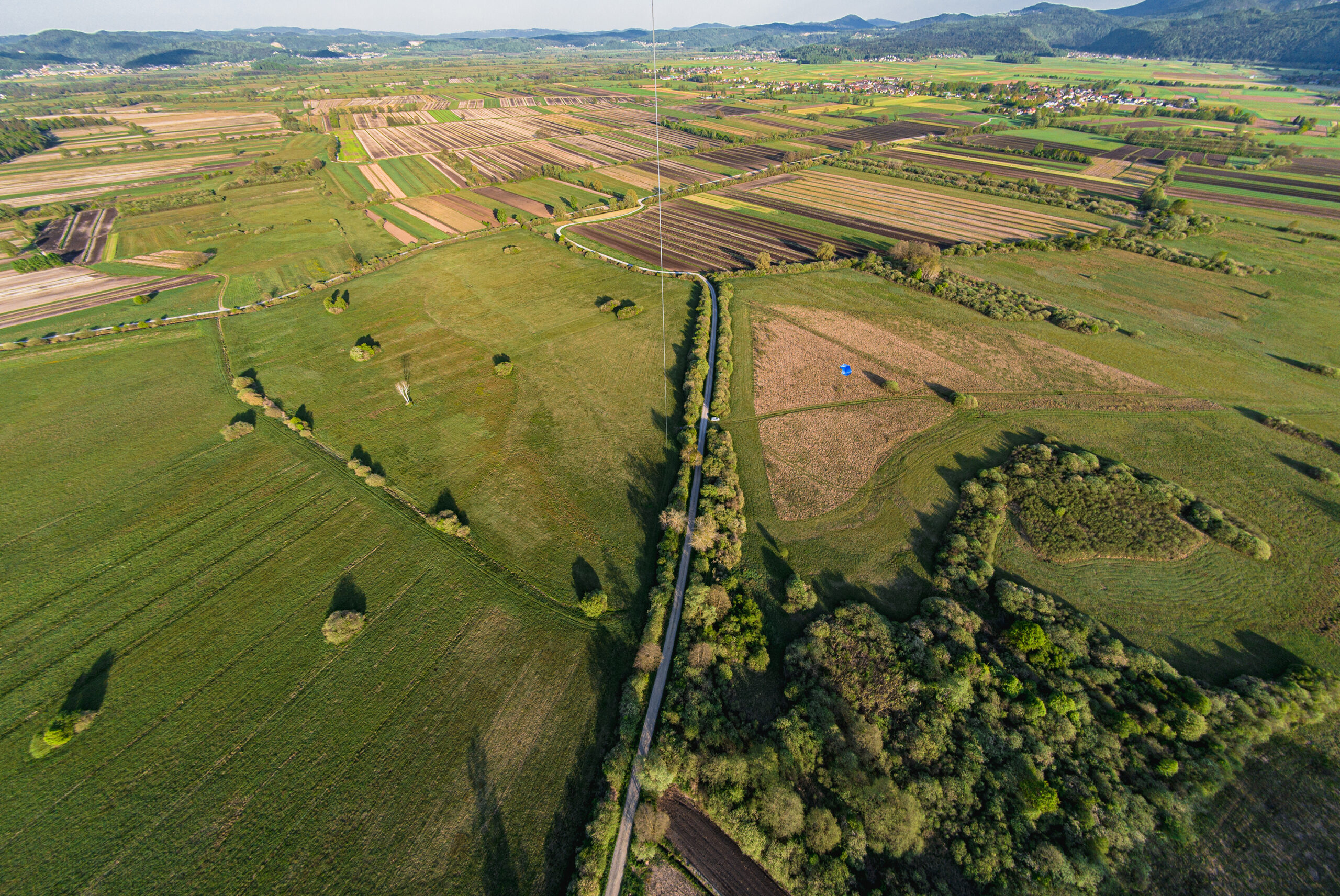
While Iška moor is not The Marshes As They Once Were, it is definitely The Marshes As They Could Be. A tessellated landscape of wet meadows, bog forests, reed beds, hedgerows, relic river channels, and shallow pools. A landscape that would not exist without humans at all: it was created by us and is still maintained by us, yet it thrives best when we keep our distance. Only a kite drifting silently overhead can approach without disturbance.
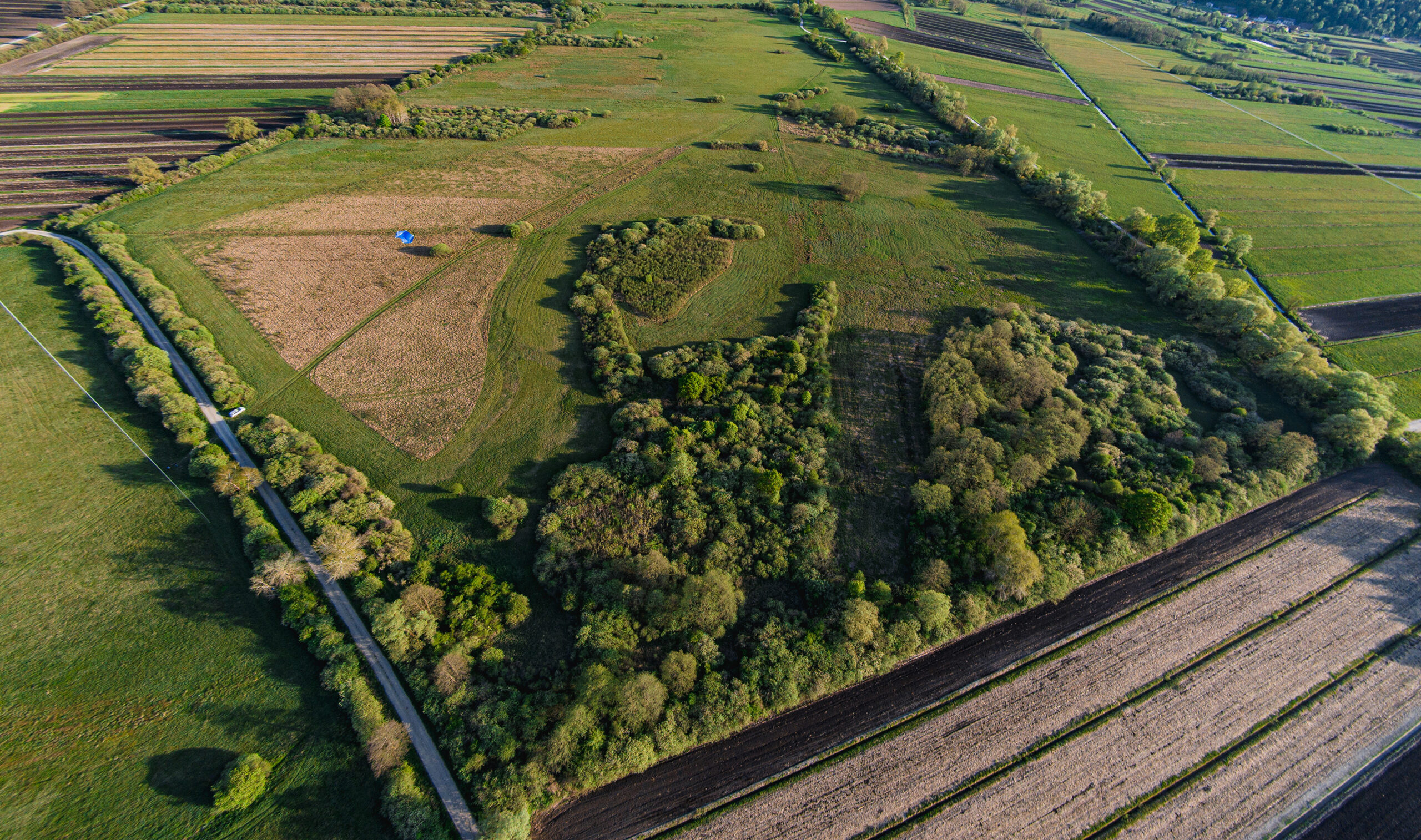
Iška Moor is beautiful, but it is not for us. When you park your car at the entrance, cut the engine, and open the doors, the sounds of the moor overwhelm you. It is a symphony that, while beautiful, is not meant for our ears: we are not meant to comprehend it, only to admire it from afar. No foot should step onto the molinia grass, no hand should part the thick stands of sedge. Even the Corn Crake Trail (one of the finest educational trails in Slovenia!) carries something slightly foreboding about it, as though it quietly reminds visitors where they do and do not belong.
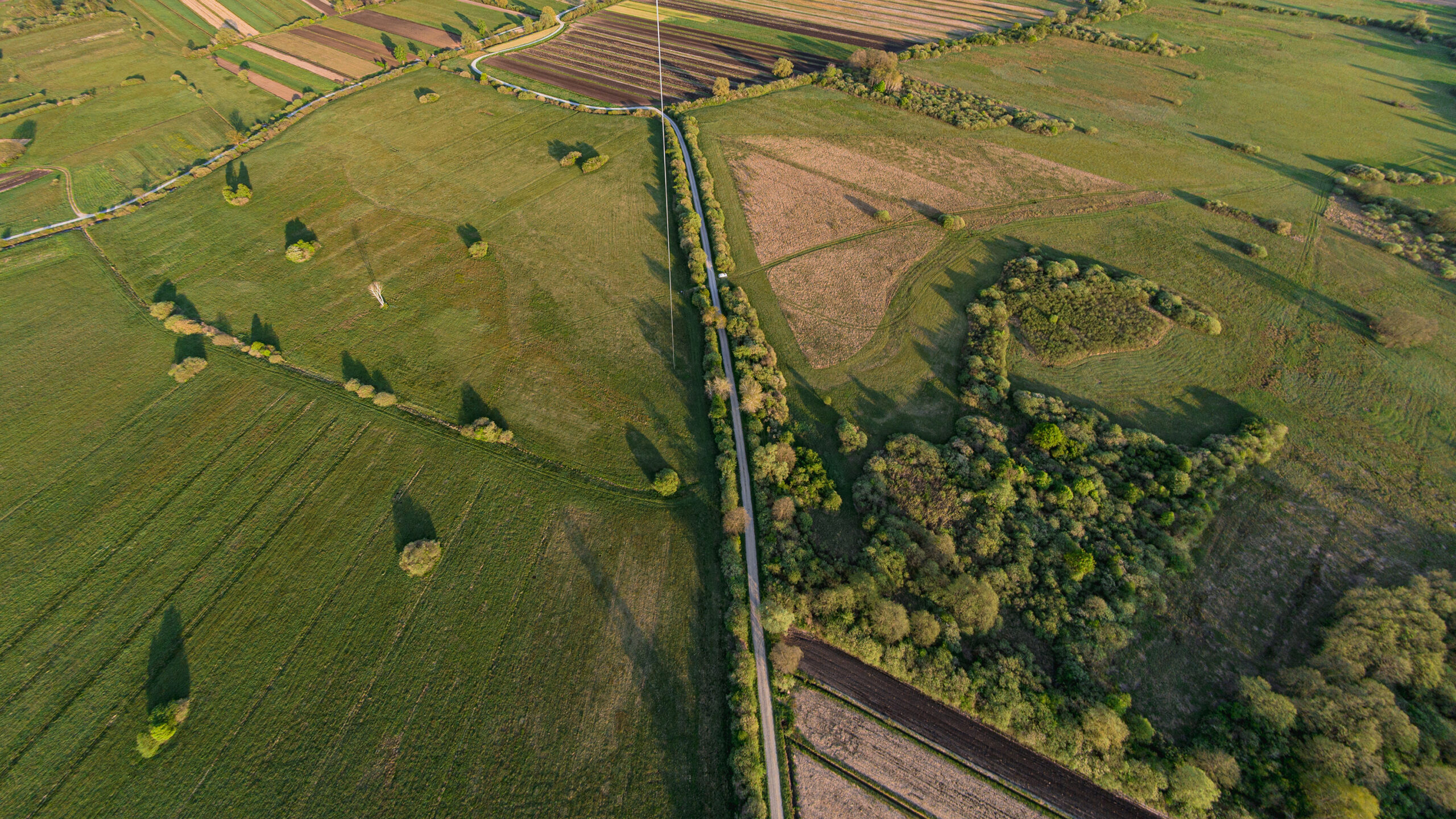
This ground is not ours to wander. But the sky is vast and free; the birds of the moor keep themselves low, while insects hold their endless congresses just above the shrubs and reeds. The serene, high-flying kite exists beyond their world. It lifts our eyes toward places we cannot, and perhaps must not, go ourselves, offering us fleeting views of the Moor that only its rightful inhabitants are truly allowed to enjoy. From above, the landscape reveals itself in a way hidden from those standing at its edge, untouched and quietly alive.
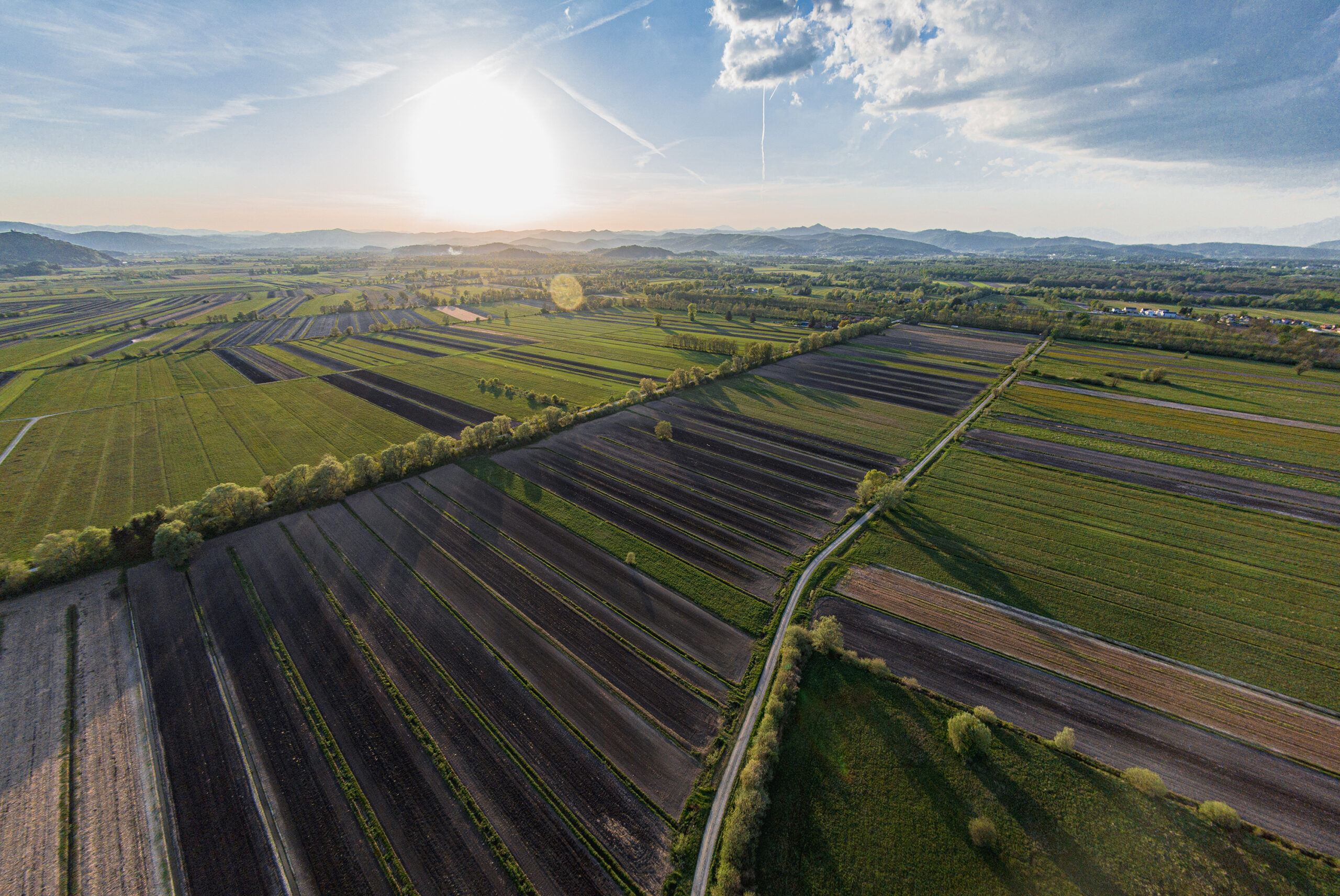
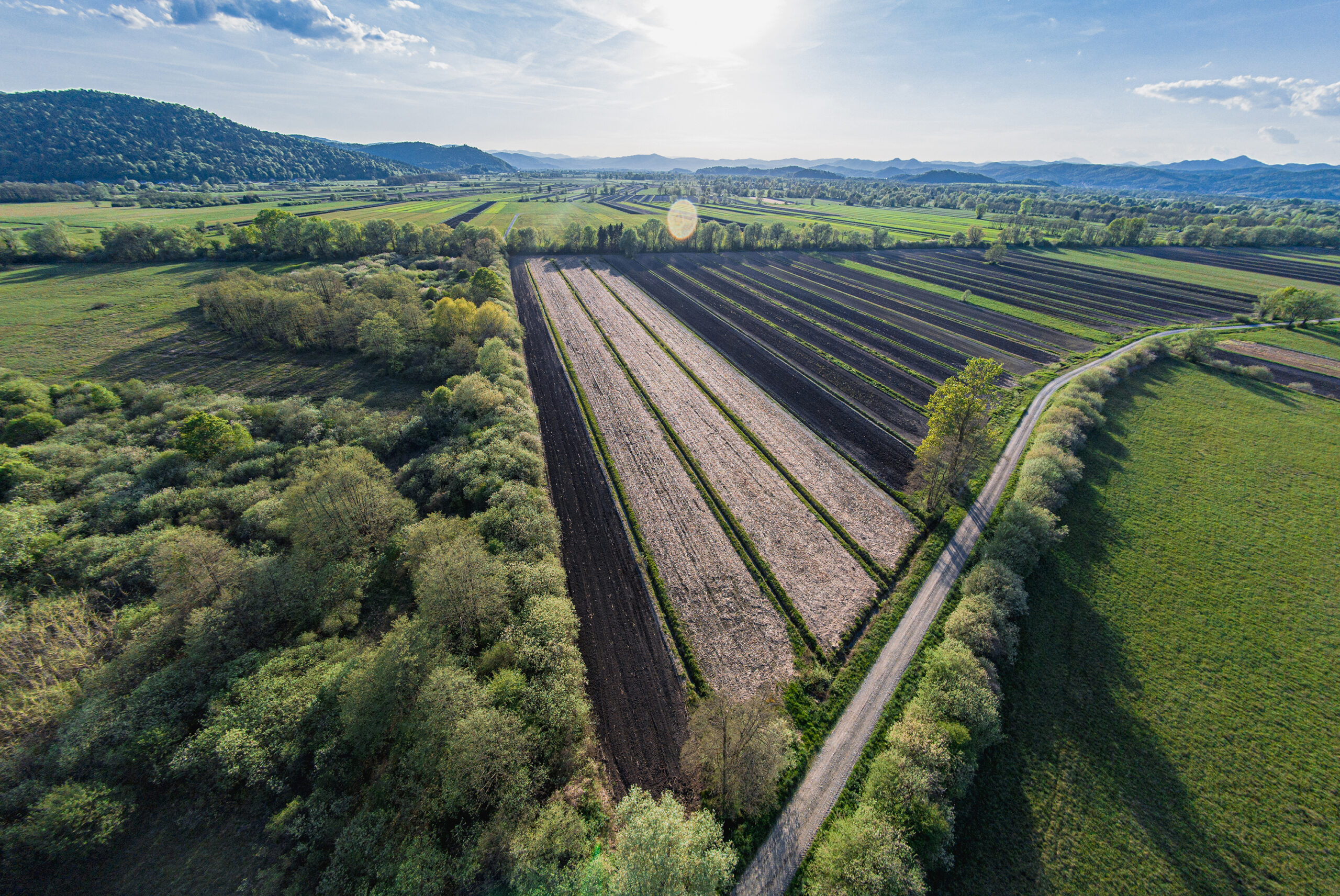
And the reserve, as if alive, keeps growing. It may seem as though the rectangles of cultivated land are still encroaching upon the moor, but in reality the exact opposite is happening. Many of the drainage canals will eventually be left to silt up, and agricultural plots will gradually be reclaimed by the ever-expanding reserve. Tall maize fields will give way to molinietum grasslands, and the rumbling noise of heavy tractors will slowly be replaced by the serenades of corn crakes.
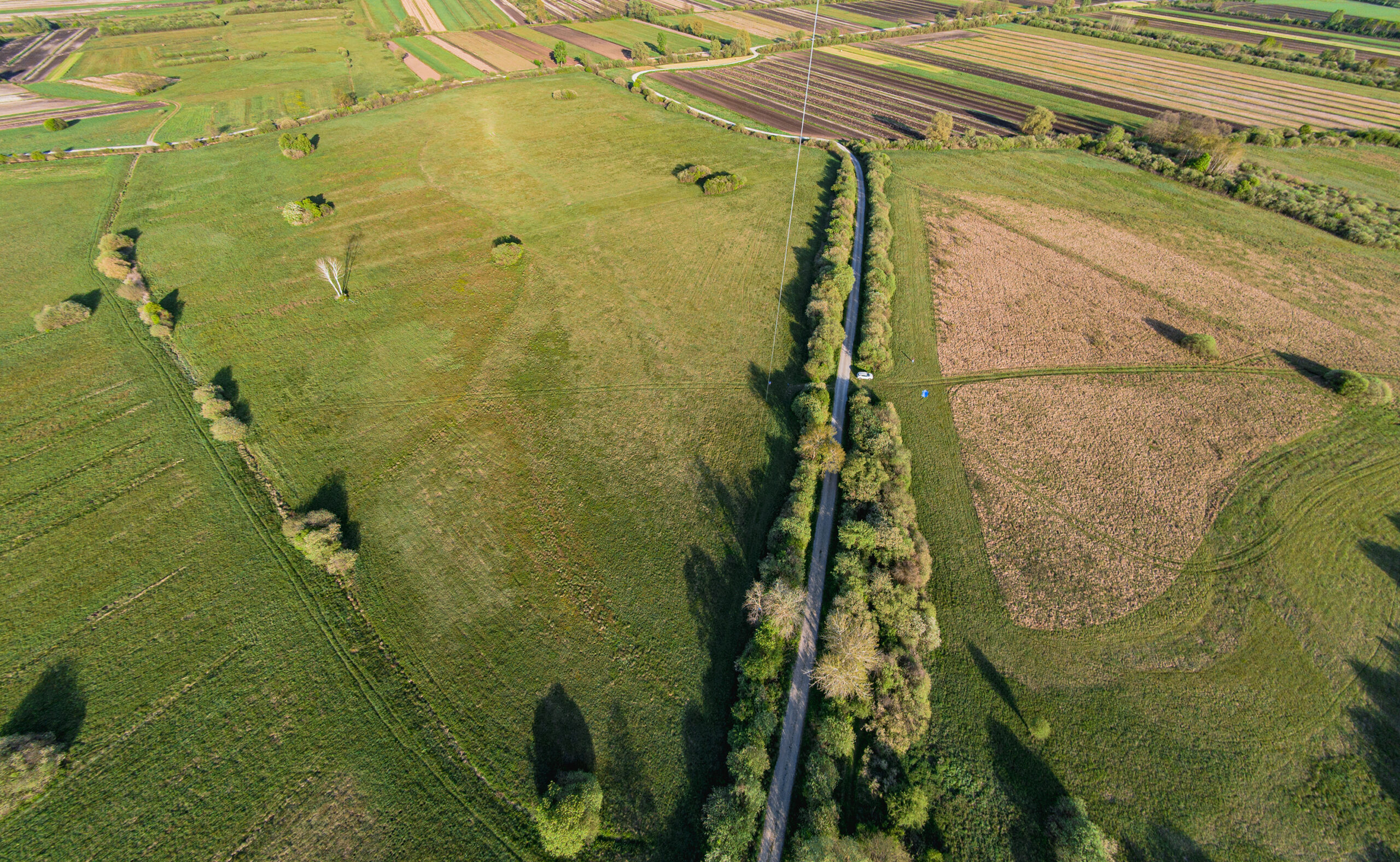
The vulgar rectangles will be covered by the soft chaos of life. And perchance one day the Marshes will be a marsh again.
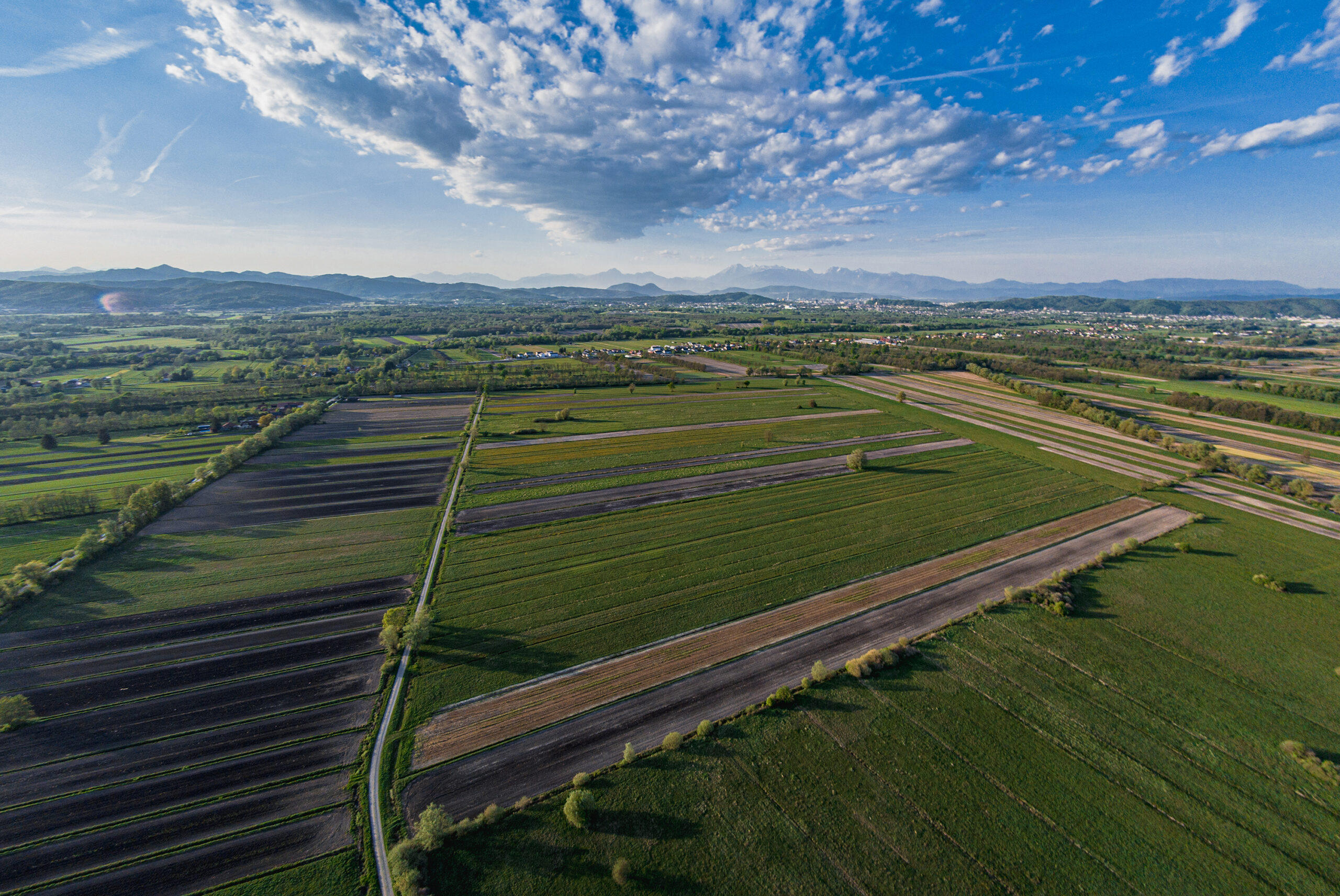
Kite aerial photos shot with Insta360 on Cindy delta kite, made by master Janez Vizjak.
This is a stunningly beautiful piece of writing, poetic, impassioned, eloquent of the complex emotions generated by complex issues. I do not often comment publicly (though I read all of these accounts) but this is something special, and I would encourage other readers to offer some acclaim to our author 🙂 It is not easy to write like that…
Wow, Trevor… thank you 🙂
I really like your KAP-based
reportages. For me another excellent example for sustainable exploration, wherever the right winds blow. Congratulations!
Thank you, Wolfgang!
We should do it together again … 😉
Hello, I’m still so happy to see green fields –
As I see the water level in Danube is decreasing, and 80mm is missing from rain from each m2.
High time not to overuse nature. Beautiful pics to call attention on your values.
Hi István … yeah, there is persistent drought in Slovenia too; these green fields are a bit misleading (it’s what spring does best), but the level of water is below minimum, and everyone is desperately waiting for some serious rain …