
The Gods of Winds can be generous around the Old year / New year transition, so we are usually able to head down to Cerknica and take some more kite aerial photos of this exceptional place.
Because it’s never enough.

And it’s never the same.

So we honoured the tradition – and the first published article of the year is yet again about the largest intermittent lake in Europe.

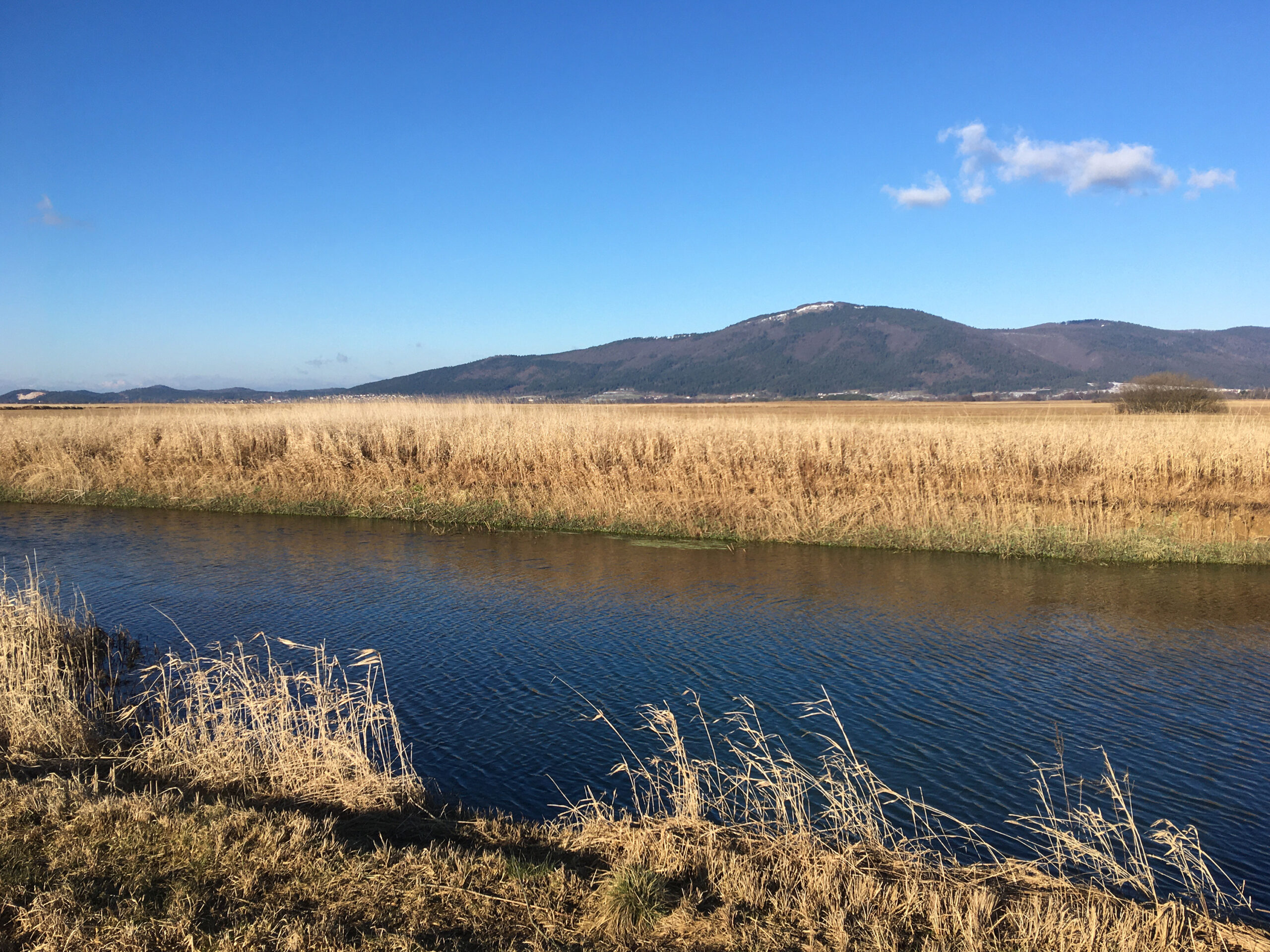
It wasn’t an easy one though … After a short and not absolutely successful session at Castle Snežnik (that’s for the next article) where the winds are tricky and the trees are hungry, a short hop to Malnšče bird-watching spot promised a more carefree kite flying in a vast open space of the now dry Lake Cerknica.

But as the kites rose up, the wind speed went up too … dramatically. There is nothing relaxed in flying a large Rokkaku in 30+ kph wind, with gusts up to 50 and more. The line stretched up to its limits and taut like a piano wire may cut your fingers like … well, like this:
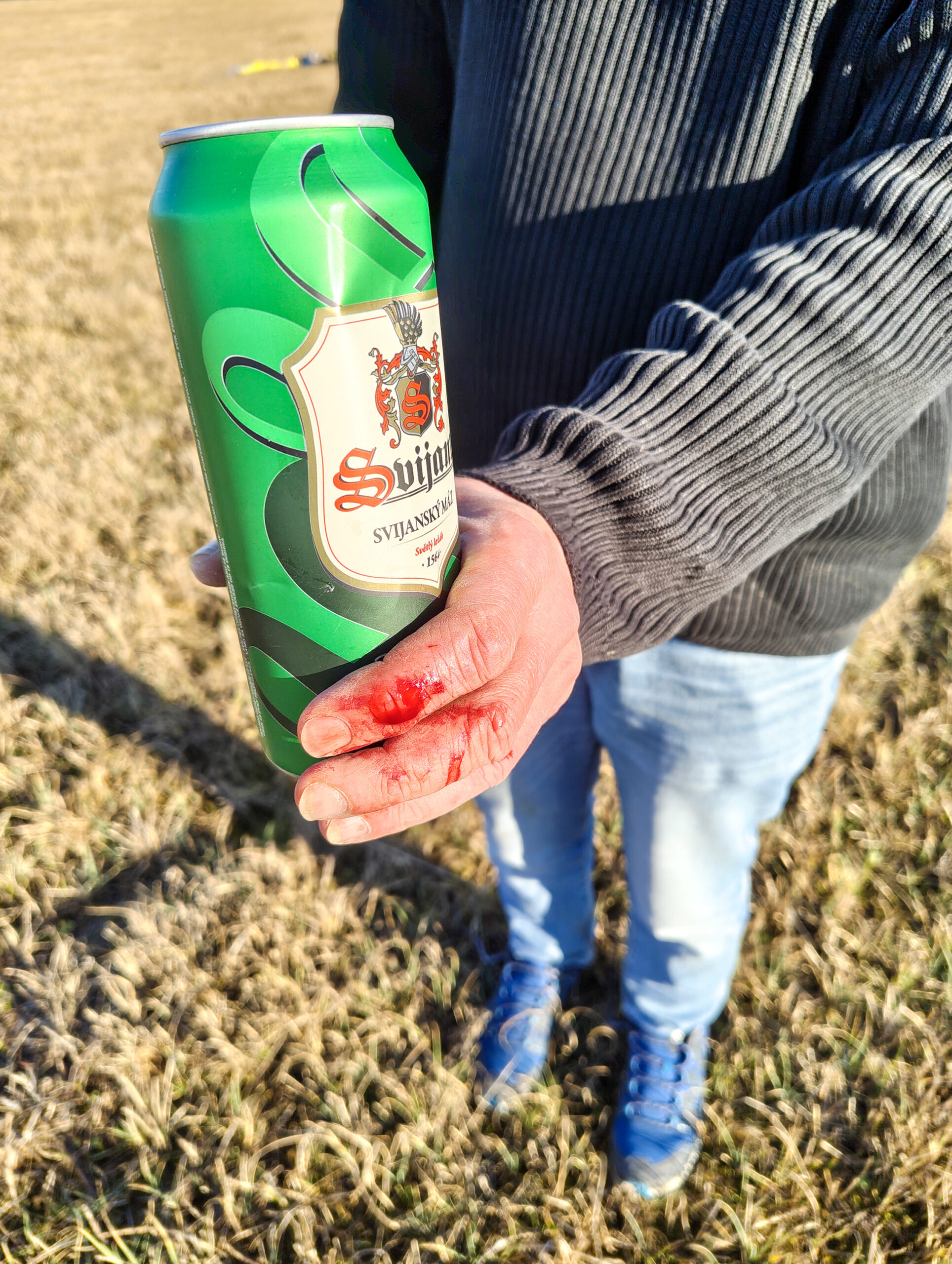
Janez smartly changed his Royal 69 sled for a brand new Mini Millie (a 150 cm tall French military kite, made on the advice of Zoltán Majernik) before his hands were butchered. A smaller kite of a different geometry and more gentle attitude doesn’t pull as insanely as the big flying bag.
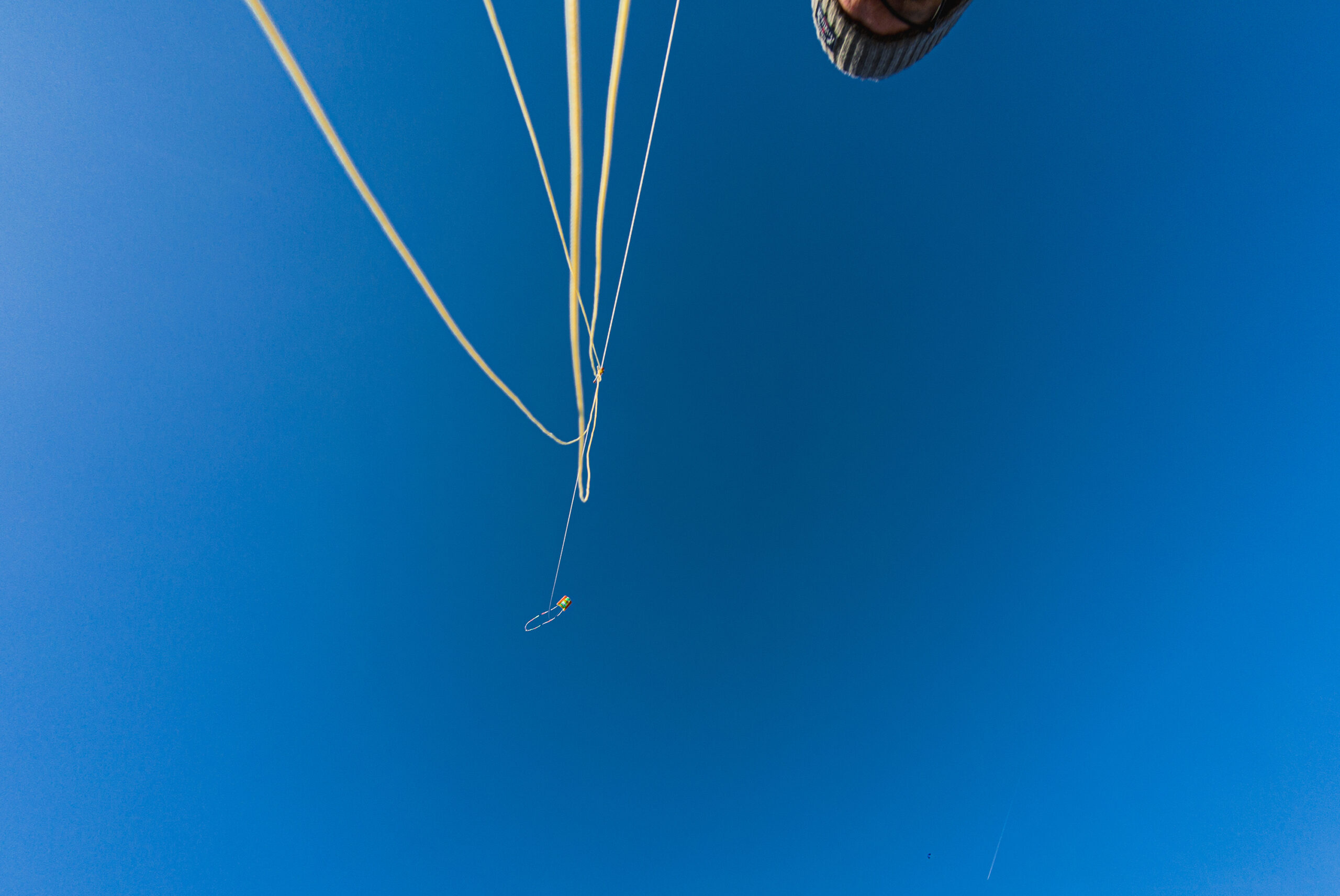
From there everything went smoothly (apart from finding a suitable tree to tie the Rok and bring it down, and the freezing winds, and the thin ice covering the moist ground through which we fell and got our feet wet etc.), and we could focus to the immense beauty of a real Phoenix of the water: a river that fills and empties Lake Cerknica; a river that was mutilated, contorted, straightened up, and finally revived – so the lake can breathe freely again.
Stržen.
Stržen is the third incarnation of a truly fascinating Karst phenomenon, a River of Seven Names. This wondrous river that flows both underground and overground is born on the eastern outskirts of Babno polje at the border of Croatia and Slovenia as Trbuhovica (1), disappears into the porous limestone, reappears at Loško polje as Obrh (2), sinks into the Golobina abyss and comes out at Cerknica polje as Stržen (3).
Here its waters bifurcate: most of them reappear as Rak (4) in Rakov Škocjan, go back down, meet Pivka river (5) in the caverns of Planina cave, and they come out together as Unica (6). Unica sinks again, and the River of Seven Names springs out for the final time as Ljubljanica (7) at Vrhnika. The rest of Stržen go straight underground to the springs at Bistra and rejoin Ljubljanica after a short run across the Ljubljana Marshes.
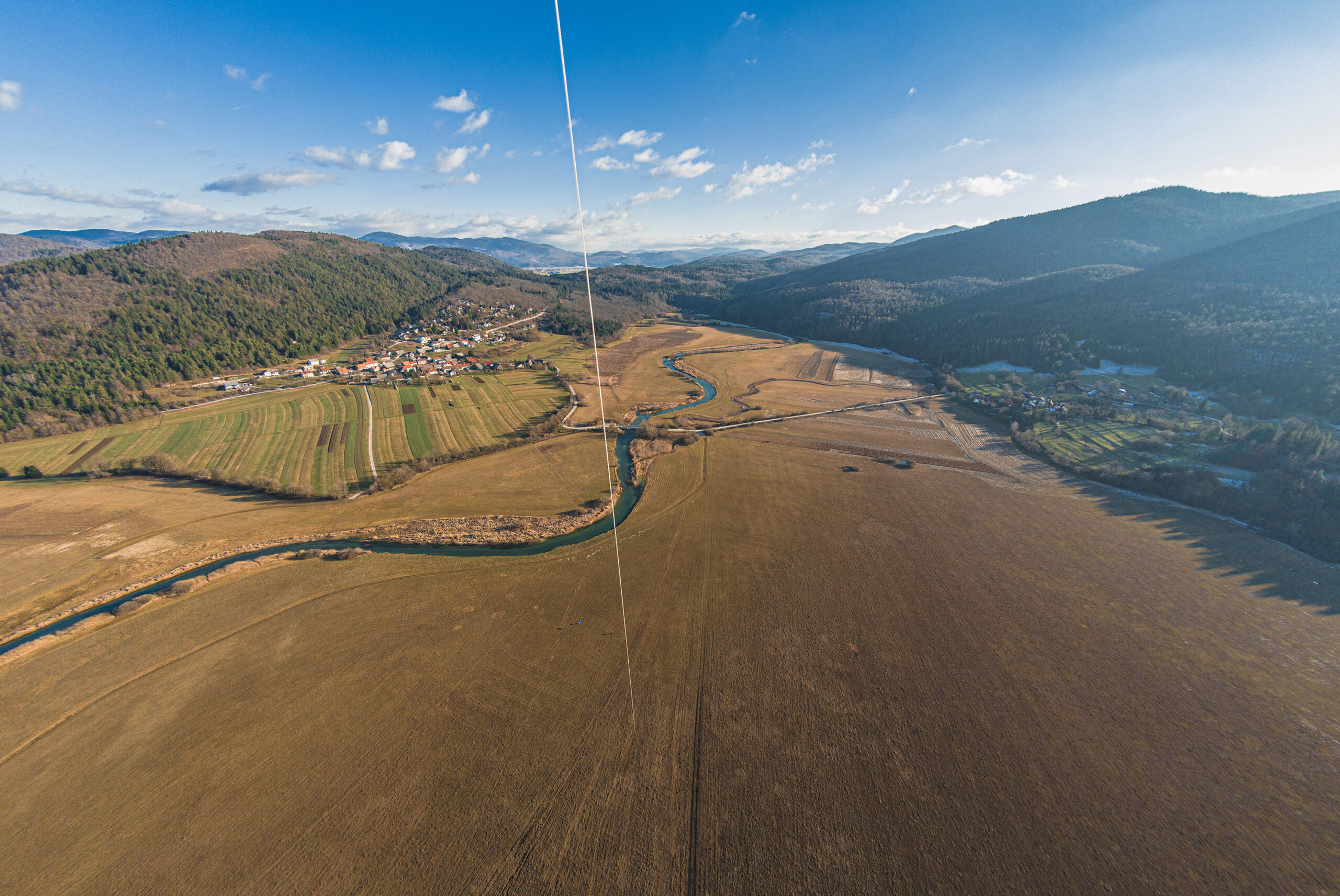
out of the forehead of Zeus.
The Karst character of Stržen makes it a very strange and unpredictable river. It’s rather vast catchment area and the underground course of its previous incarnations can make its flow rise vehemently, while the sinkholes and caves at the other edge of Cerknica polje just can’t gulp up all the excess water. Thus Stržen – usually in Spring and in Autumn – overflows and creates one of the most spectacular wonders of Slovenia: the intermittent Lake Cerknica.

Lake Cerknica was admired for millenia – Strabo knew it as Lougeon, Valvasor tried to explain its semi-regular breathing, it was a must-see for the visitors and a must-understand to the polymaths and early scientists. But.
The industrial revolution thrust forward a very smug concept: productivity. The land that was periodically covered by water was beautiful, but it wasn’t productive – at least not productive enough (which the local farmers felt rather painfully, being poorer than their neighbours who weren’t farming a natural wonder). And people were smug enough they thought they could take Nature head-on … and win.
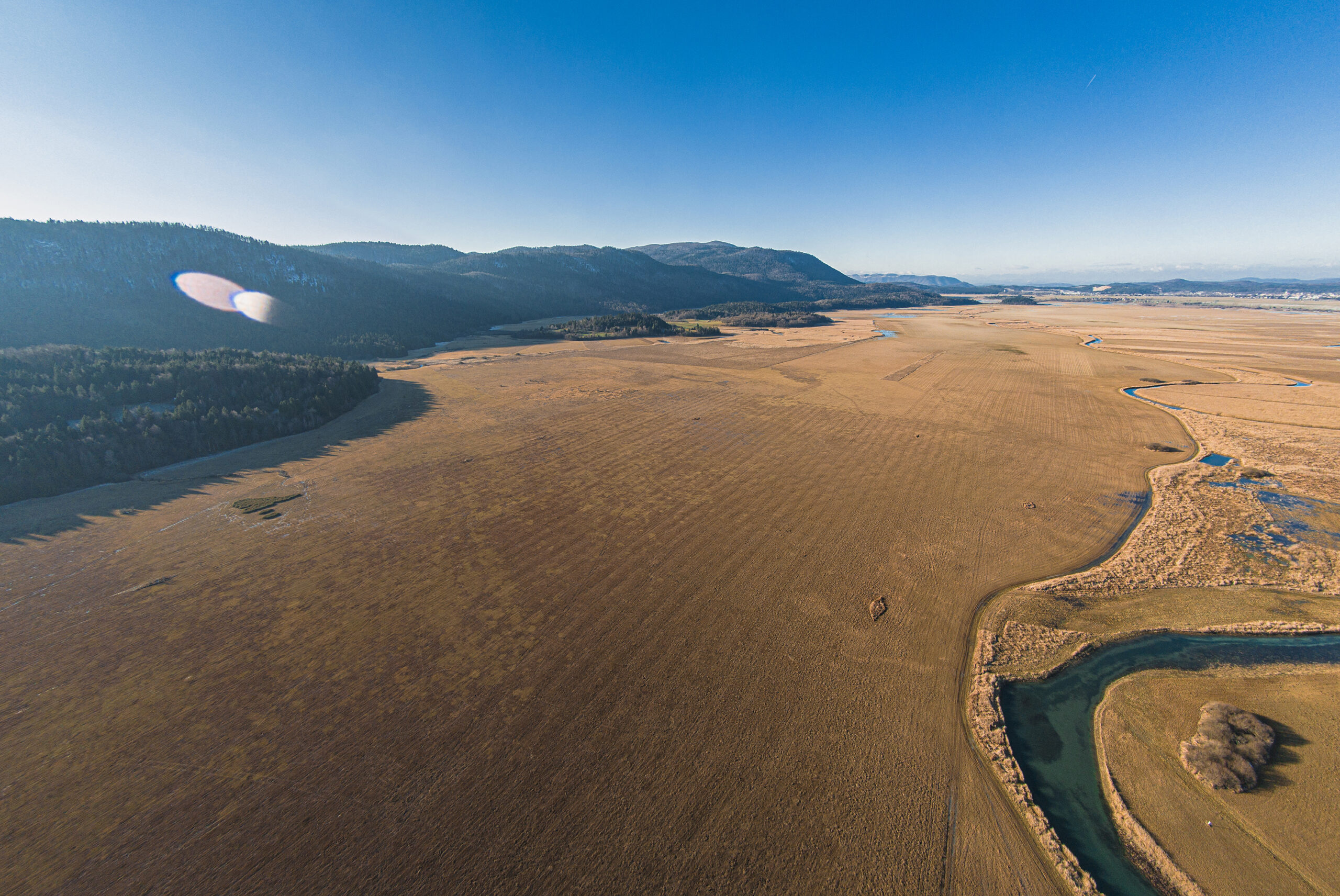
The first attempts at melioration of Cerknica polje were conceived back in Austria-Hungary. The sinkholes and caves were cleaned and enlarged (using dynamite), the meandering course of Stržen (and its tributaries) was straightened up, it’s riverbed deepened and widened. The idea was simple: if the waters would run off faster, the unproductive lake would cover the land for less time, and farming would become more, well, productive.

It was a huge effort. Between 1844 and 1958 some 12 kilometers of watercourse of Stržen and other streams and creeks on Cerknica polje (Goriški Brežiček, Lipsenjščica, Tresenec, Žerovniščica) – a quarter of the total length! – were cut out, filled up, destroyed, forgotten.
It kinda worked – but not as much as it was hoped for. Lake was a bit lamer, shallower, and Cerknica polje was flooded for a few weeks less. But the subterranean outflow was not just about the physical dimensions of sinkholes and cave entrances, and faster inflow basically meant they just choked up sooner. The lake was still appearing and disappearing. The soil was still wayyy too wet to be productive.
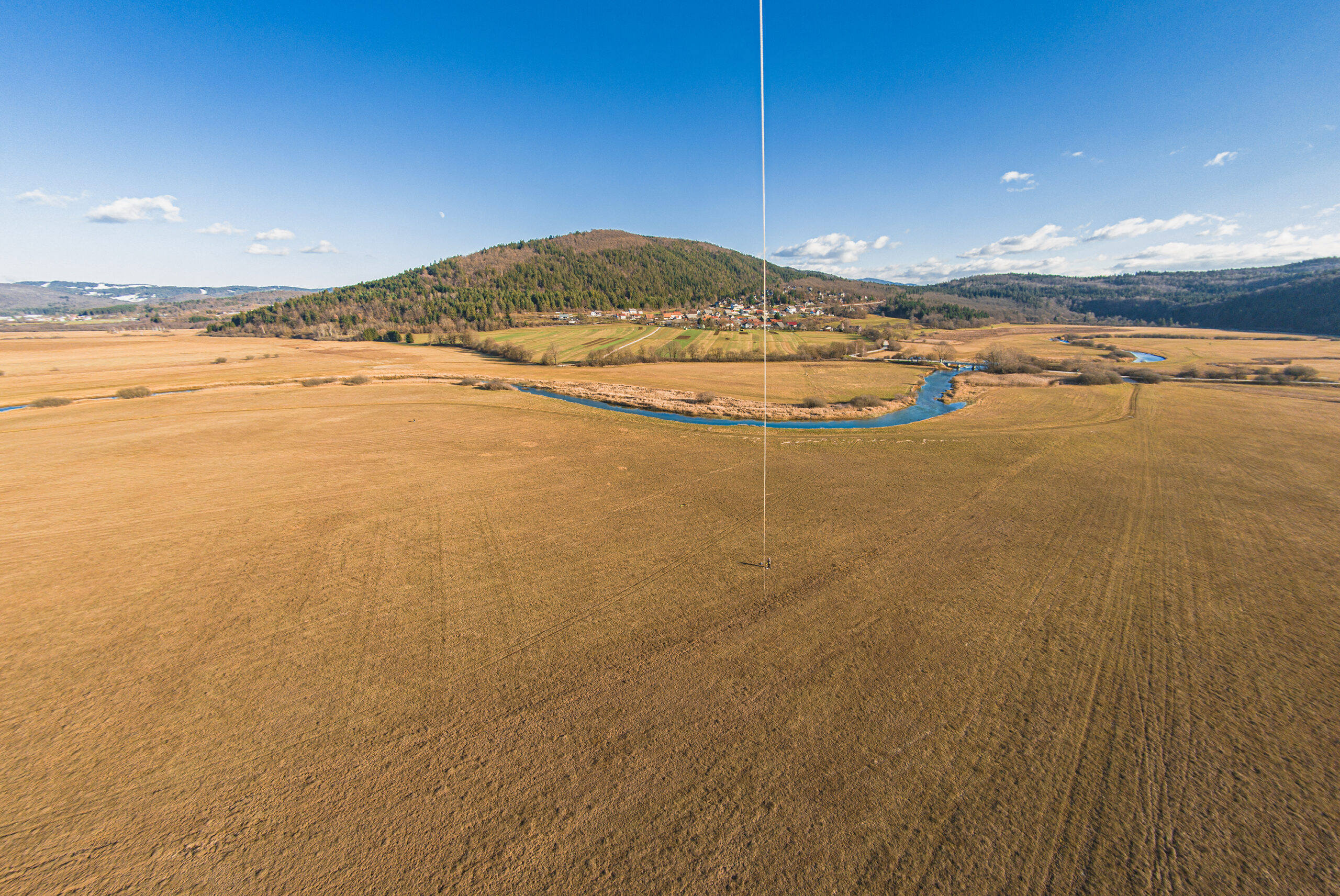
But the magnificent meanders of Stržen were gone, the proud river shortened, mutilated, humiliated. The habitats were lost, the fascinating biodiversity of Lake Cerknica was diminished, ecosystems were destroyed, and certain species were gone forever.
The ideas brought forth in the young and overconfident socialist country after the Second World War were even more bold – and more outrageous. After studying the proposal of a total draining of the lake (unworkable, impossible, too expensive) they came up with something completely different: making the lake permanent. A hydroelectric power plant! Fishing! Sailing! Tourism! Luckily, that was also completely impossible, as there is no way to put a dam on a porous limestone – the waters would find new outlets like it’s nothing.

The crazy ideas were shelved, yet Stržen remained a wounded, imprisoned river …
Fast forward to the good people of Notranjska Regional Park and to another big and bold project for Stržen and Lake Cerknica. Actually, not just one: two big and bold projects for the river to become productive again – but now productive as a river.

LIFE Stržen and KRAS.RE.VITA. The projects’ full scope is much broader – remedy fragile ecosystems, improve habitats of rare and endangered species, reduce visitors’ pressure, building special infrastructure etc., but they both included a magic word: renaturation of Stržen.
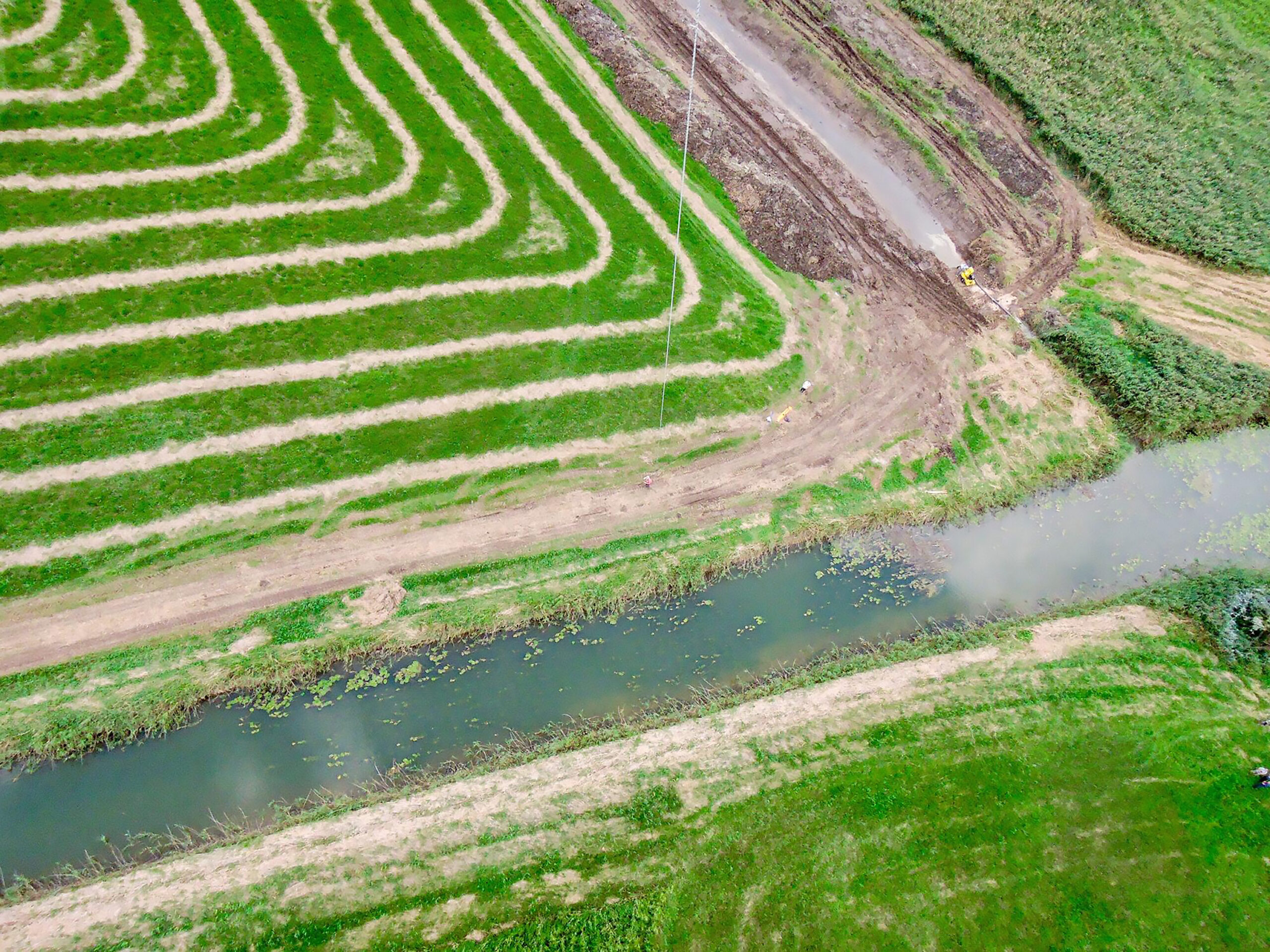
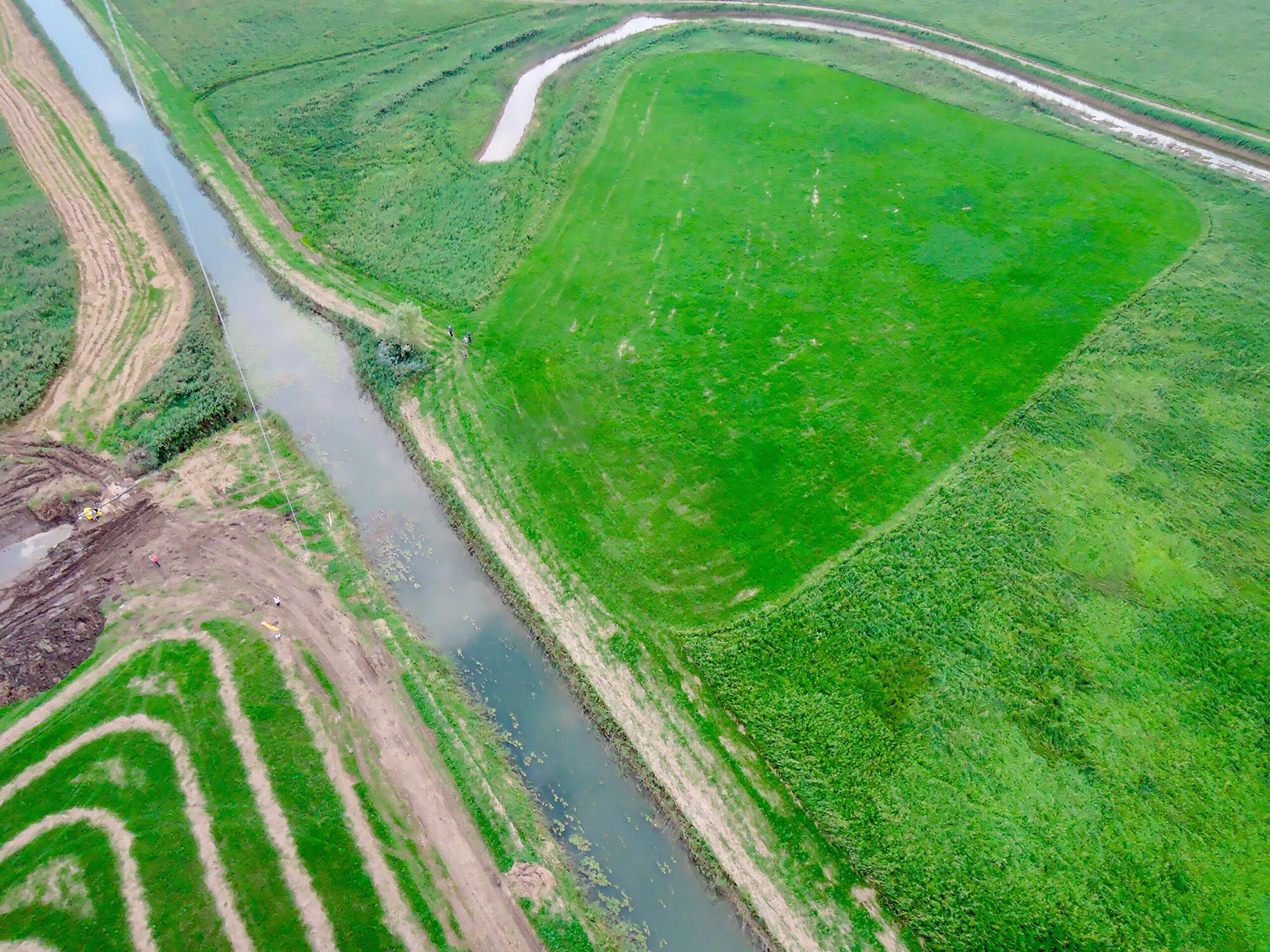
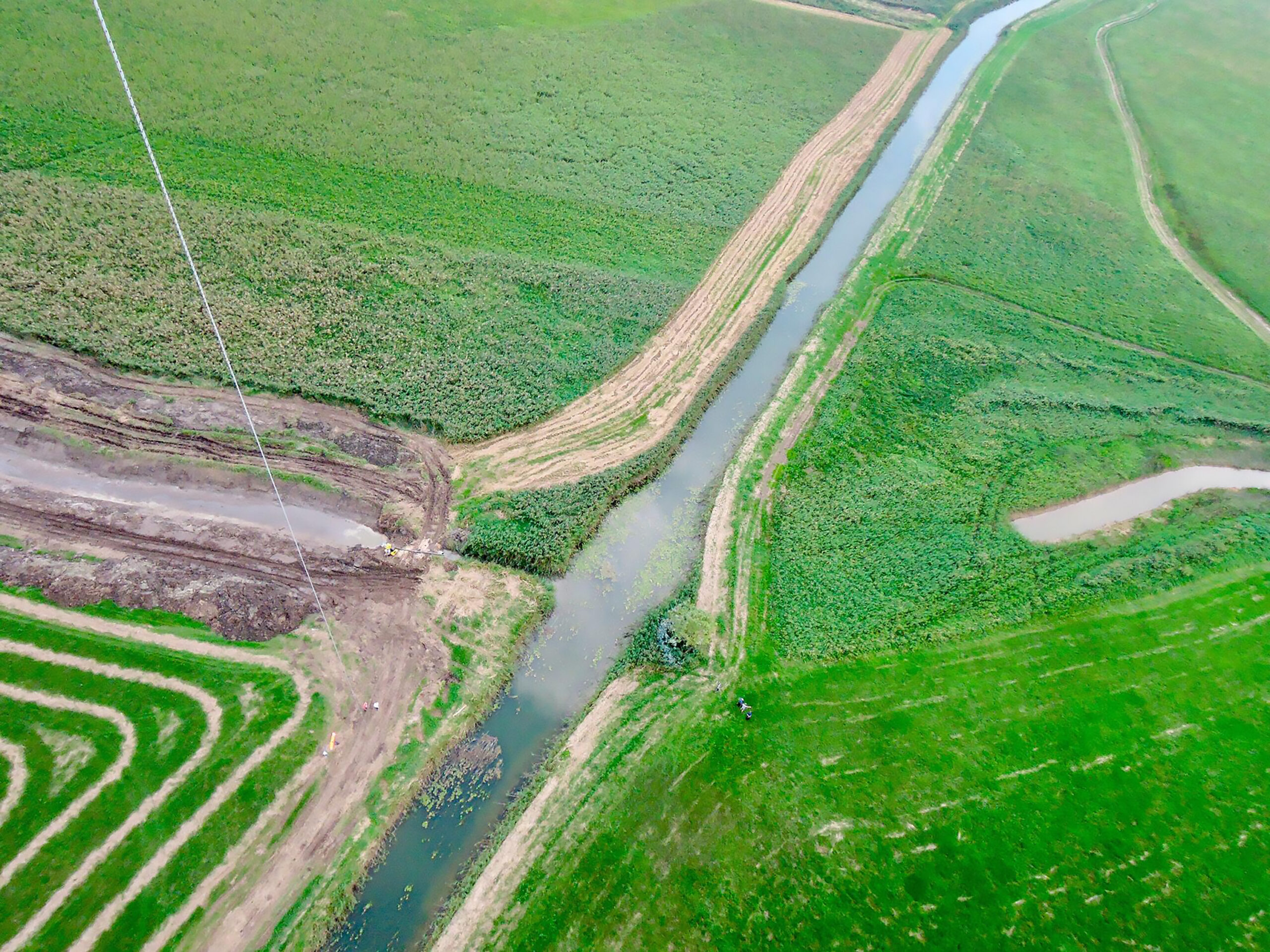
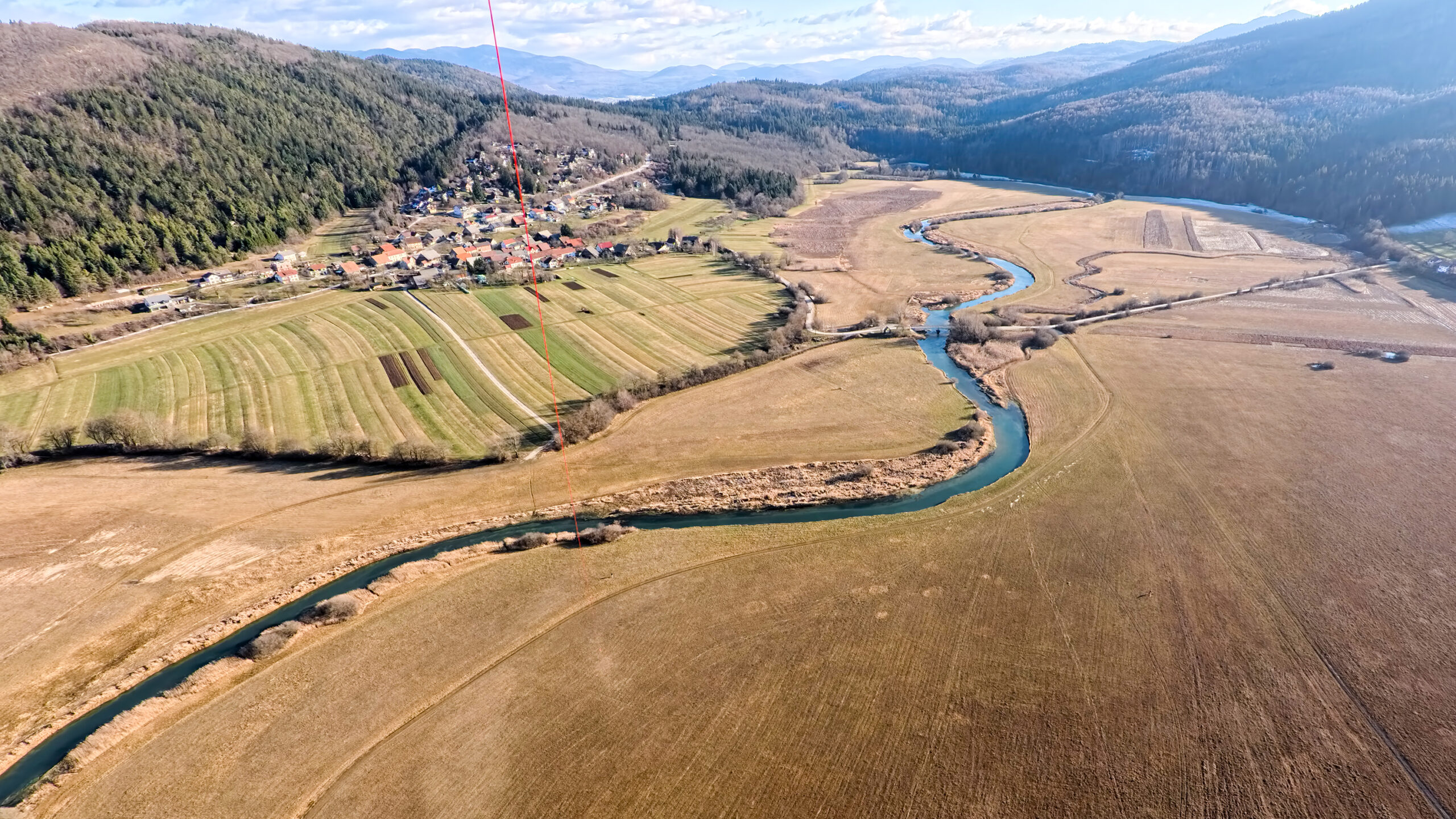
The first, LIFE Stržen, was tasked with re-opening two huge meanders in the middle of the watercourse of Stržen, called Ključi. Incidentally, we were there as they were completing the dig in 2019 – we were allowed to go there, lift the kite with a camera and document the finishing touches of the renaturation of Ključi just before the old meanders sprung back to life!

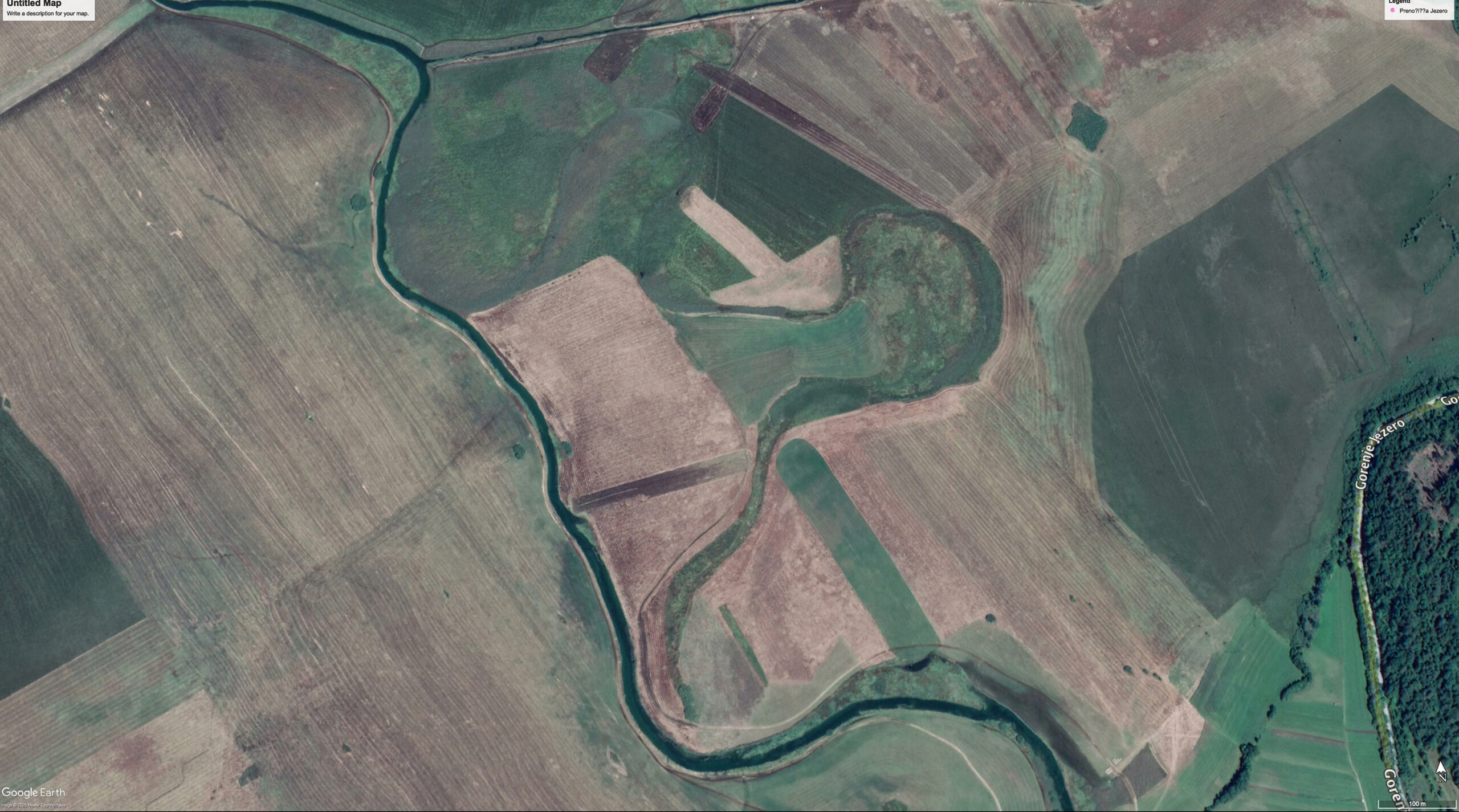
The second, KRAS.RE.VITA, was to bring back to life a series of beautiful meanders further southeast, called Beli breg. Here is the before-after view:

Bottom photo: Google Earth, 2023.
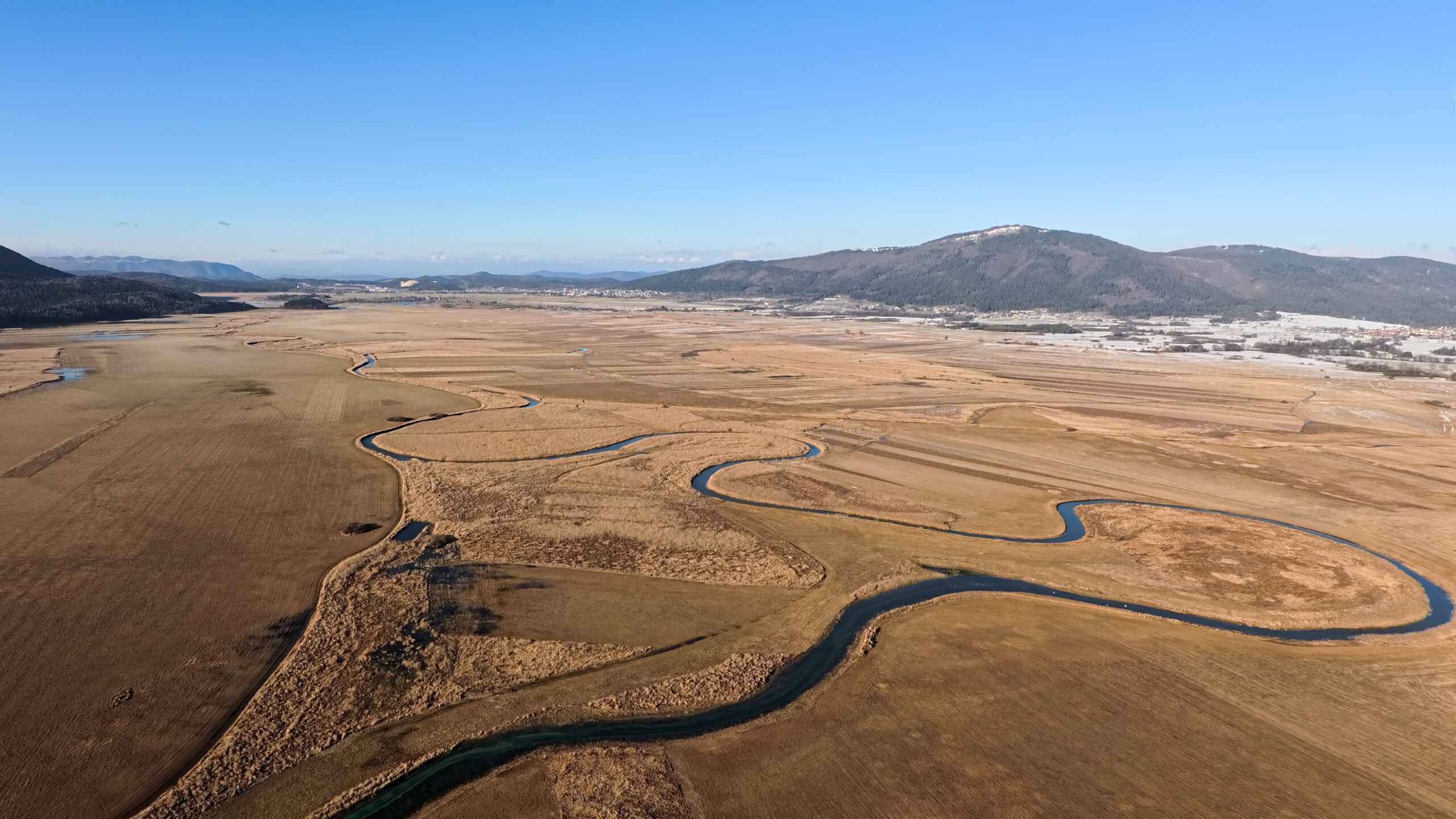
And just over three years after the water once again flowed through the Beli breg meanders, our kites were seeing them in all their wiggly glory.
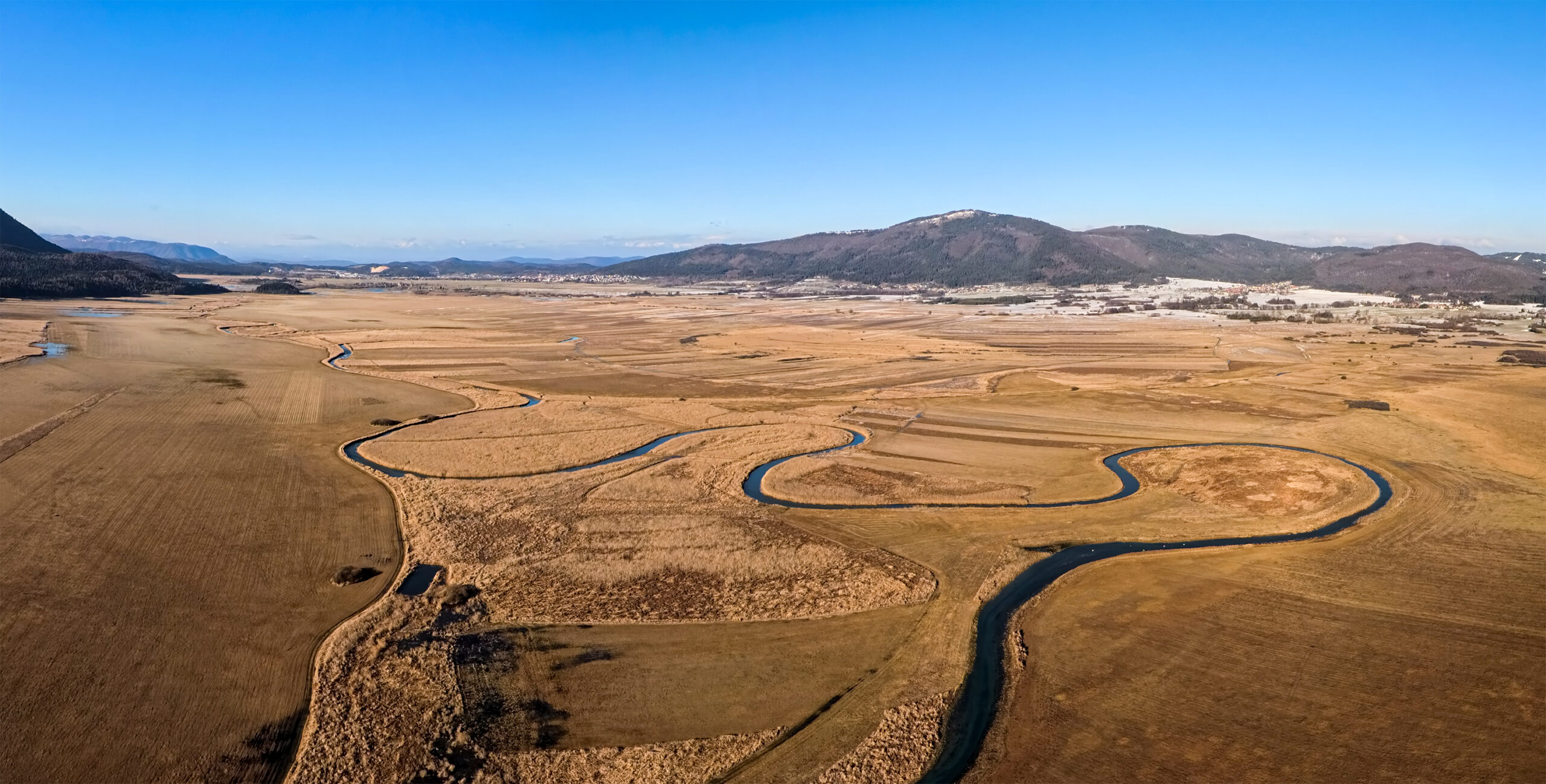
What’s the point? How does digging up the old meanders help? For one, long meandering rivers hold more water for a longer time, enabling plants and animals to complete their life cycle. There is more oxygen dissolved in the water, there is less erosion, the self-cleaning power of the river is increased. The whole ecosystem of Lake Cerknica is being restored and left to its own devices – and as we have found out so many times (often too late), Nature herself know best how to manage things … how to be productive.

The results?
To quote Laura Štampar, m.sc.: Restoration improved the hydrological and morphological characteristics of the river channel, and increased habitat diversity! As she notes, macrophyte communities have not yet fully stabilized – but they are coming back, and Stržen is slowly but surely reviving like a Phoenix it is.

It’s been only a couple of years since heavy machinery brutally remedied the brutal mutilation of Stržen, and we can already see the whole ecosystem of Lake Cerknica improving – even from the air.

We won!
Hubris. That’s what is being remedied here today, replaced with humility and respect for the power – and for the ingenuity of Nature. Just leave Her alone, she knows exactly what to do.
Come to Lake Cerknica and see for yourself.
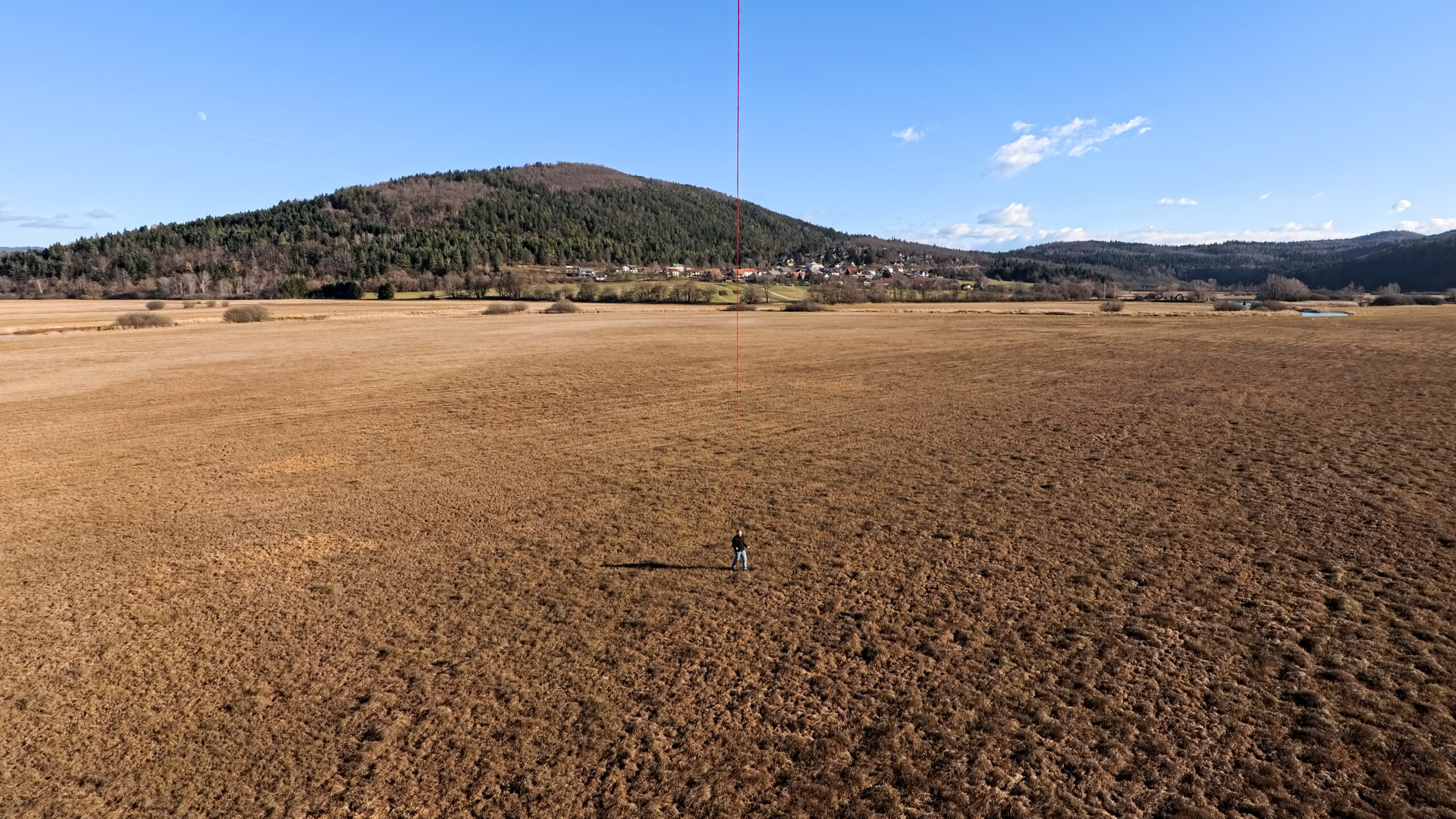
Kite aerial photos shot with Instas on The Original Blue Rokkaku and on the Mini Mille, both made by master Janez.



Love it, totally. What a wonderful series of KAP pics collected from different seasons of years. Keep up your fantastic work. Congratulation KAP JASA team!
aus Fehlern lernt man !? Hoffentlich immer !
Great Story and beautiful Dokumentation before, between and now.
Thanks, Ulli! 🙂