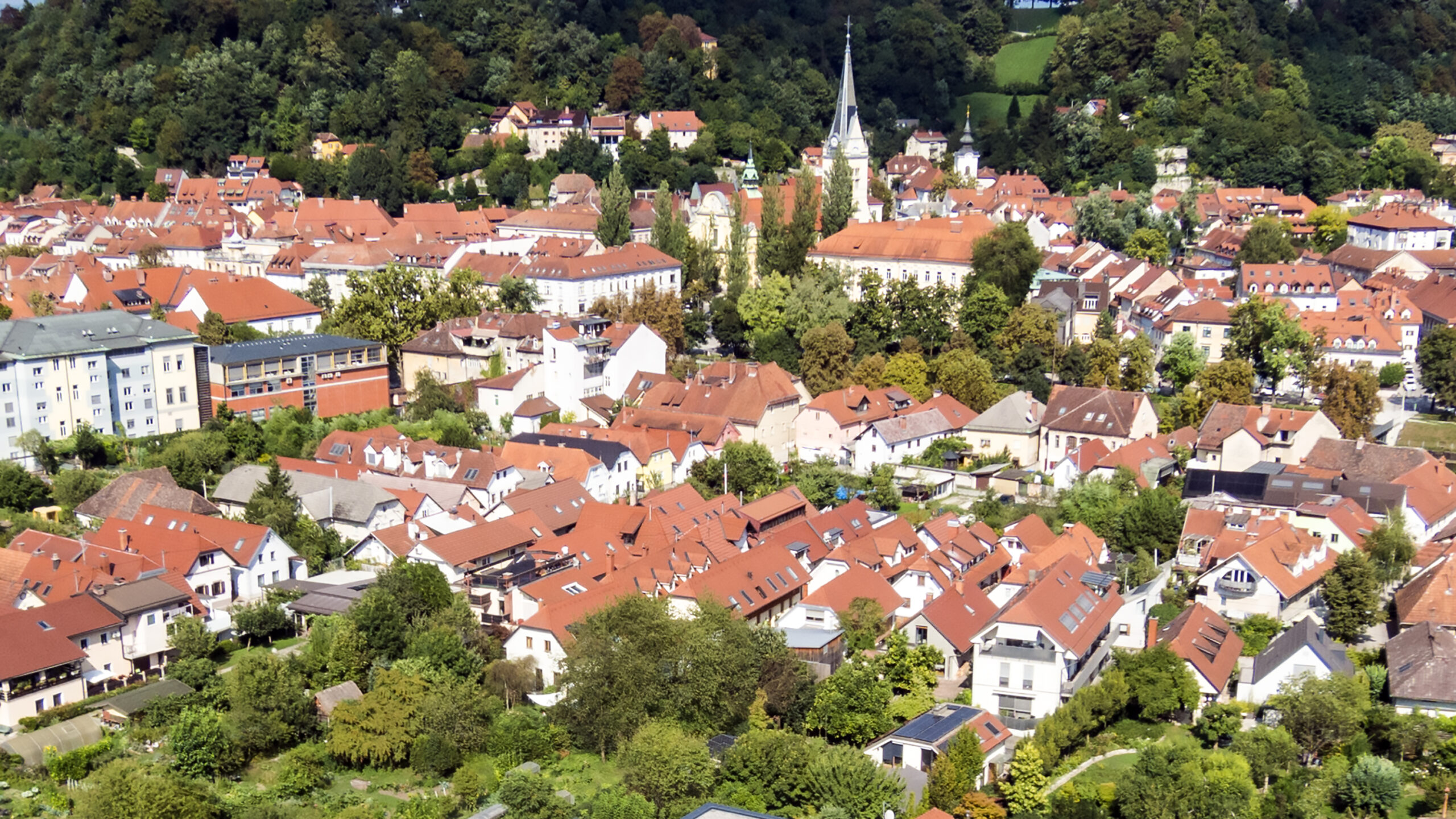
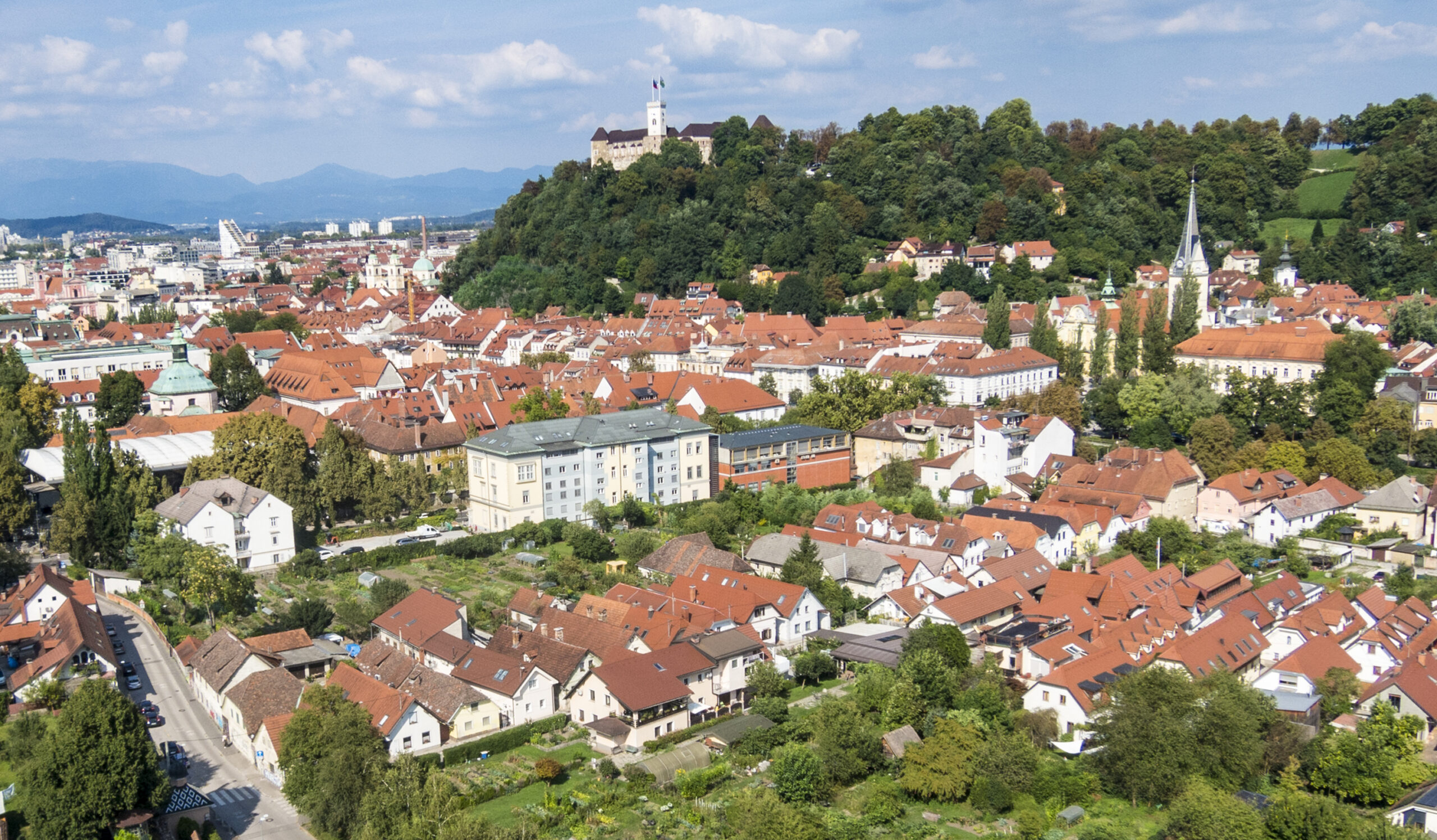
This is the the third instalment in the series of kite aerial stories about the forštats (Vorstadts, faubourgs) of Ljubljana; now integral parts of the city that were built just outside of city walls. Ljubljana has seven of them: Saint Peter’s, Poljane, Carlstadt, Trnovo, Krakovo, Gradišče, and Capuchins’ forštat. The first one was about Saint Peter’s forštat, the second about Trnovo – this one is about Krakovo.
A pilgrim in time, a Garden of Eden, an almost-island …
They say every good story about Medieval times should start with Pauperes commilitones Christi Templique Salomonici …
The Knights Templar.
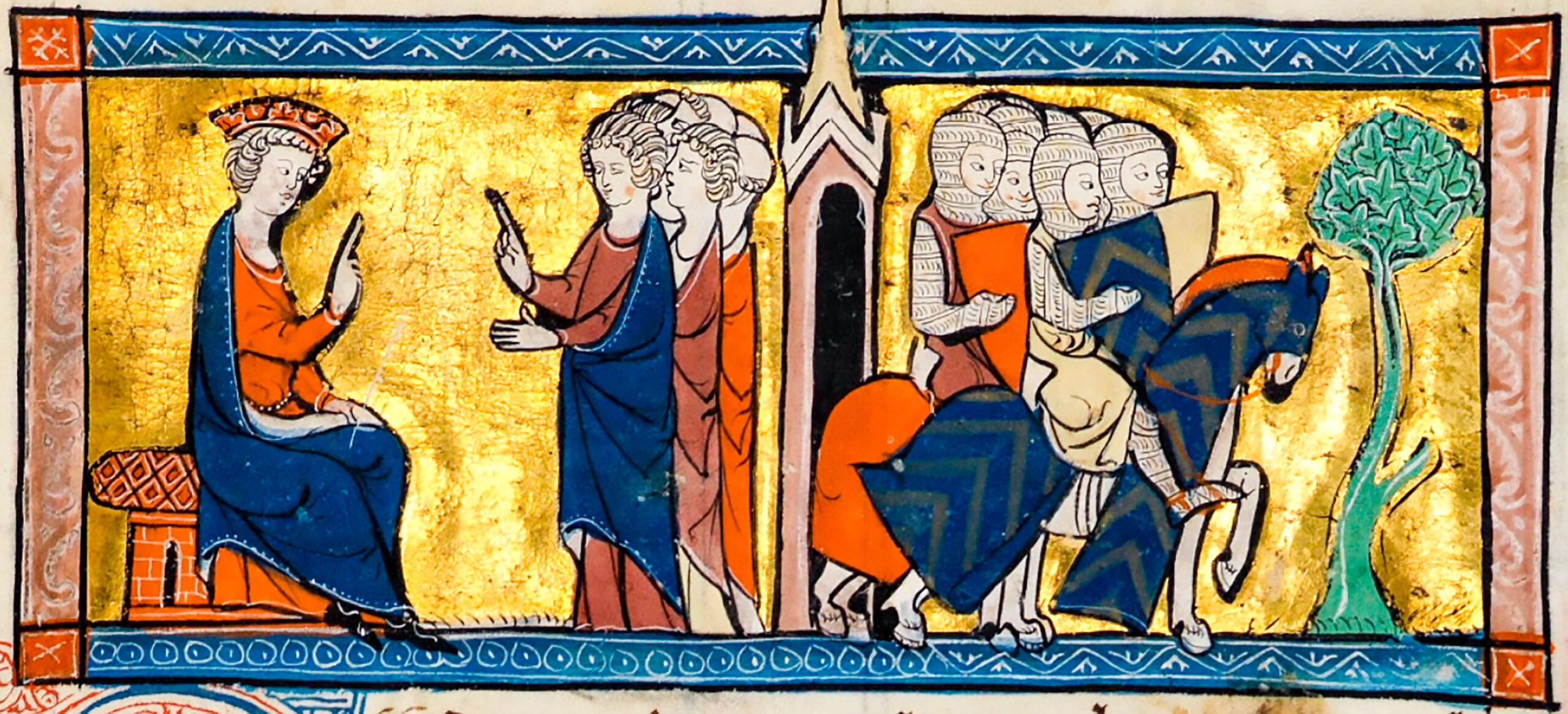
Ah, the Templars … The Crusades, the invention of banking, untold riches, immense power, secret codes, romantic conspiracies … yes, including that one.
But the Templars in Ljubljana? Why not! Soon after Hugo de Payens convinced Baldwin back in 1119 to fund a militant monastic order that could protect pilgrims to the freshly occupied Holy Land, the Templars exploded onto the scene and spread all over Europe, so why not to Carniola (and Ljubljana) too, as these lands back then were fiercely contested (so an elite special force would come in very handy) and in the early stages of colonisation (so a rich investor would come in very handy).
And lo, here are two old(ish) mentions of the Knights Templar in Ljubljana, both from the second half of the 17th century. Valvasor quotes Schönleben (who had access to the municipal archive since his father was the Mayor of Ljubljana) as saying that the Templars left, or were driven out of, Ljubljana in 1200. Dolničar, a lawyer, a wannabe polymath and an instigator of the Academia Operosorum, found an old document about the old Church of the Cross that stated: “cuius originem fastus ordinis et vetusta cartophilacea ab Anno 1167. Anspicantur Templariorum olim sedem usque ad Annum 1312 fuisse constat.” In other words, “the origin [of the church] can be seen in the proud history (…) and in the ancient charts from 1167. It is established that it was once the seat of the Templars until 1312.”
Yay, Templars!
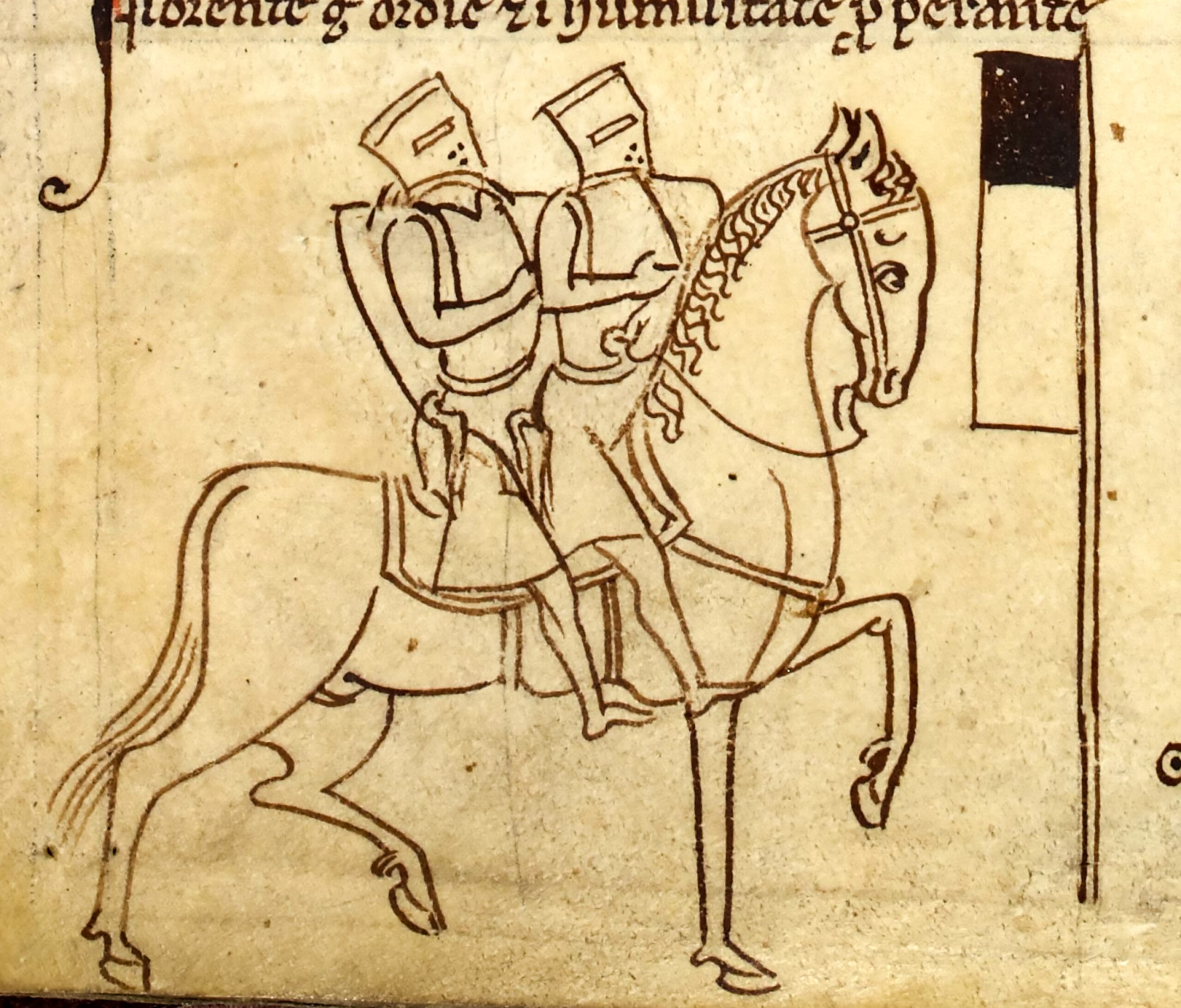
We are deep in time, trying to pry a consistent narrative from sparse and obscure facts covered with a thick veil of History. The oldest known mention of Ljubljana is from 1120, the Templars appear soon after, in 1167 if the venerable chroniclers are to be believed, and it is hard to even get a story together, much less separate fact from fiction. But still … Templars in Ljubljana!
So why did the poor knights come to our Medieval city in the making, and what were they doing here? In short, security for the Sponheims (who ruled Carinthia and wanted to rule Carniola), and colonisation of the land, starting with Ljubljana, to turn a small fortified settlement into a regional seat of power. À moi, beau sire! Beauséant à la rescousse!
The Templars were a military elite; powerful, rich … and fashionable.
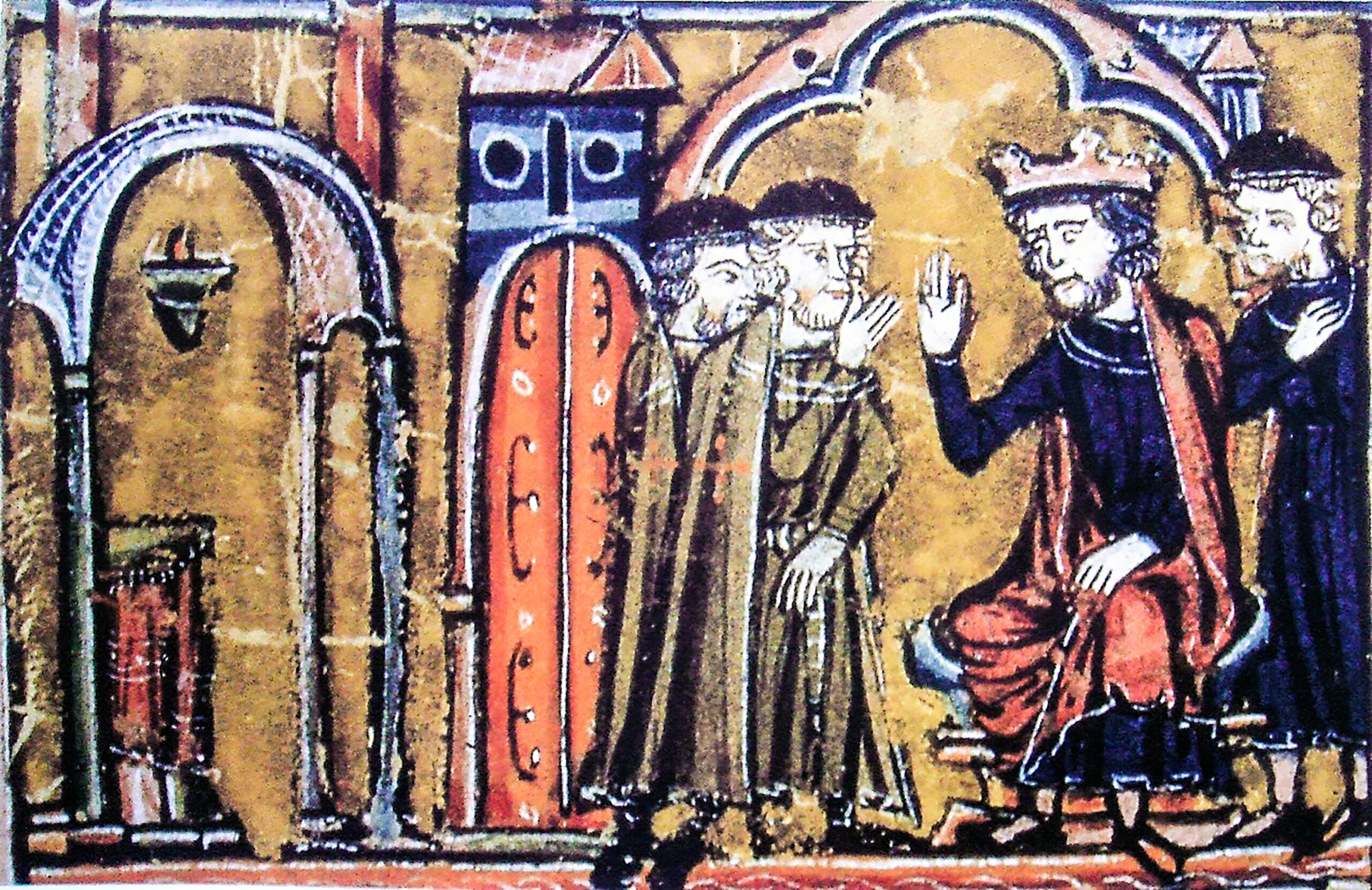
The Sponheims gave the Templars some land across the river in the Novi trg (New Market), perhaps even an existing estate, a small court there. And we know they built a church there, near what would become the south-west corner of the Medieval walls (the first mention of Ljubljana as a walled town is from 1243), and started to colonise the wider Novi trg area towards the river port at Breg.
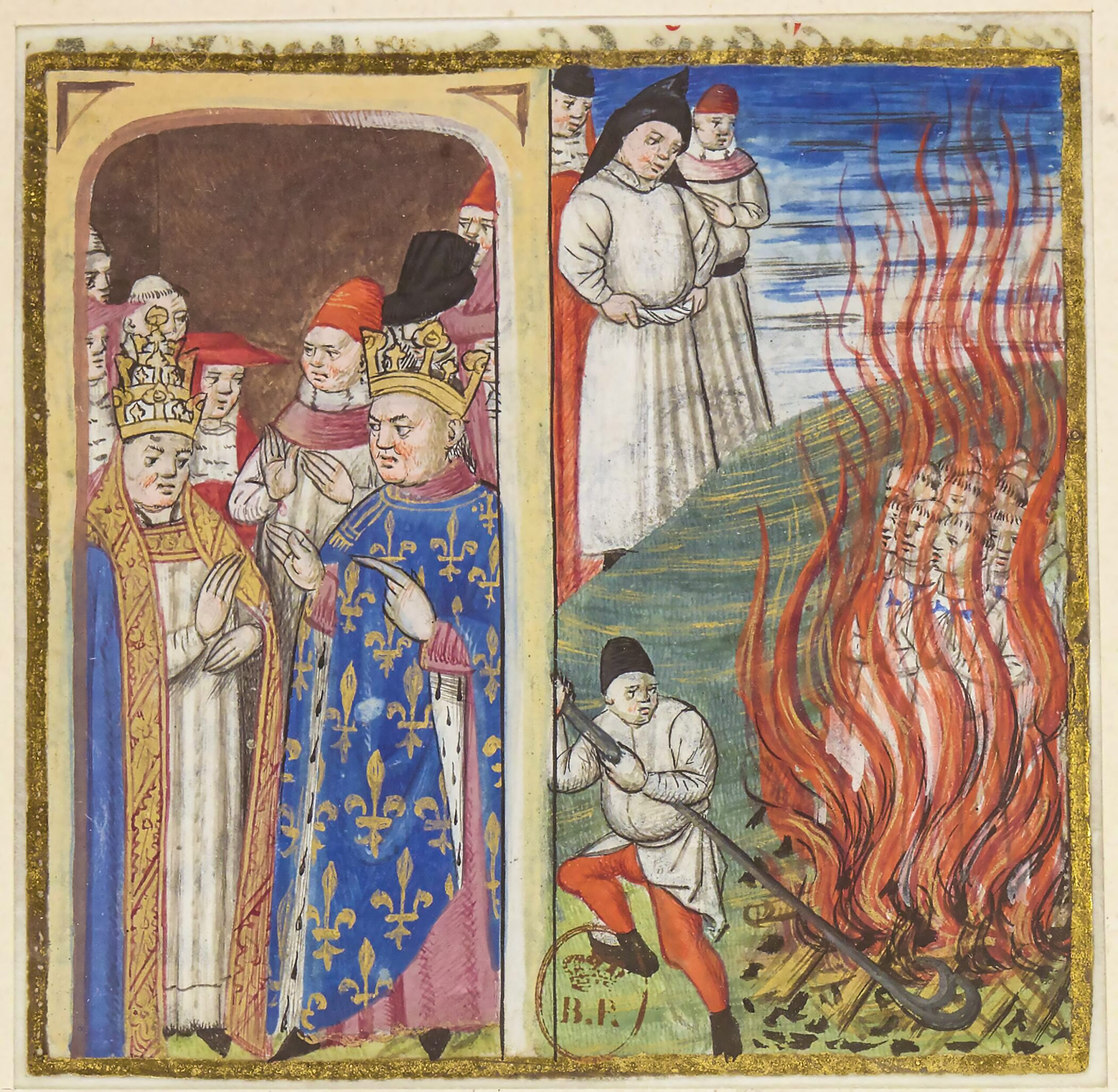
Alas, the Templars didn’t stick around for long; apparently they got too cosy with the Patriarch of Aquileia, so the Sponheims thanked them for their service and invited another military monastic order, Ordo domus Sanctae Mariae Theutonicorum Hierosolymitanorum, the Teutonic Knights of the Cross, to take their place. And anyway, the Templars pretty much ceased to exist in 1314, with Grand Master Jacques de Molay and Geoffroi de Charney burned at the stake in Paris.
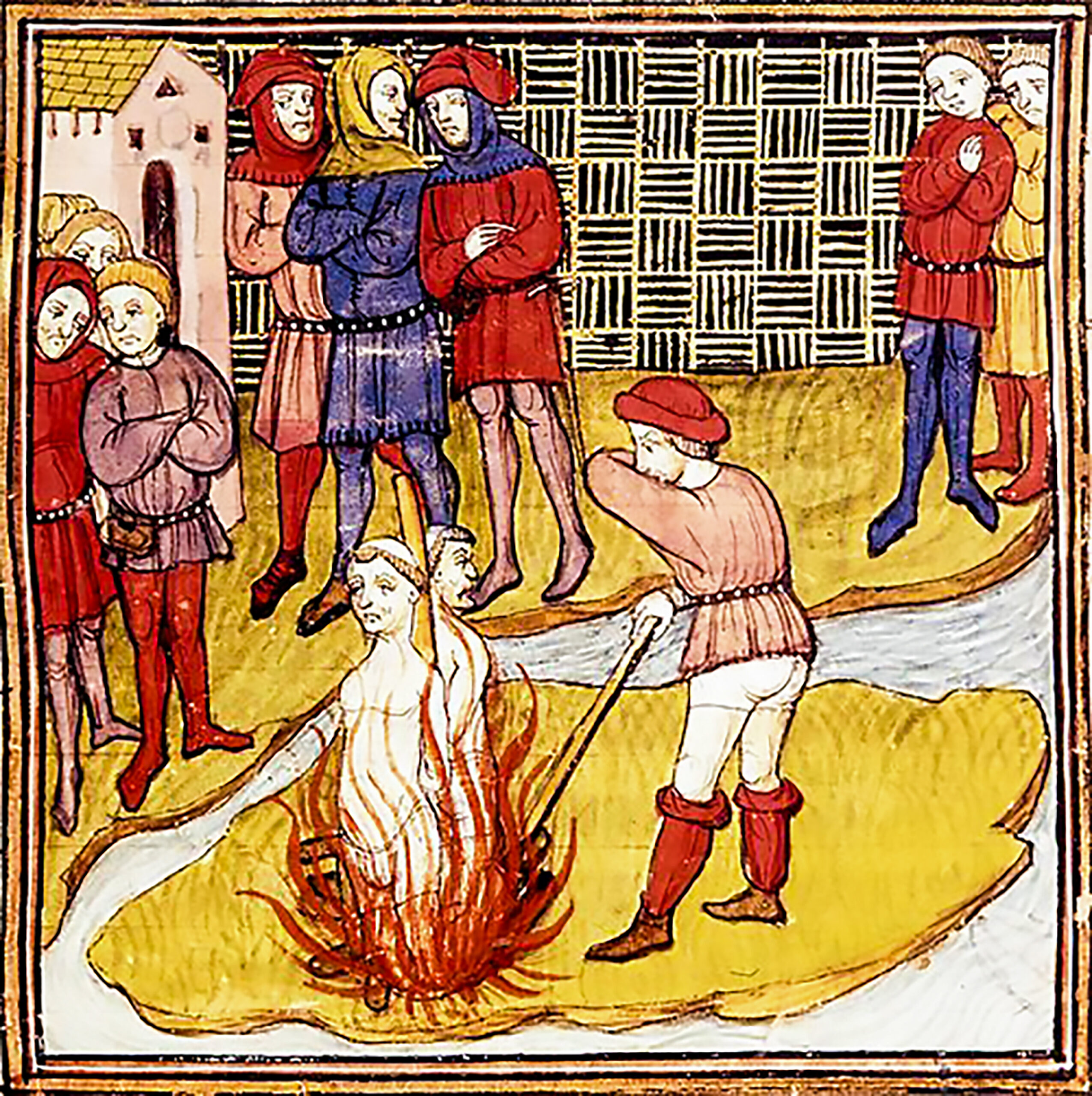
We know Dolničar’s 1312 as the year the Templars were gone is wrong. The Ljubljana Kommende of the Teutonic Order was definitely established before 1256 (and the militant monks of the Order were here even earlier, before 1228), so we can, with some confidence, say the Templars arrived in Ljubljana in 1167 and left in 1200 (or at least before 1228). Their baucent flew over Ljubljana for at most six meagre decades.
But the Templars surely left an impression … and the story of one of the most unusual, out-of-place, and ancient Vorstadts of Ljubljana really begins with them.
Let’s start our stroll in the very heart of Ljubljana, by the Triple Bridge and Prešeren Square. Going up Wolf Street to Congress Square, and on to Vega Street, the Cultural Axis of Plečnik. This is where the walls of Roman Emona and Medieval Ljubljana kissed, and a cute little round tower of the Medieval walls still stands.
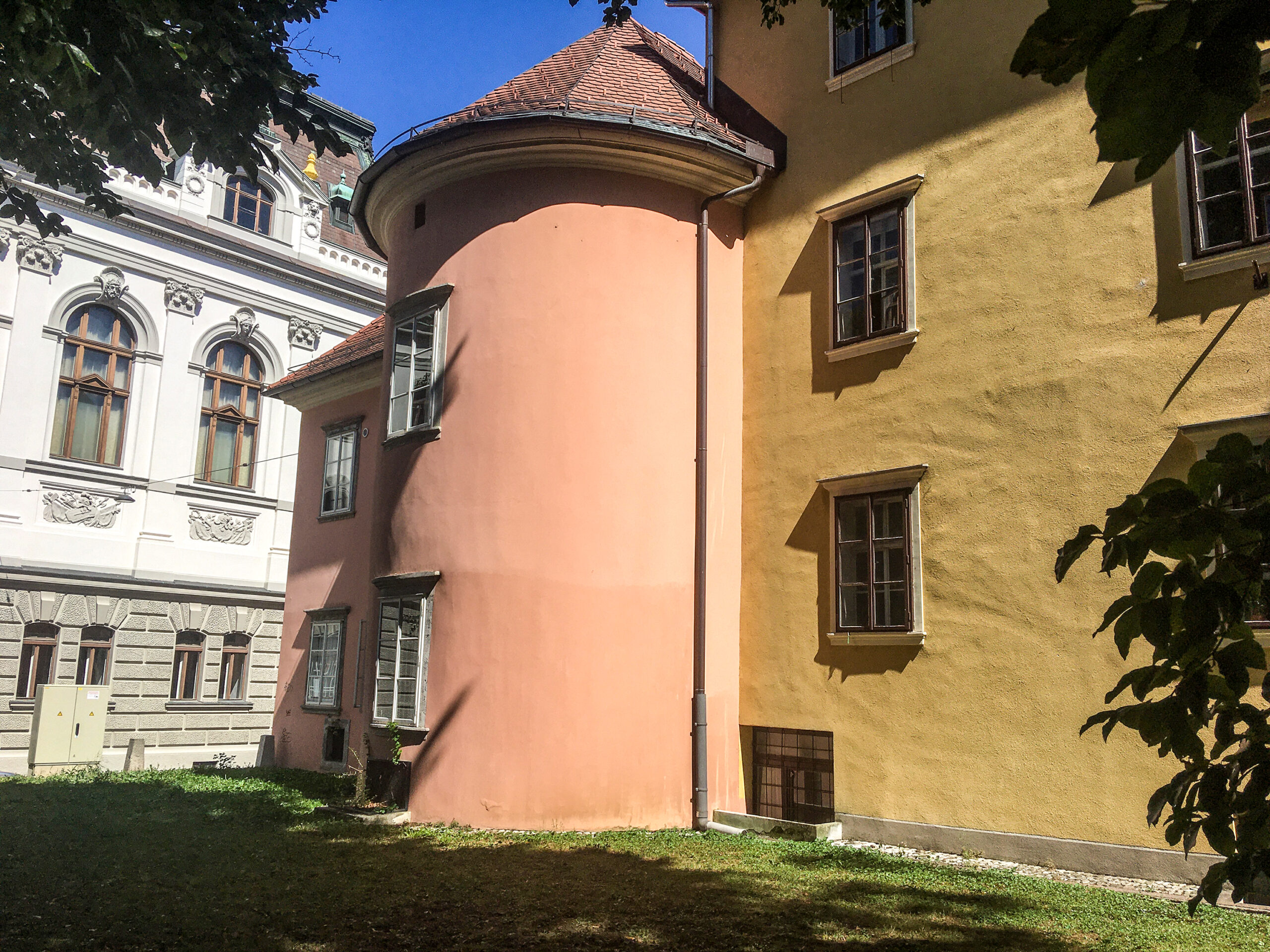
We pass the masterpiece of Plečnik and the Napoleon monument where once the Deutsches Tor, one of the six Medieval gates of Ljubljana, led into the walled city, and we face the ancient complex of Križanke, the monastery of the Teutonic Knights, and the church from 1715 that was built on the foundations of the older Church of the Cross from 1268 (or 1277), which was (probably) built on the foundations of the first Templar church from the late 12th century.
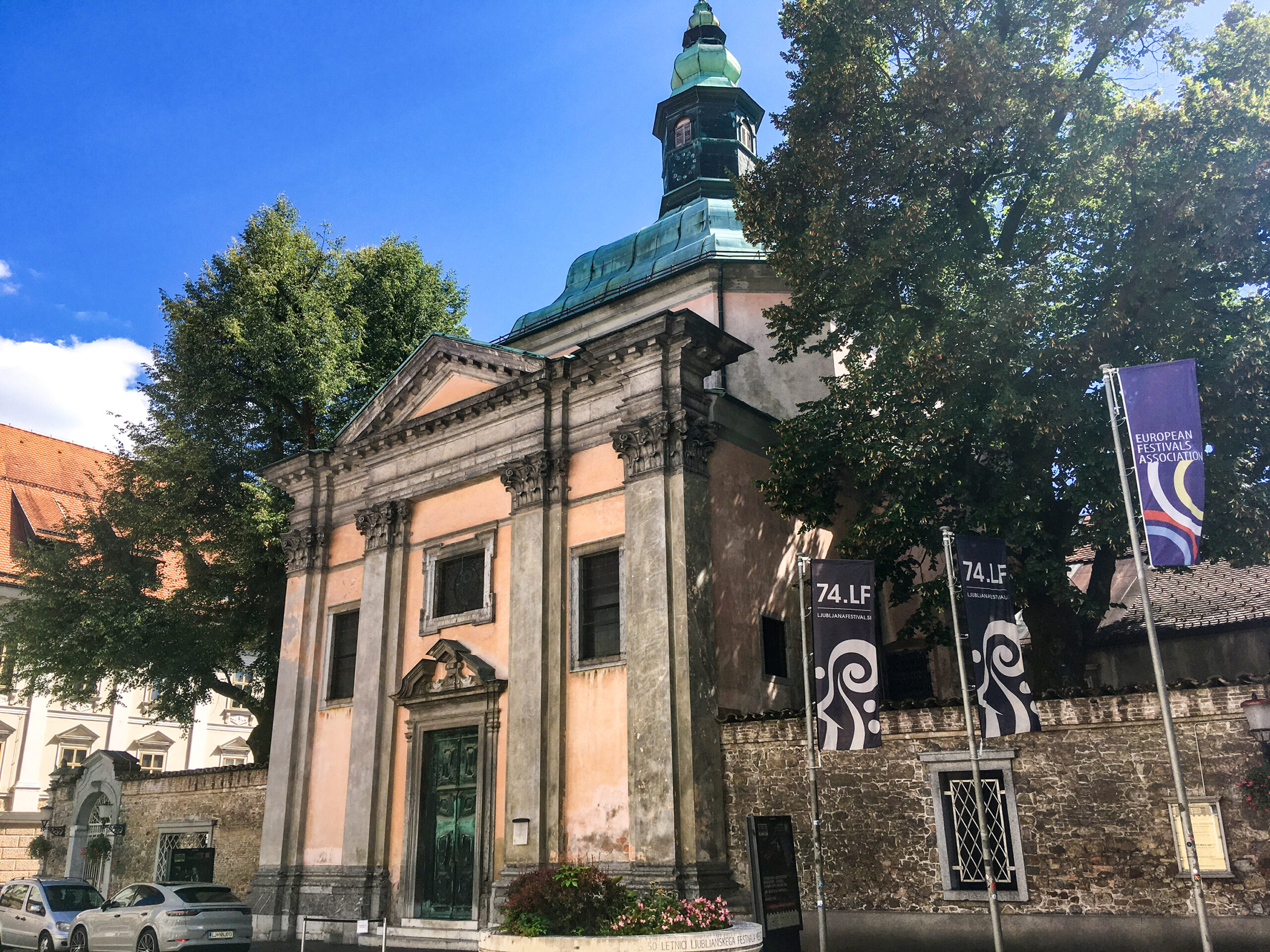
This was all very urban, and very old. Now we are at the south-western corner of the former walls, and the road going down to the Ljubljanica River covers the Medieval defensive ditch, Graben. Crossing the road means going extra muros, into the Vorstadt that is almost as old as Ljubljana itself.
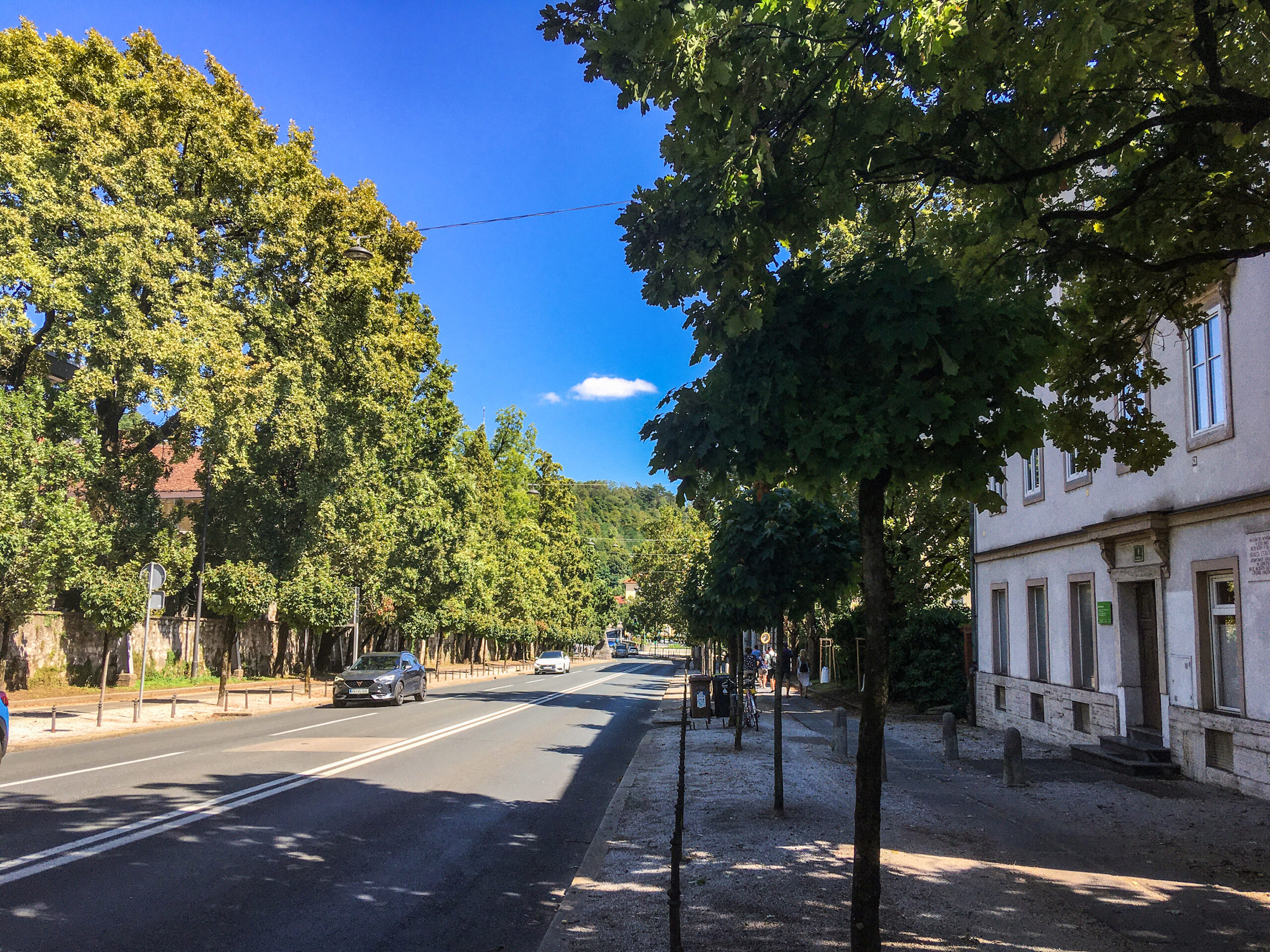
And it’s wondrous. Welcome to Krakovo.
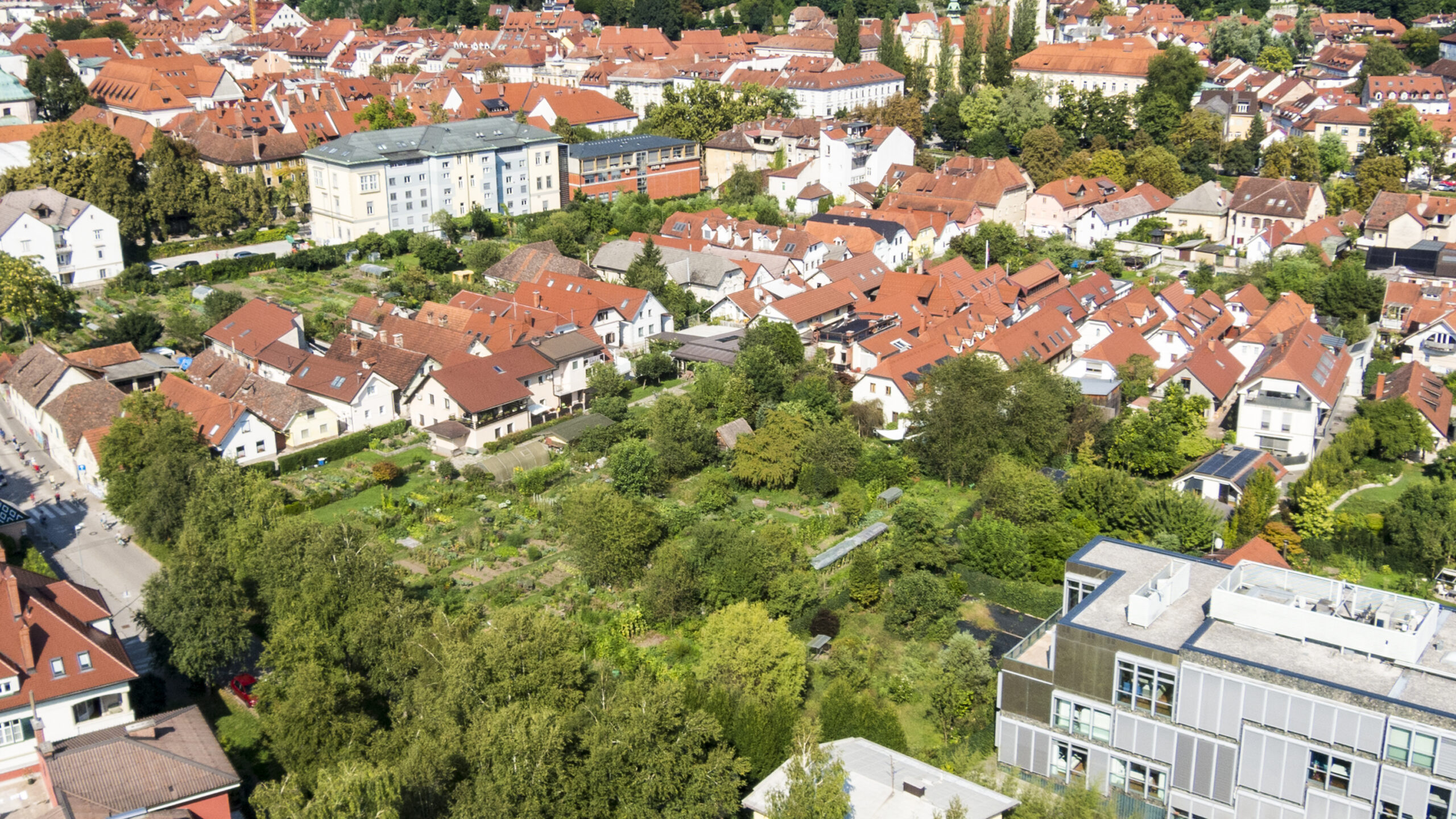
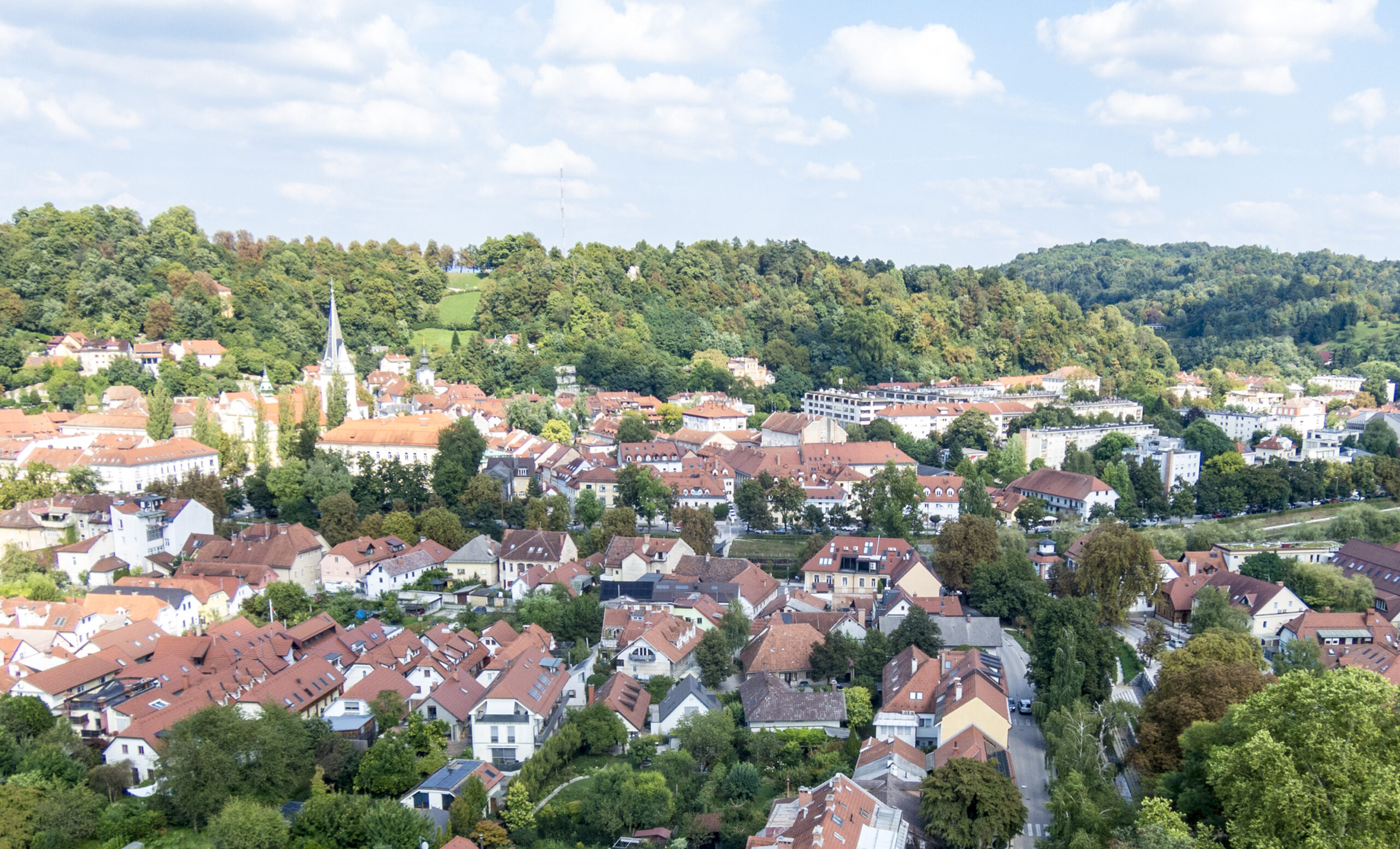
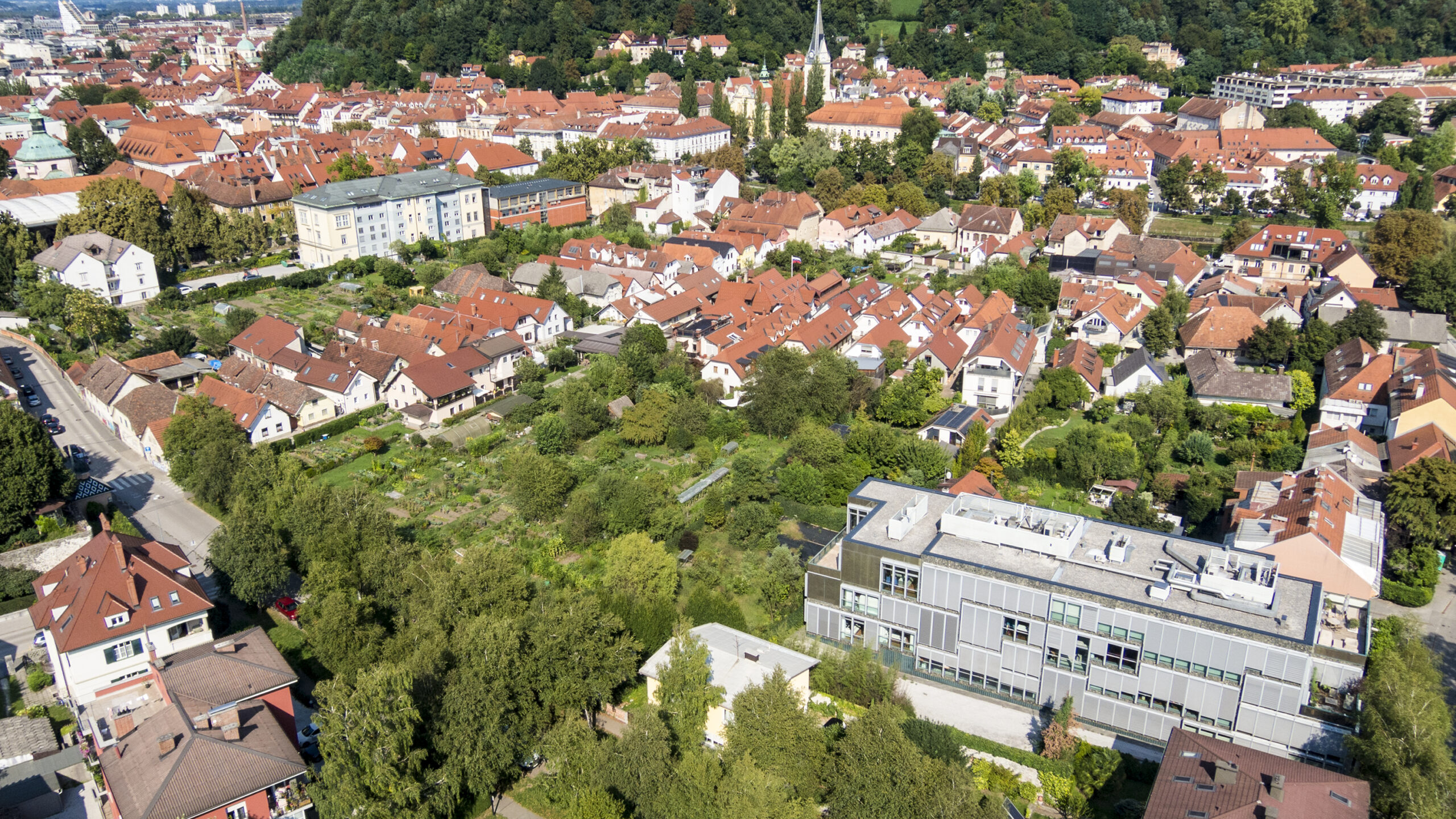
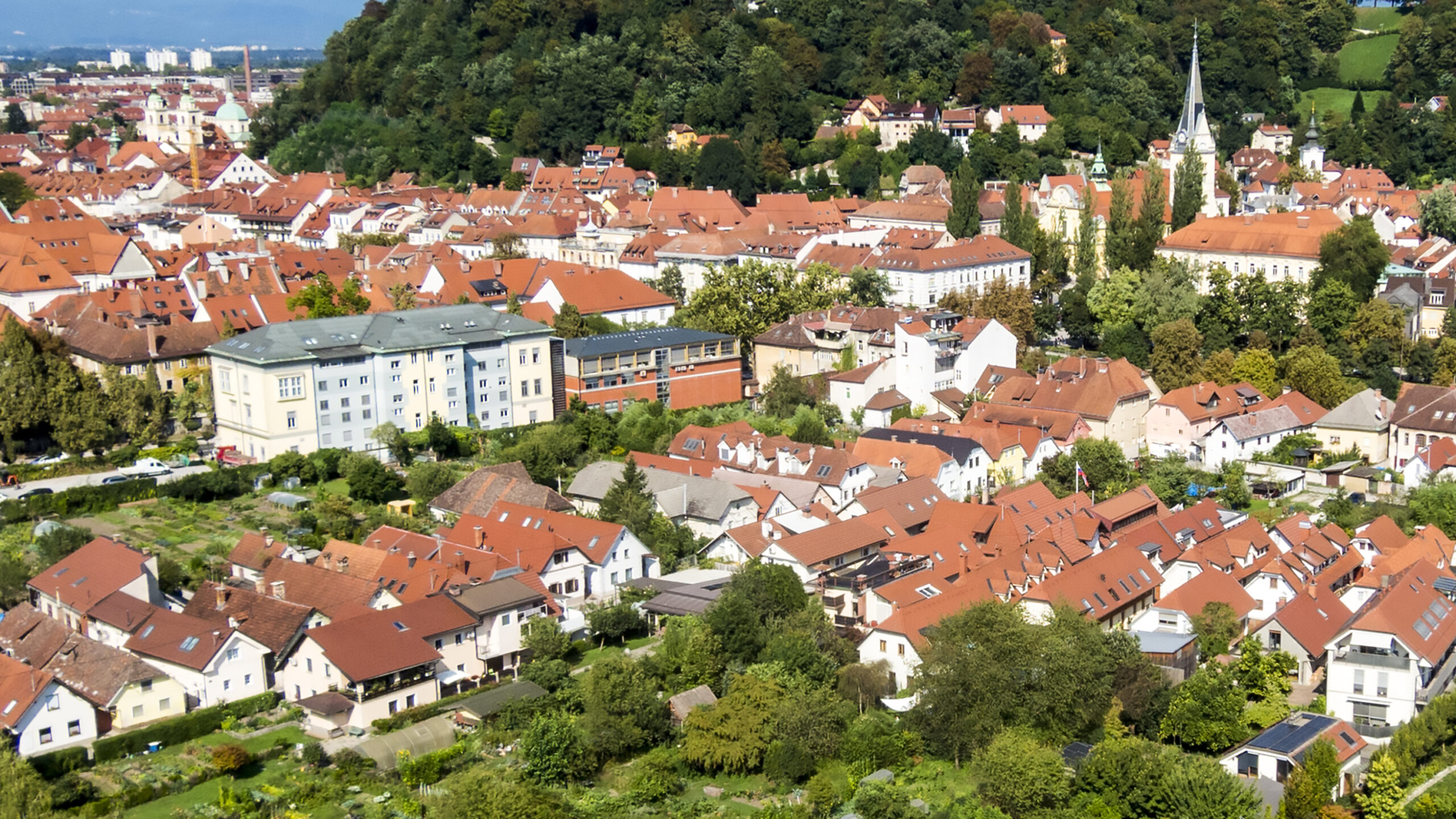
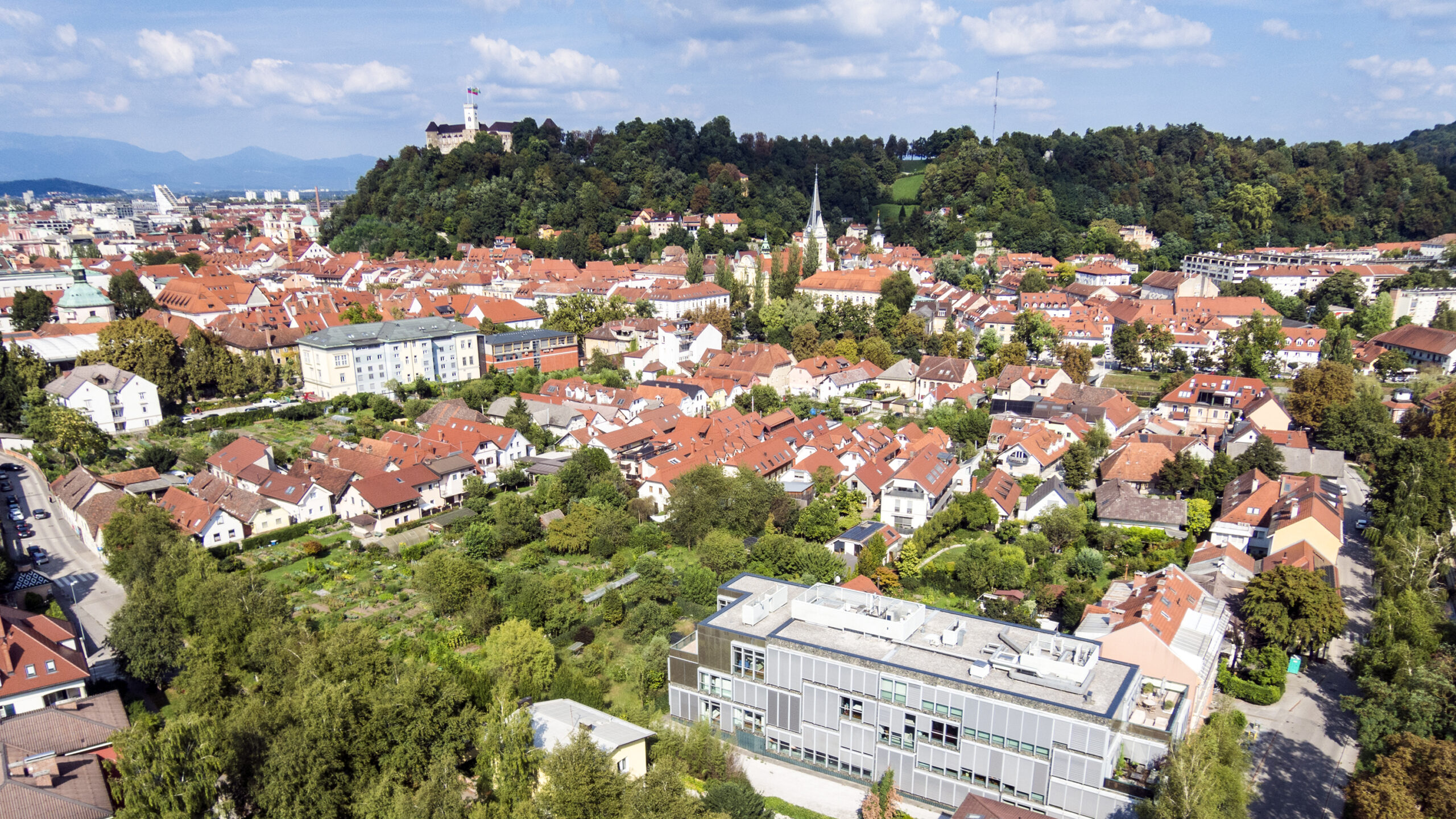
A cluster of humble one-storey houses with their shorter sides facing four narrow lanes. Gardens covering more than half the area of this mismatched rectangle. It has a nice name: Krakovo, coming either from krak, a local name for a species of starwort inhabiting slowly moving waters and ponds, or, more romantic but much, much less plausible, from Krak, a (barely attested) Slavic god.
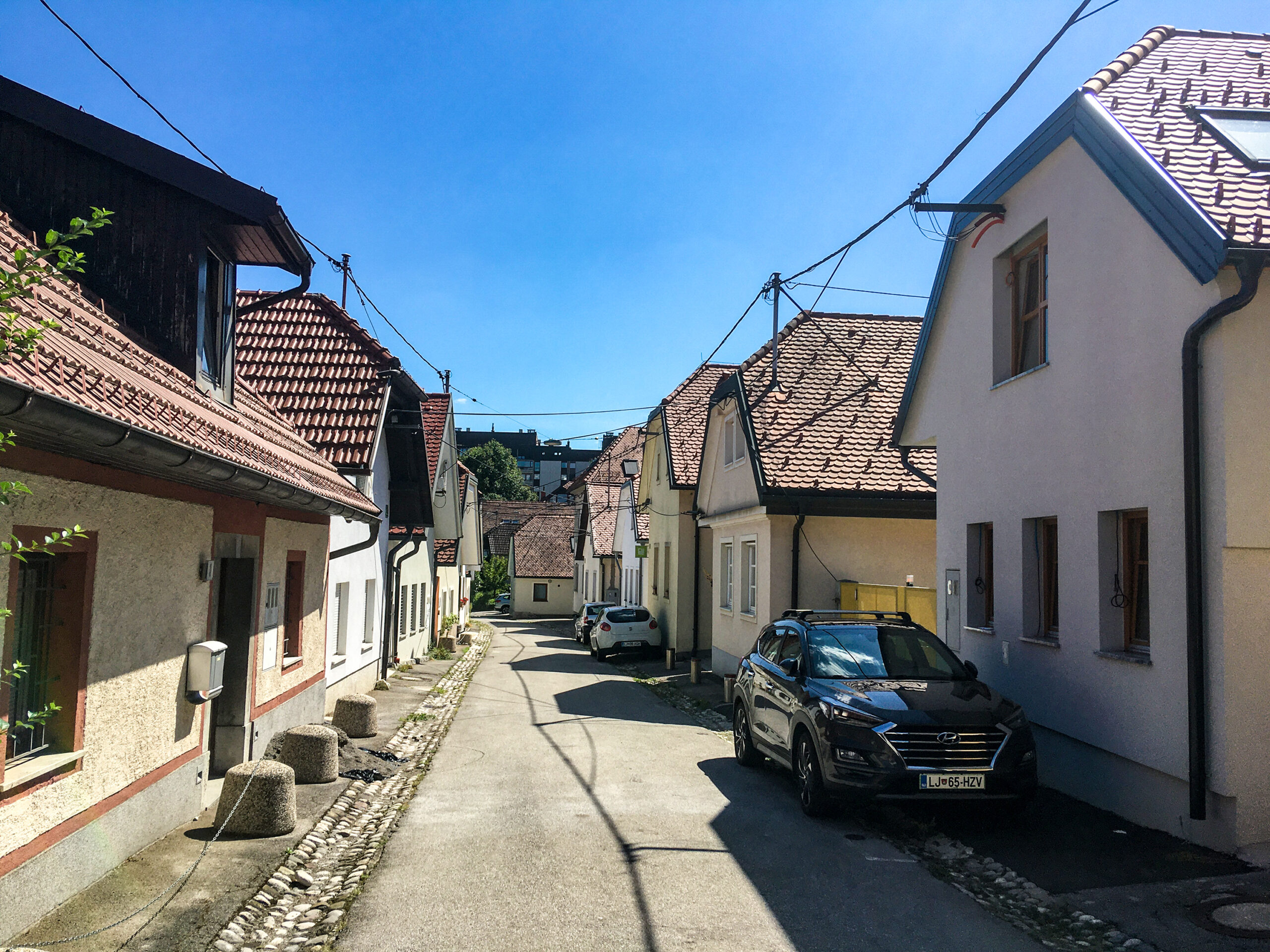
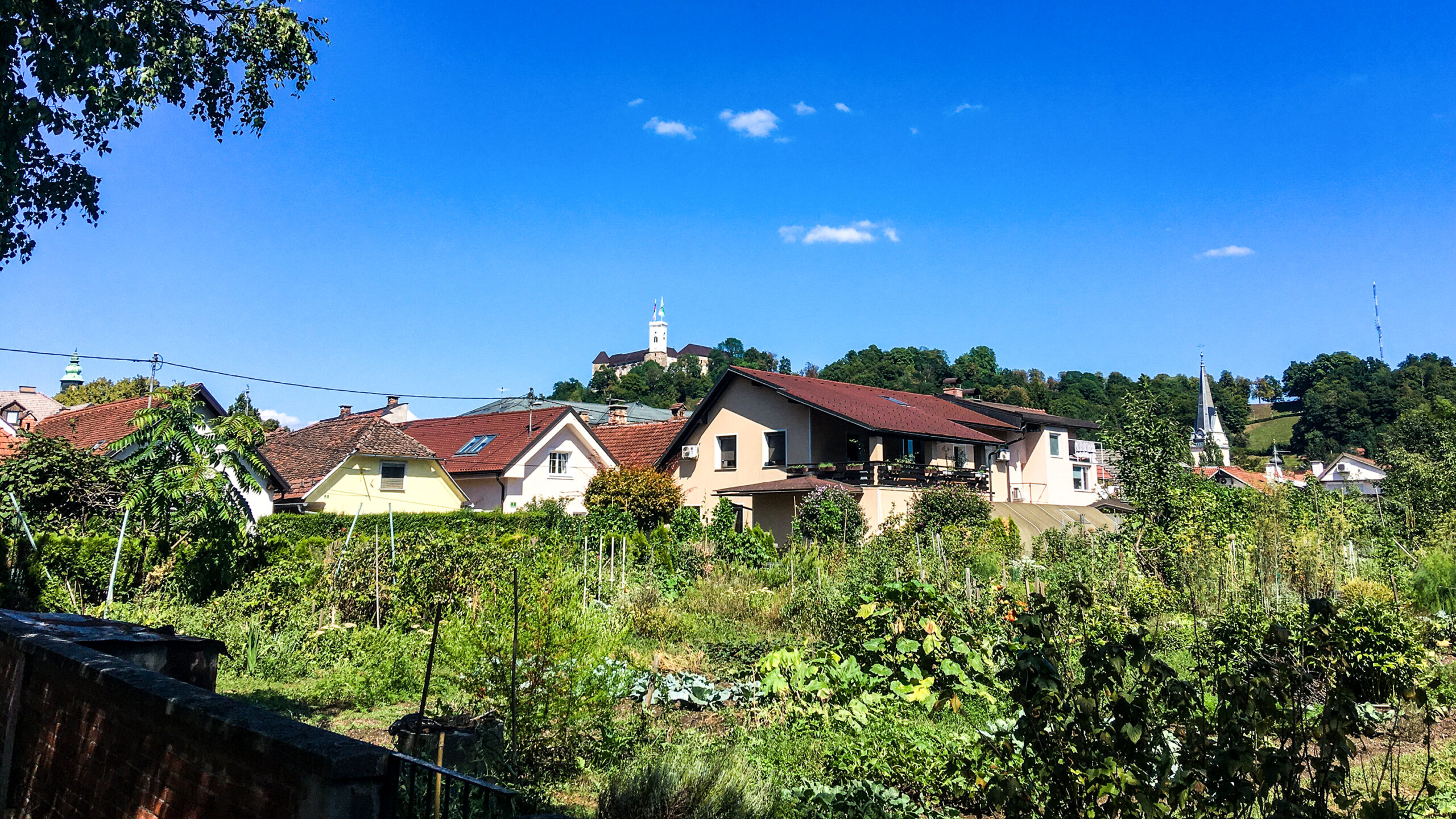
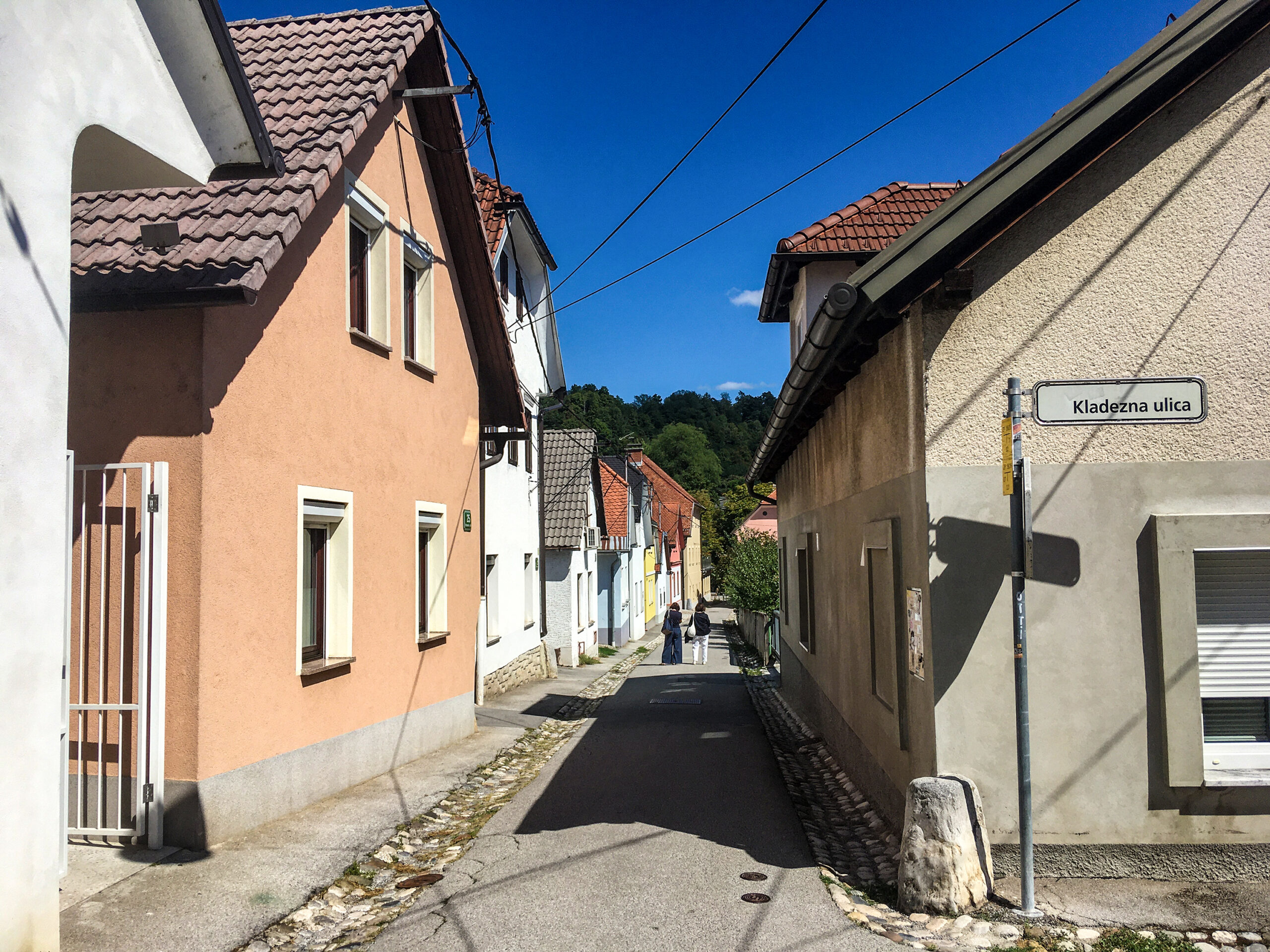
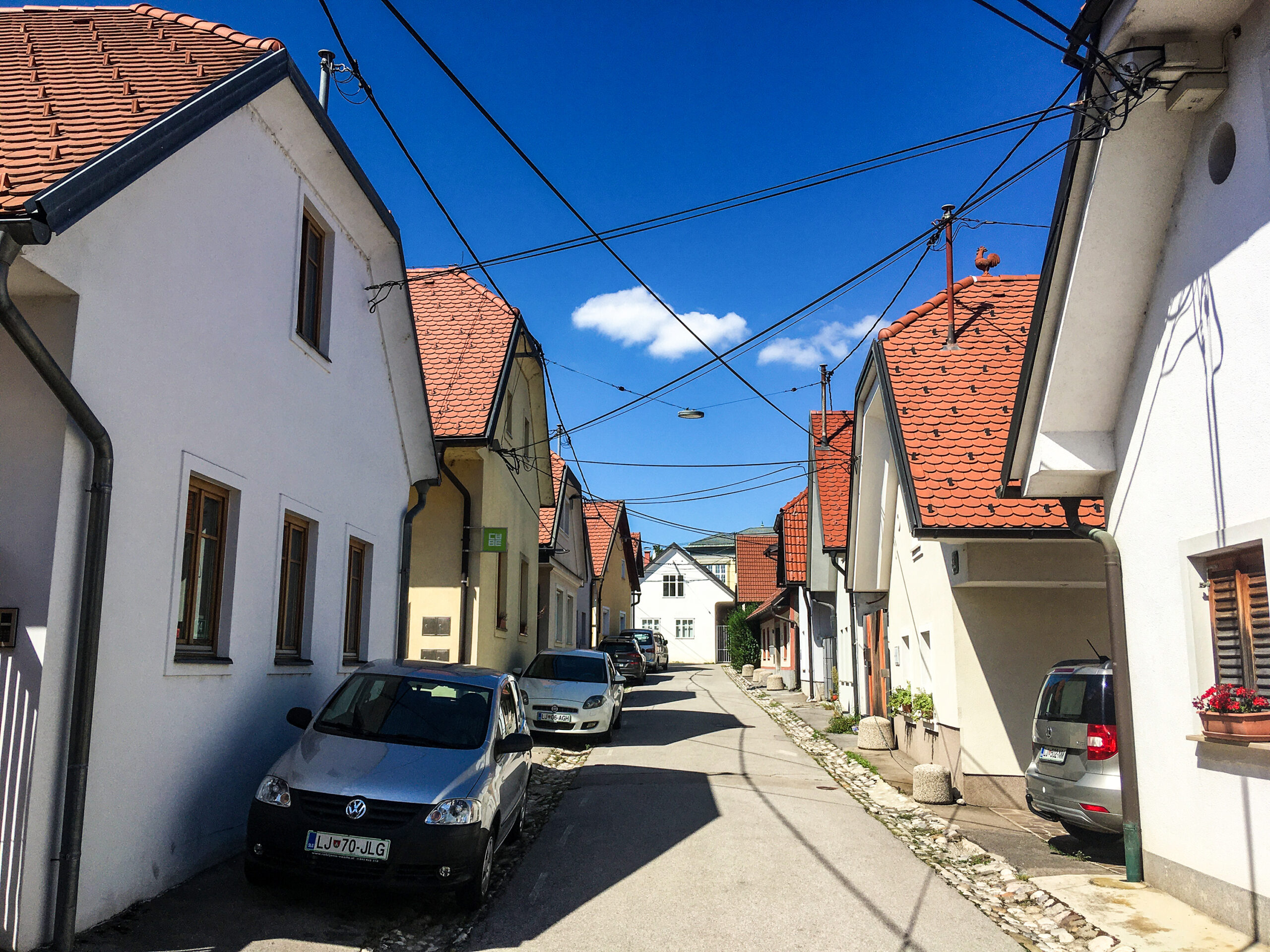
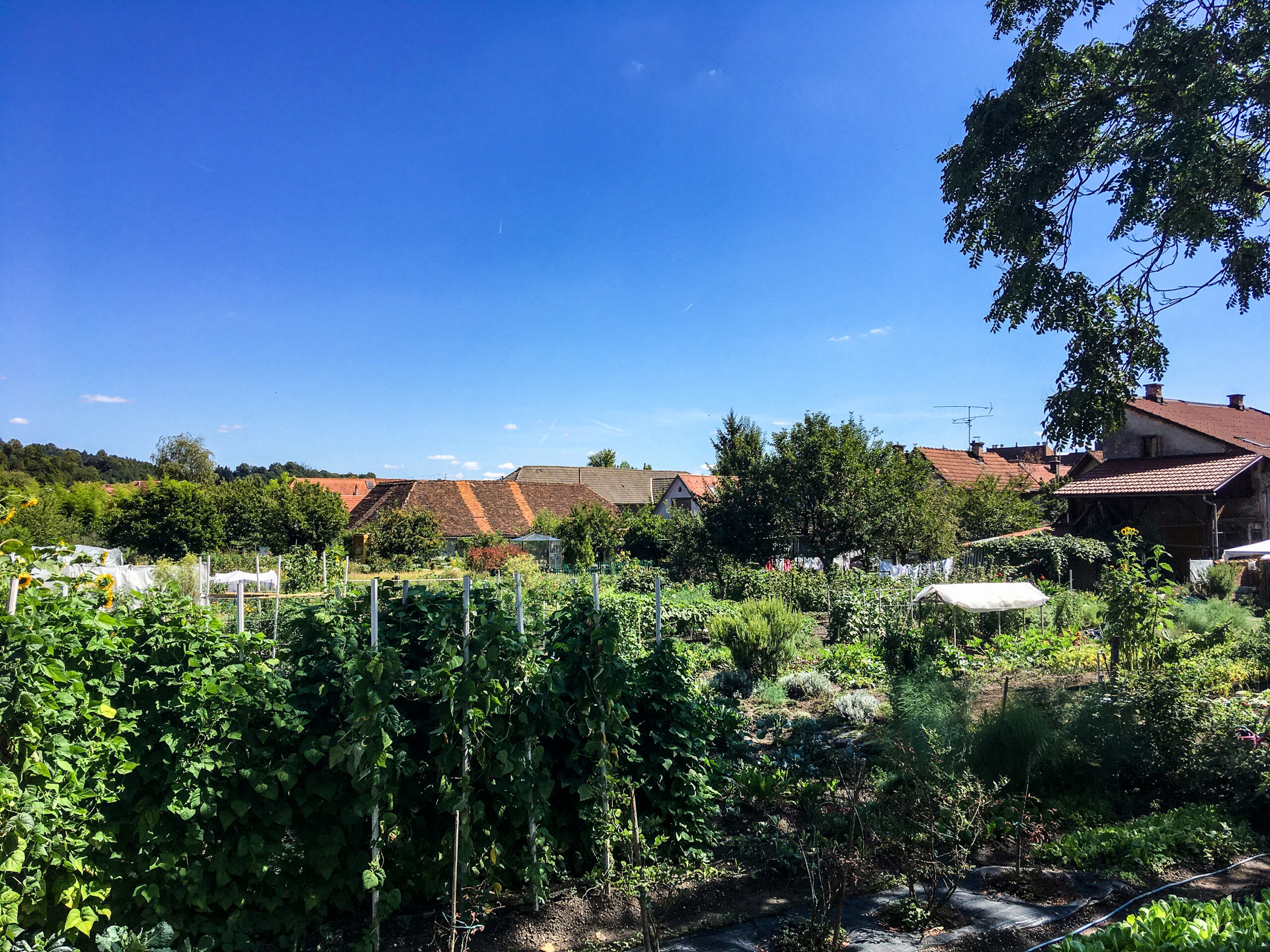
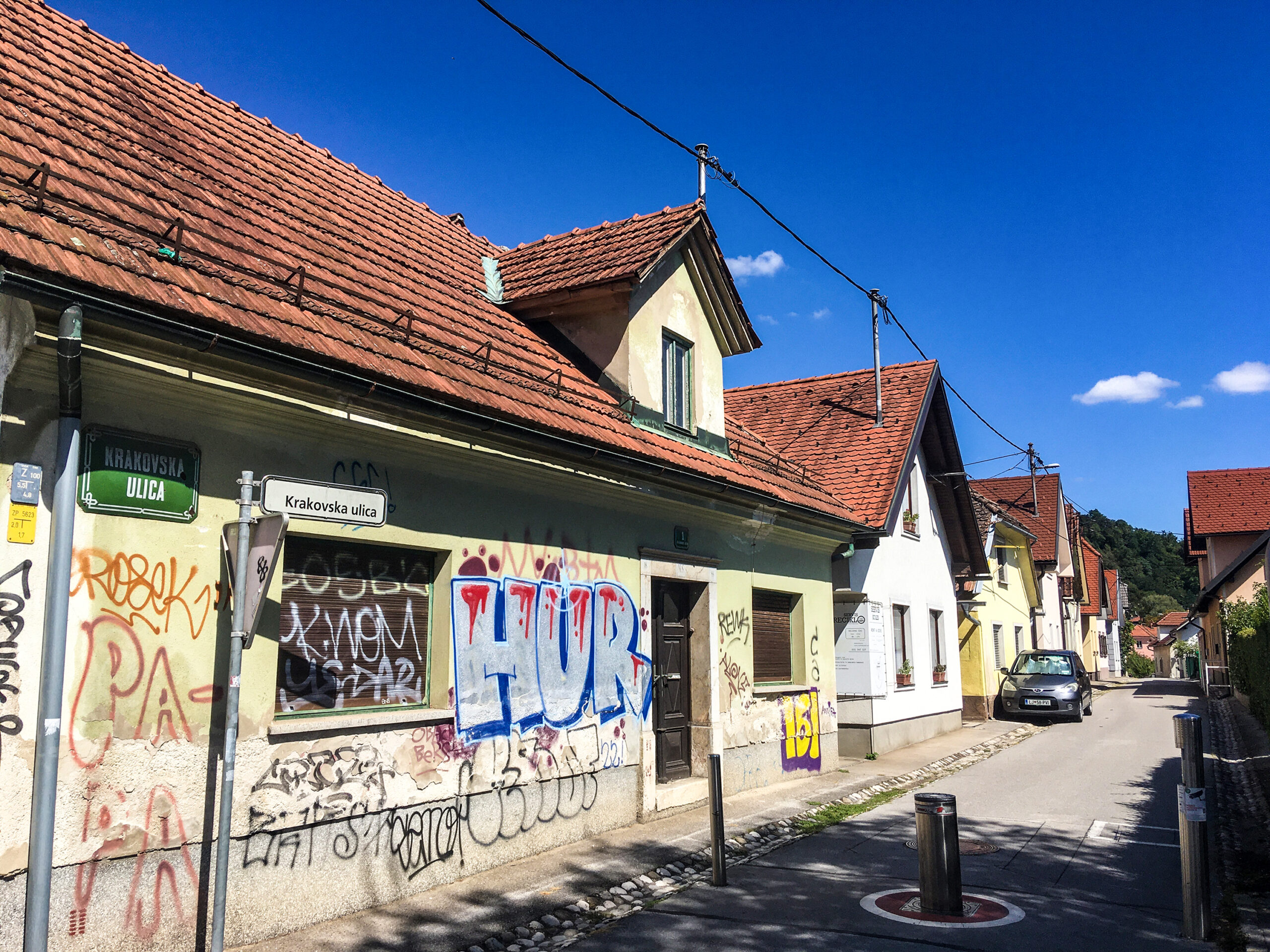
The first question about Krakovo is almost invariably: what the hell is this place? A village in the middle of the city? What are these little houses and sprawling gardens all about? How is this even possible, given the centuries of greed-driven real estate development? Why does it still exist? Well, the answers are almost as bizarre as Krakovo itself.
Because listen, Krakovo has come unstuck in time.
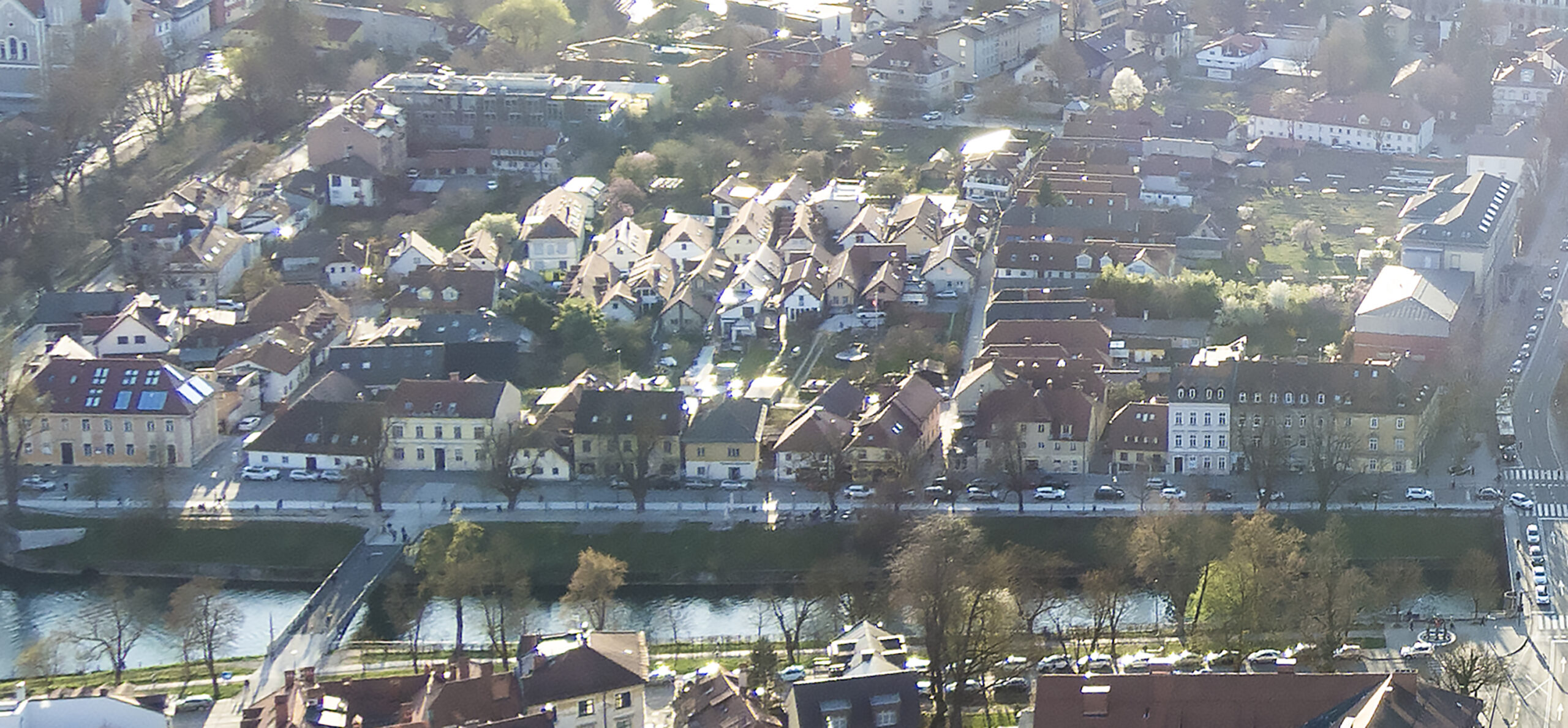
A cluster of humble houses – a flock would be more appropriate, as the dwellings look like they just landed for a brief moment to rest and relax before they must return to their unfathomable travels – lining the streets forming a T in the middle of a garden. A village that was never a village. An almost-island, nested between the Ljubljanica, Gradaščica and Graben ditch. Krakovo.
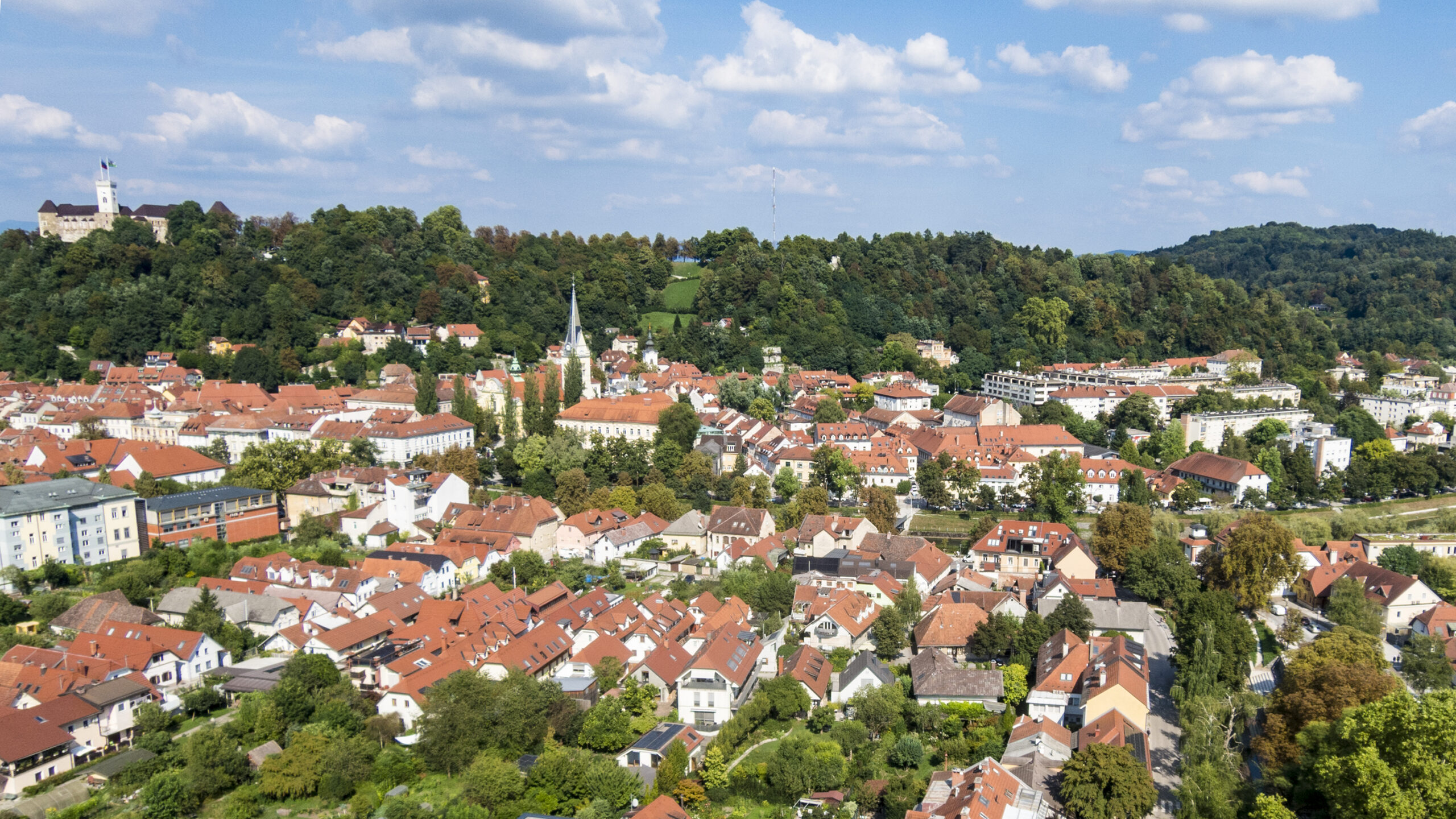
The Teutonic Order of the Cross began developing this area following the first colonising steps of the Templars. In 1270 they bought six Hubes (small farms) from a ministerial von Falkenberg; seven years later, this generous ministerial gifted the Order more land, and in 1280 a burgher, Nicolas Porger, gave them some more inter Purchstal et flumen minus dictum Laybach, between the ruins of Emona and the Little Ljubljanica (i.e. Gradaščica) River. Ever since, for three quarters of a millennium, Krakovo is … well, Krakovo.
The documents and charts tell us about Hubes, small farms, but Krakovo, covering less than six hectares, was never a true, agricultural village. Soon after Krakovo was in the hands of the Order of the Cross, the Novi trg area was already being gentrified, so the Kommende relocated their fishermen from Breg to Krakovo. Fishing was a lucrative business. Friday fasting was a big thing back then, and fish, crabs, and frogs were not considered meat by the pious (and the valiant monks of the Cross were really pious). The fertile land around the dwellings was divided into long, narrow gardens, and Krakovo soon became the Garden of Eden … that is, of Ljubljana.

Krakovo. Where all men were fishers. And women grew icebergs.
No, for real. The iceberg lettuce variety grown by the good women of Krakovo became the stuff of legends. The Laibacher Eis still exists (yet another thing from Krakovo that still exists as it did long, long ago) in three official and catalogued varieties, and the most famous is the phenomenal Blonde à bord rouge 2 variety, with a red border on its light yellow-green leaves. That Krakovo lettuce was exported all over Austria, and it is said the best restaurants in Paris were desperate for it.
It was the icebergs that defined Krakovo in the eyes of the people of Ljubljana for hundreds of years: the soothing sight of lettuce women pushing their carts filled to the brim with iceberg heads along the river to the Central Market every day, for hundreds of years.
From the 1490 Urbarium of the Order of the Cross, Krakovo was divided into Upper Part (by the Gradaščica River) and Lower Part by the Graben ditch, with 16 houses and 15 gardens in Upper Krakovo, and 23 dwellings (each with its garden) in Lower Krakovo: 39 houses altogether. Incidentally, this was a bad time for houses outside the Medieval walls, as in 1487 Emperor Frederick ordered all Vorstadts to be razed, lest they be used by the Ottomans to scale the walls. Thirty-nine houses is about half of what Krakovo can handle, and we have the receipts: soon after, there were 70 houses, 78 in 1750, 72 in 1798, 77 in 1931, and 78 today.
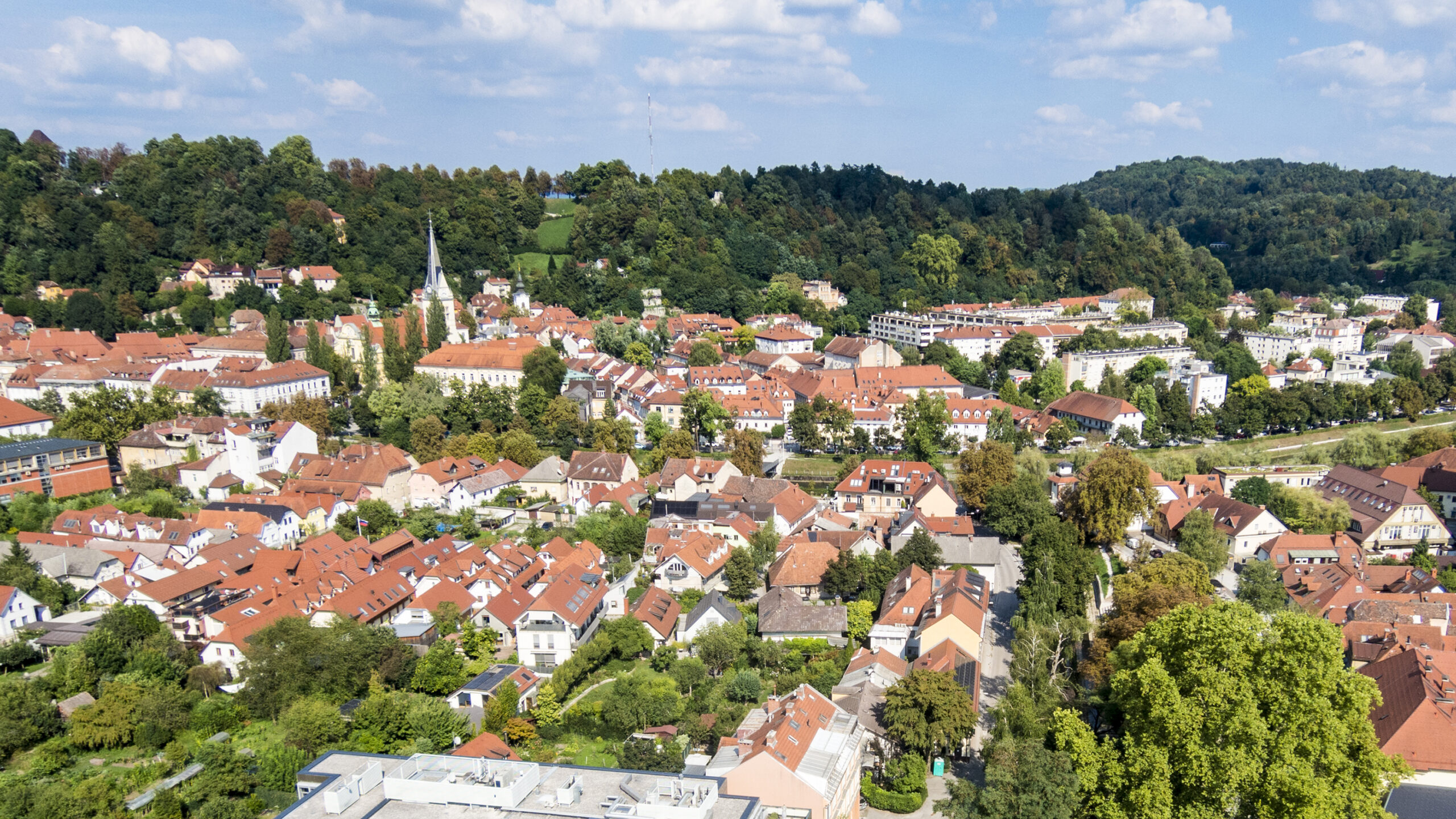
See, Krakovo might have come unstuck in time, but not in space. Krakovo is exactly where it is, and has been there since forever; the T of its two streets is recorded on every map, on every copperplate vista, on every painting and every aerial photo of Ljubljana.
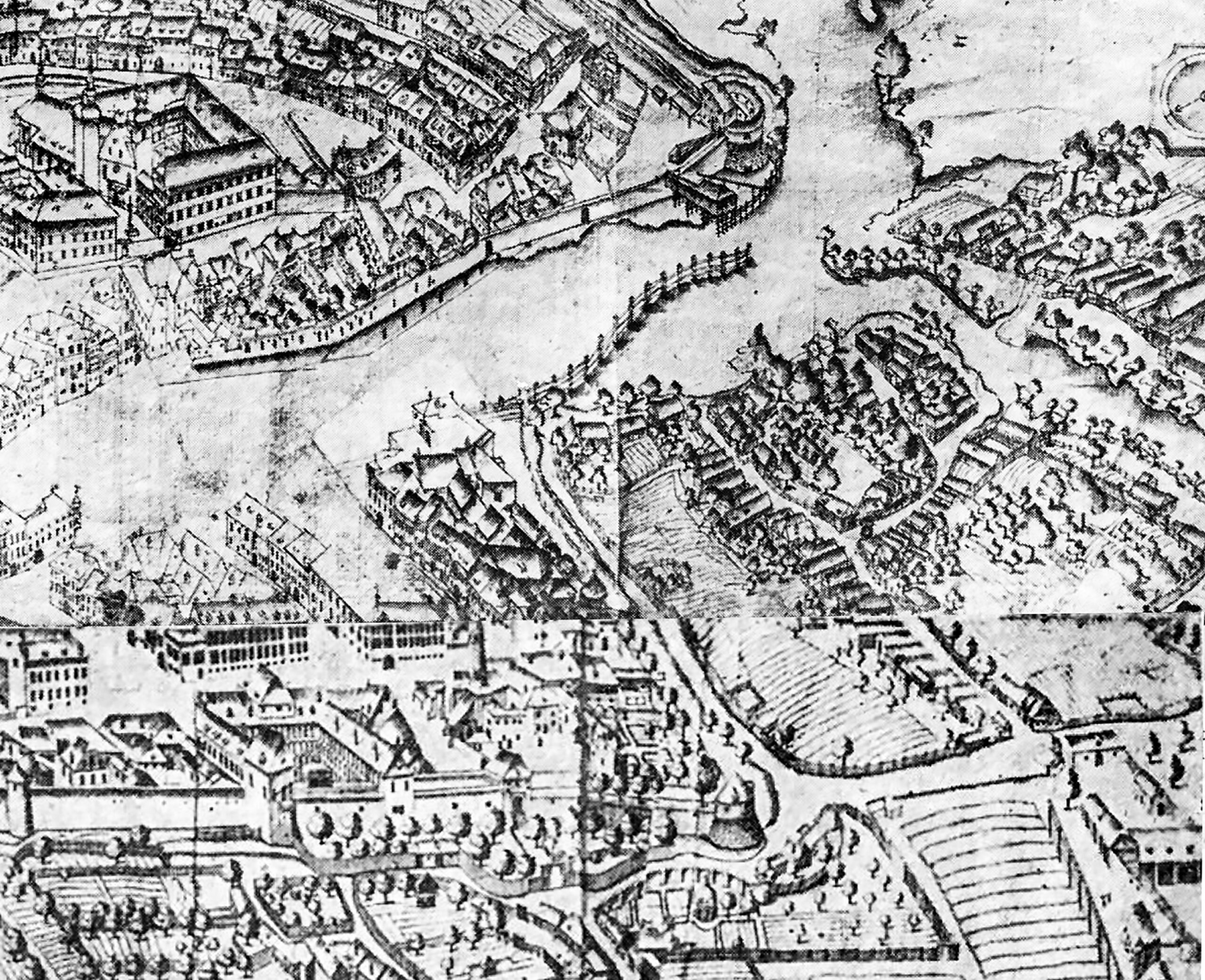
This is a part of a veduta of Ljubljana, an incredible and incredibly detailed perspective drawing made by Folbert van Ouden Allen for Valvasor back in the 1660s. Krakovo is there, of course; it has been there for almost 400 years – and apart from the vantage point and the angle of view, it is the same like in our kite aerial photos, taken another four centuries years after Folbert.
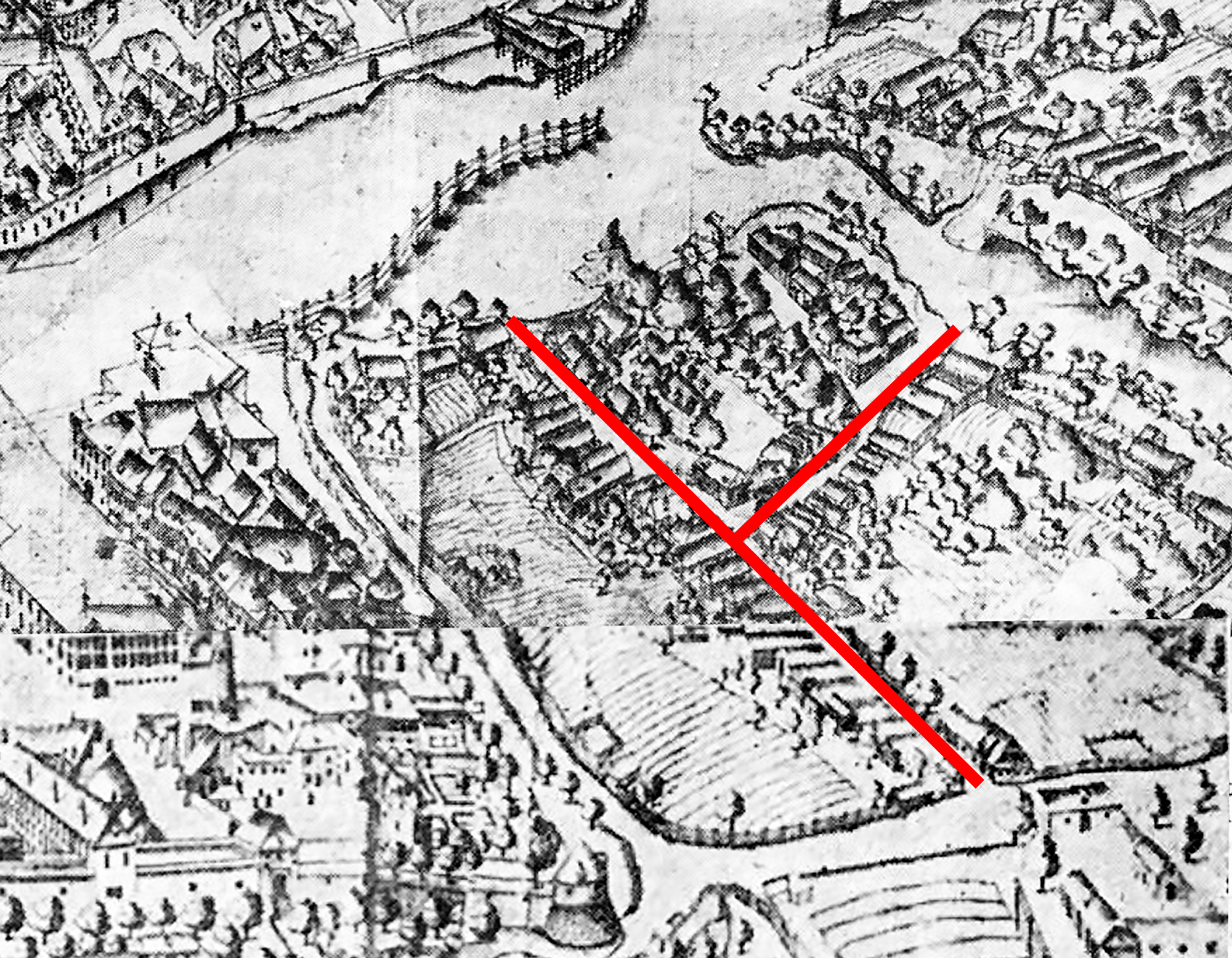
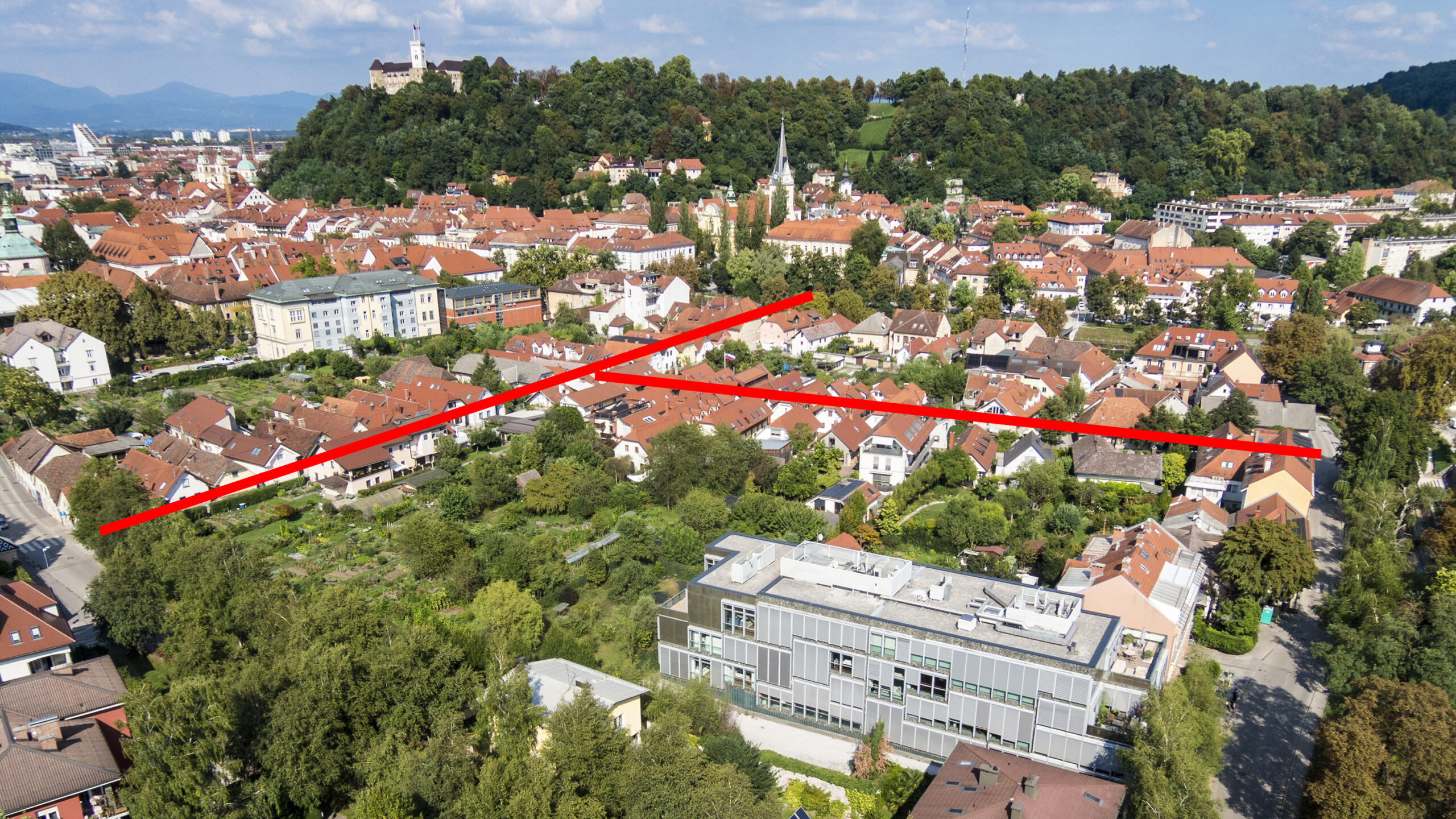
You can’t really tell when a view of Krakovo was taken. Apart, sadly, from that hideous vomit of a building, a symptom of shit that overflows the sewers when the indebted, the corrupt, and the stupid collude.
The maps change with the territory, and we can see how Ljubljana around Krakovo was expanding, metastasising, mutating into the city we know today. But Krakovo itself is immutable: on every map, the unmissable pattern of narrow paths with narrow houses and long, narrow gardens appears as a signature, a sigil, a proof that the map corresponds to the territory, that Ljubljana truly is Ljubljana.
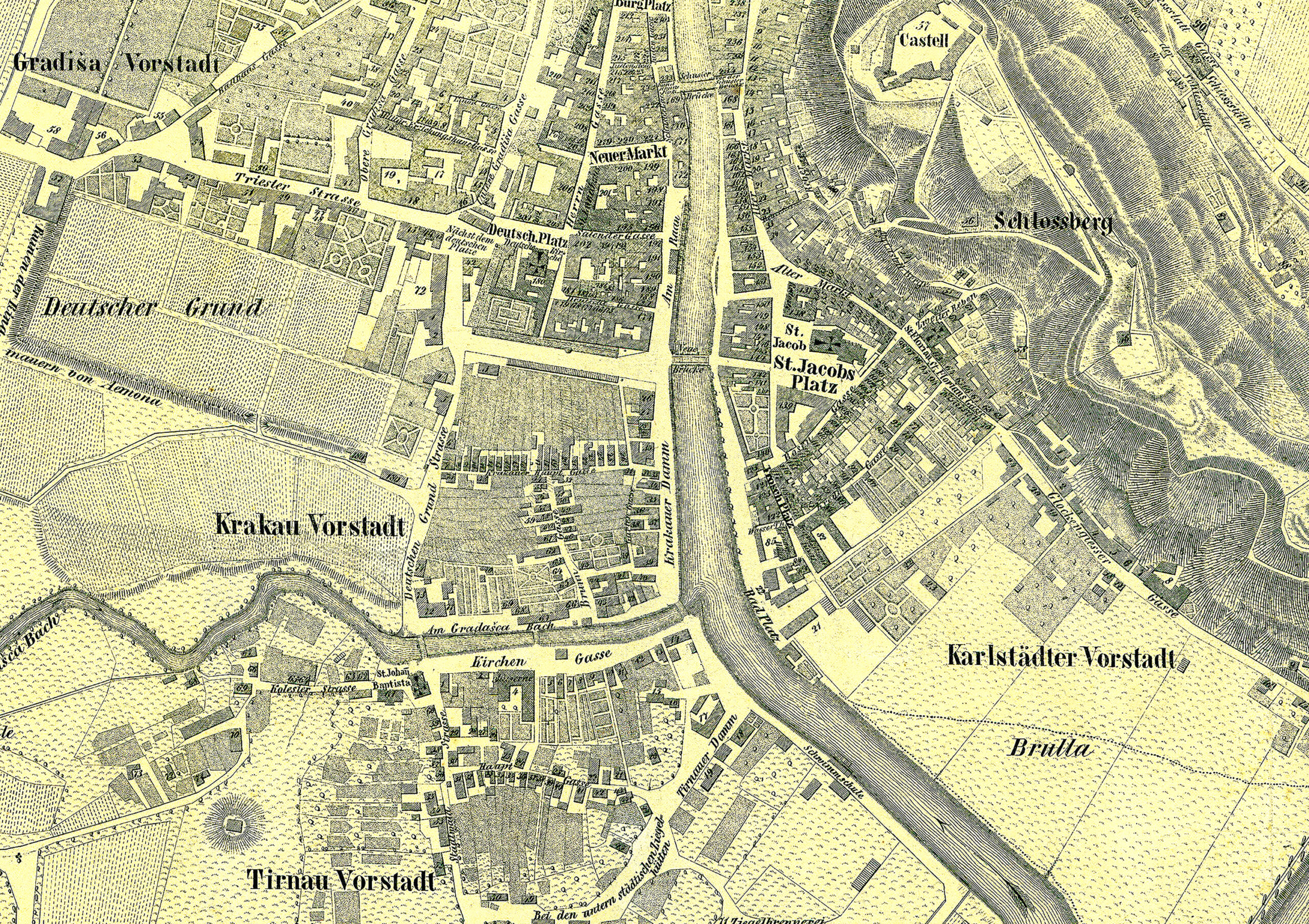
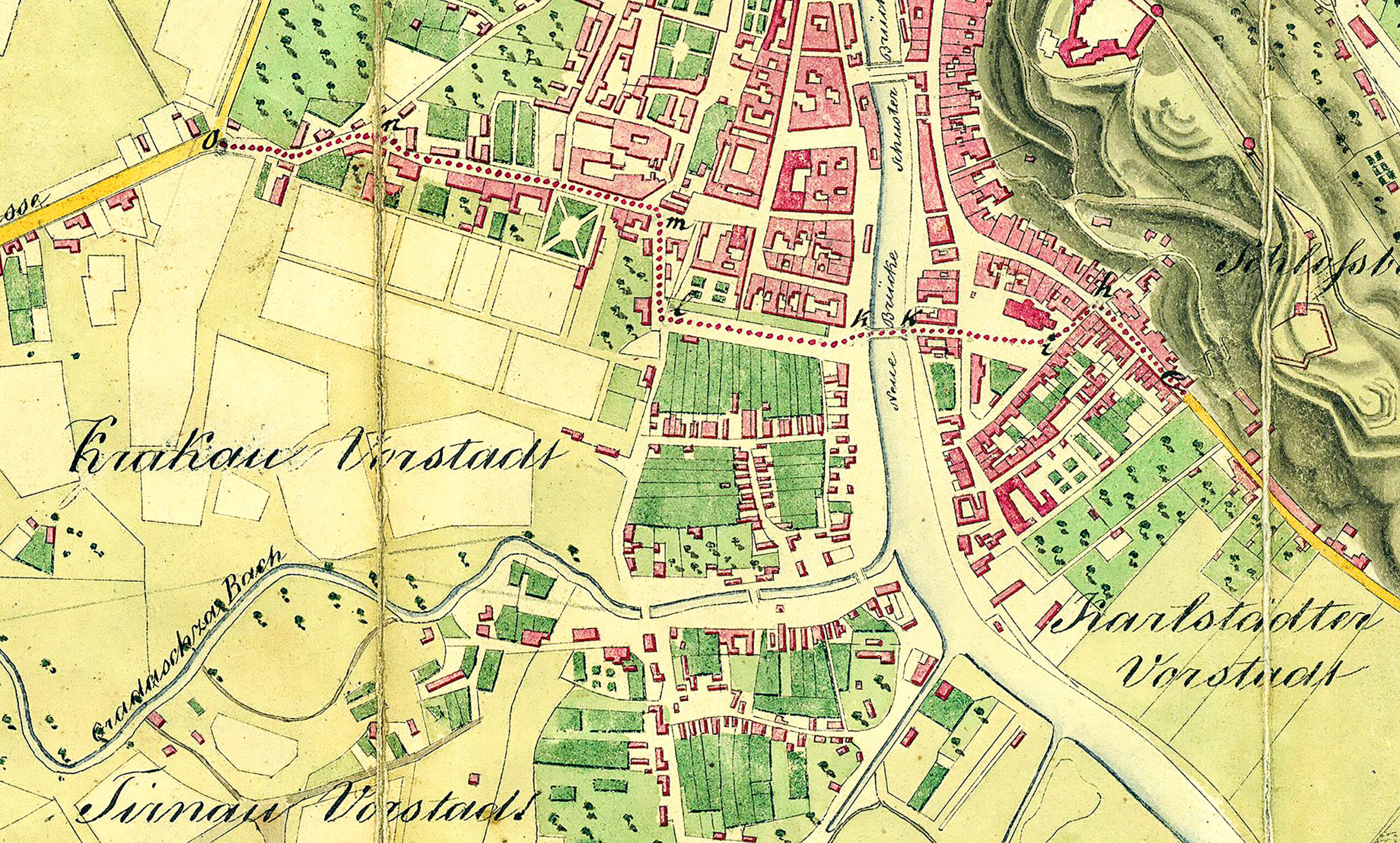

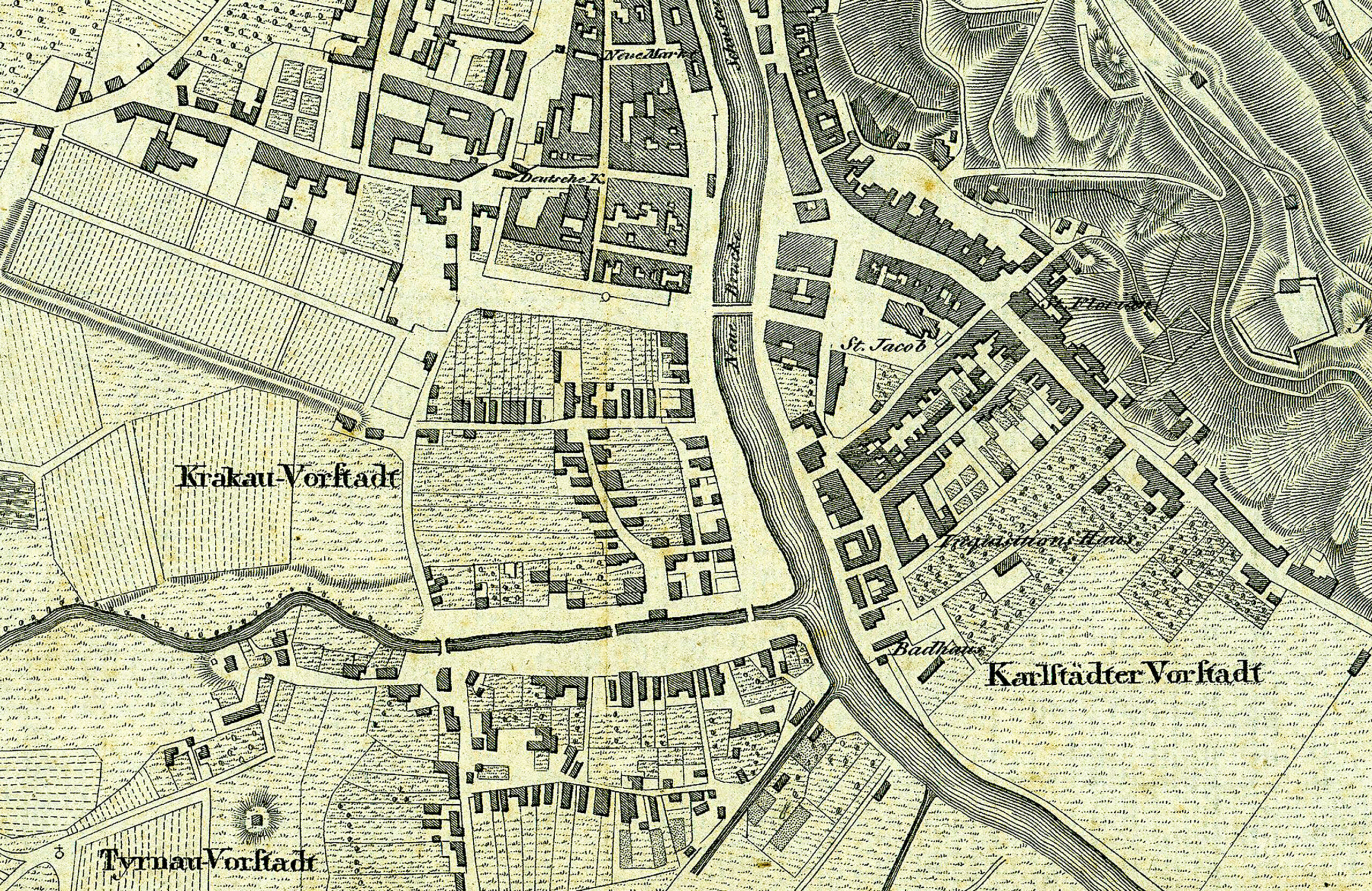

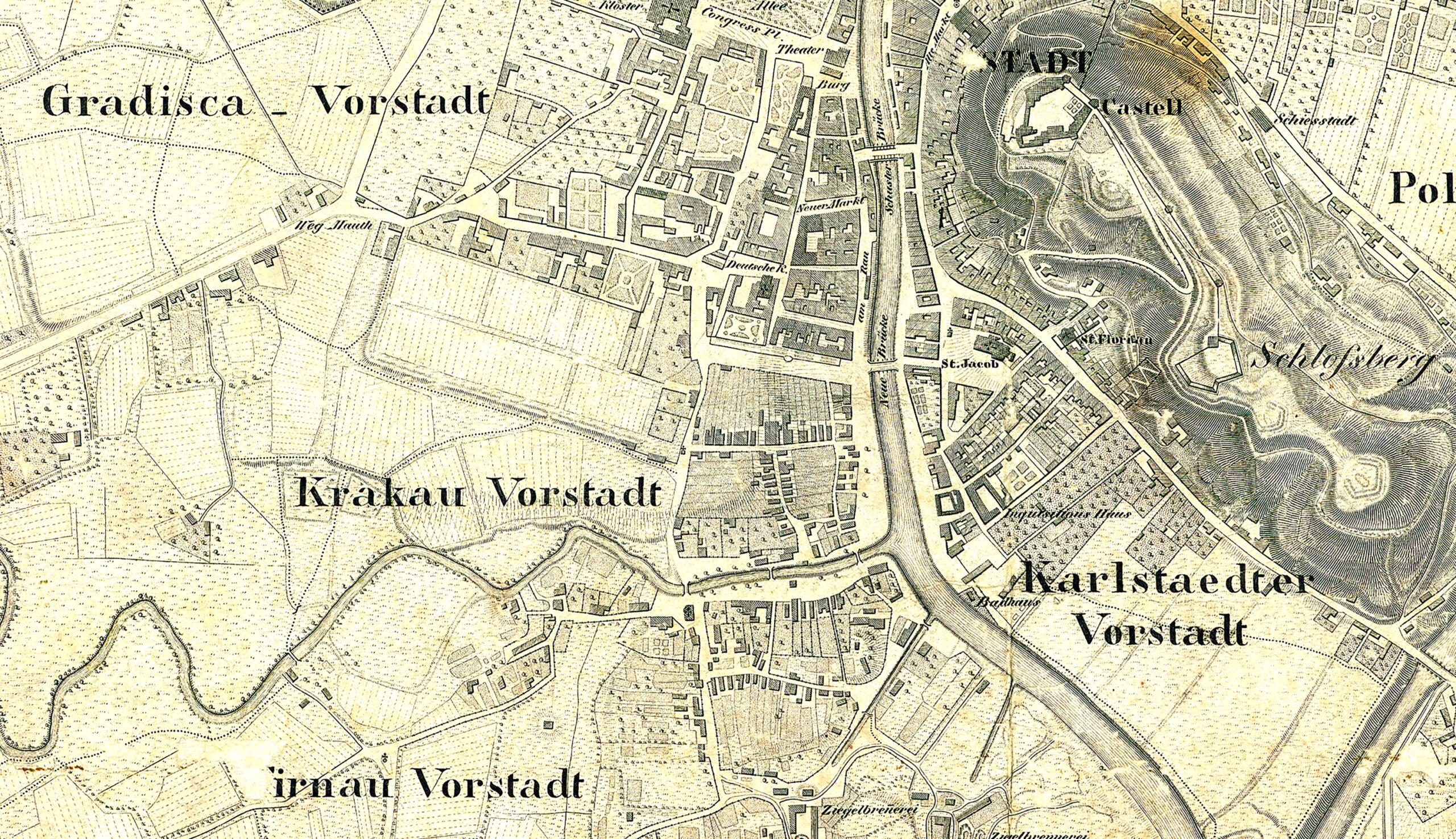
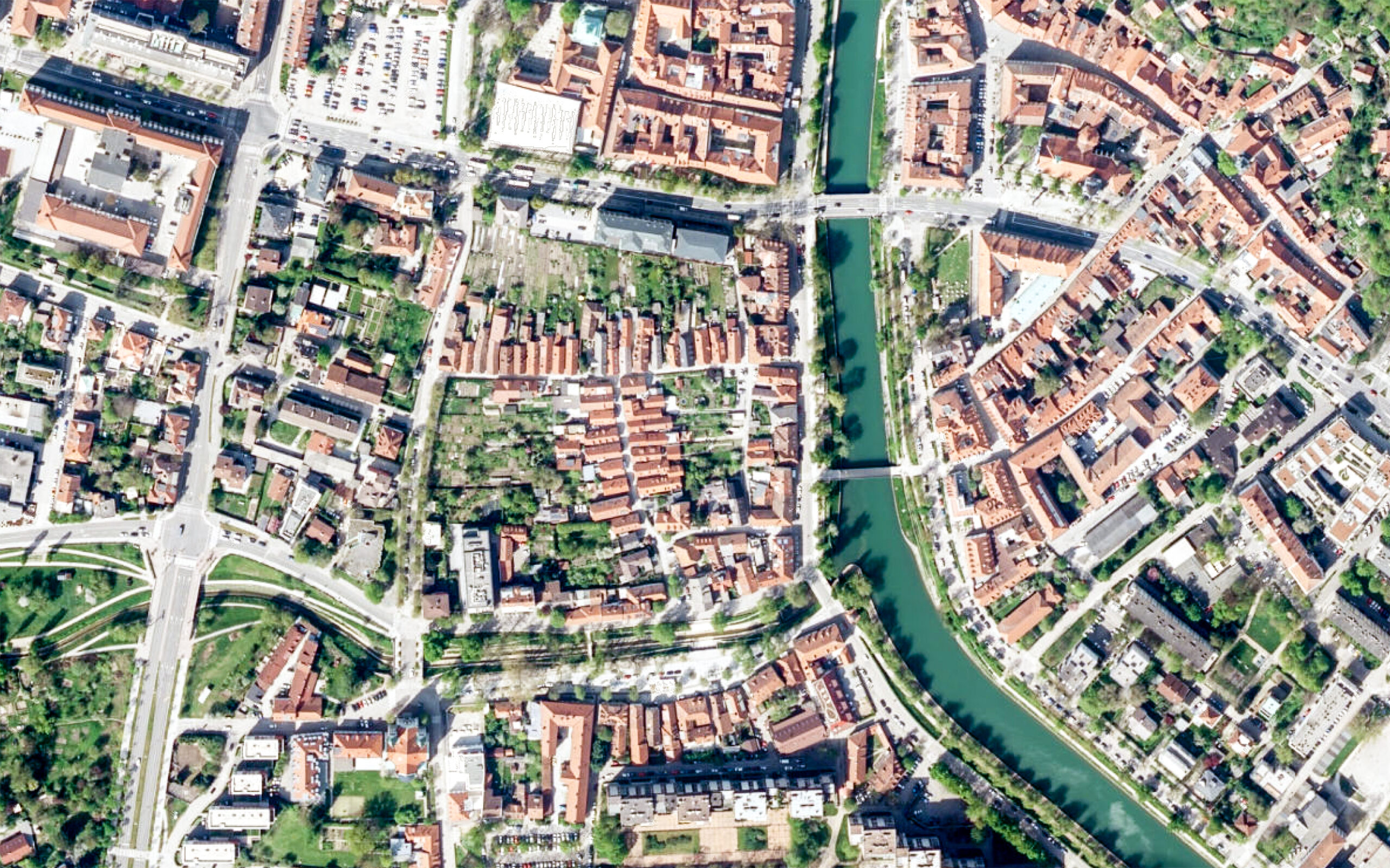
Sure, the town grew into the city, the rivers got encased in concrete, and hideous buildings encroached into what should be, what is, a sacred space. But Krakovo held and is holding on, as if fiercely protected by something … or someone.
The history was far from smooth sailing for Krakovo. It was razed in 1487, suffered bouts of the Black Death, and was devastated by a series of fires that reduced the Vorstadt to ashes. But like a Phoenix it rose back from them, the same as it was before, the same as it will always be.
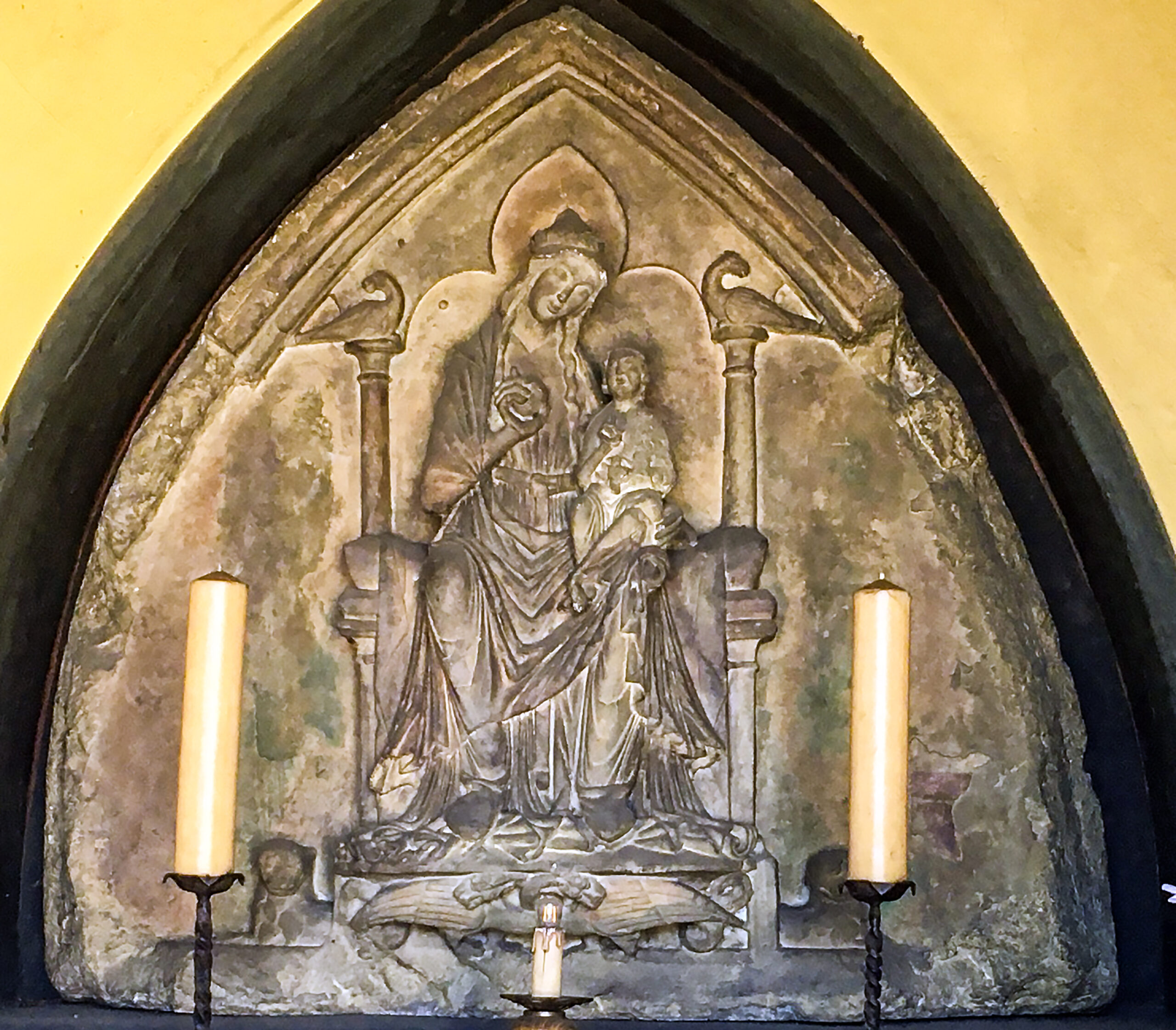
The old Church of the Cross, the one from 1267, had a beautiful stone relief of Mary the Helper of Christians with her child installed above its main entrance. For almost 300 years she greeted the pious, until the great Idrija earthquake of 1511 almost destroyed the church and the statue was relocated to the sacristy. It soon became famous for its magical powers; Dolničar writes of Miraculosa statua Commendae Labacensis.
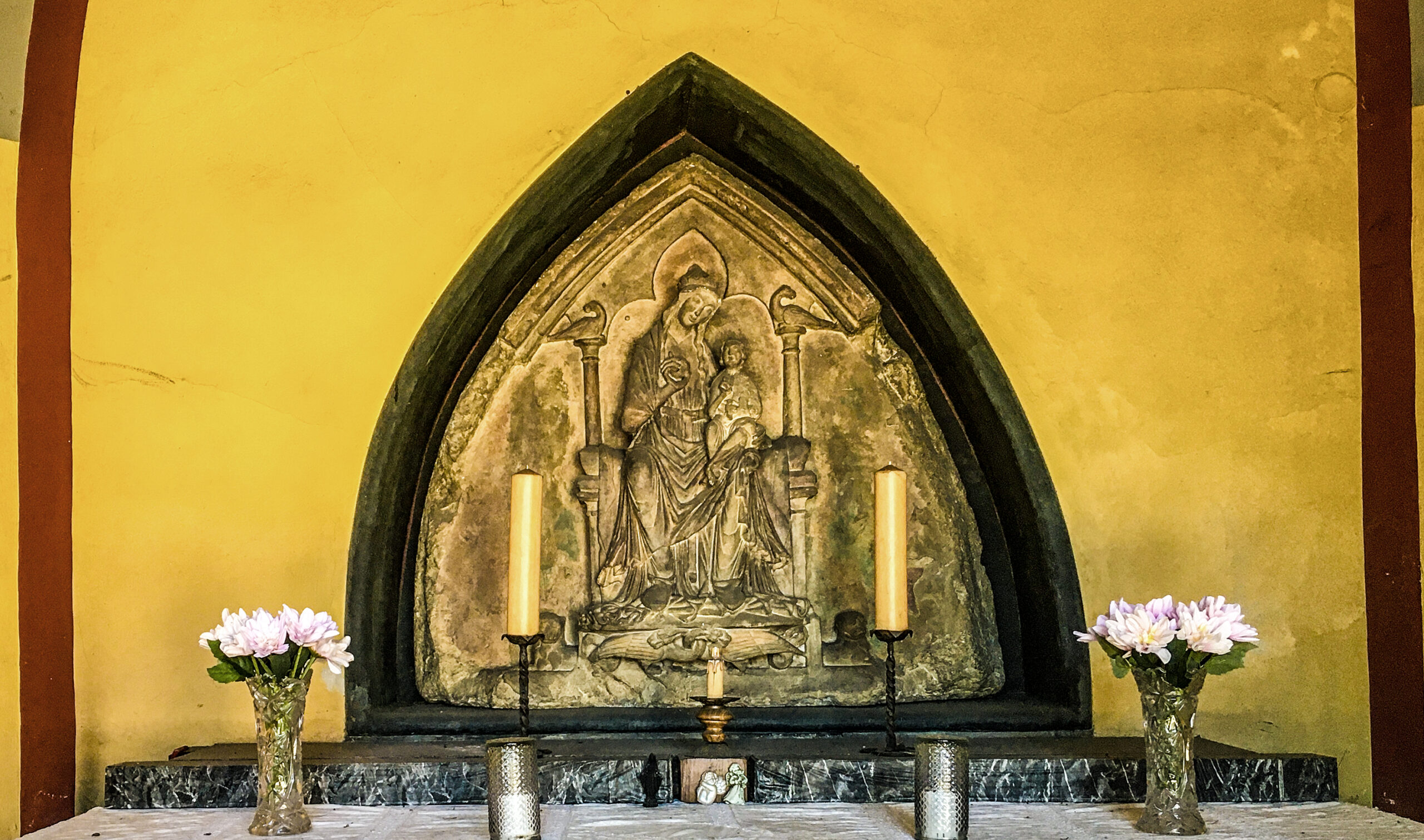
When this old church was replaced by the new one, the relief disappeared, and soon reappeared right in Krakovo. Was it a gift of the monks to their loyal serfs? Did the good people of Krakovo simply take her, feeling she was rightfully theirs; a thank-you for all the fish, for every inch of snow shovelled, for each day of toiling the fields of the Kommende?
In any case, the old stone Mary the Helper became the Madonna of Krakovo. A small chapel was built for her on the remains of the Roman wall, and she has guarded Krakovo ever since.
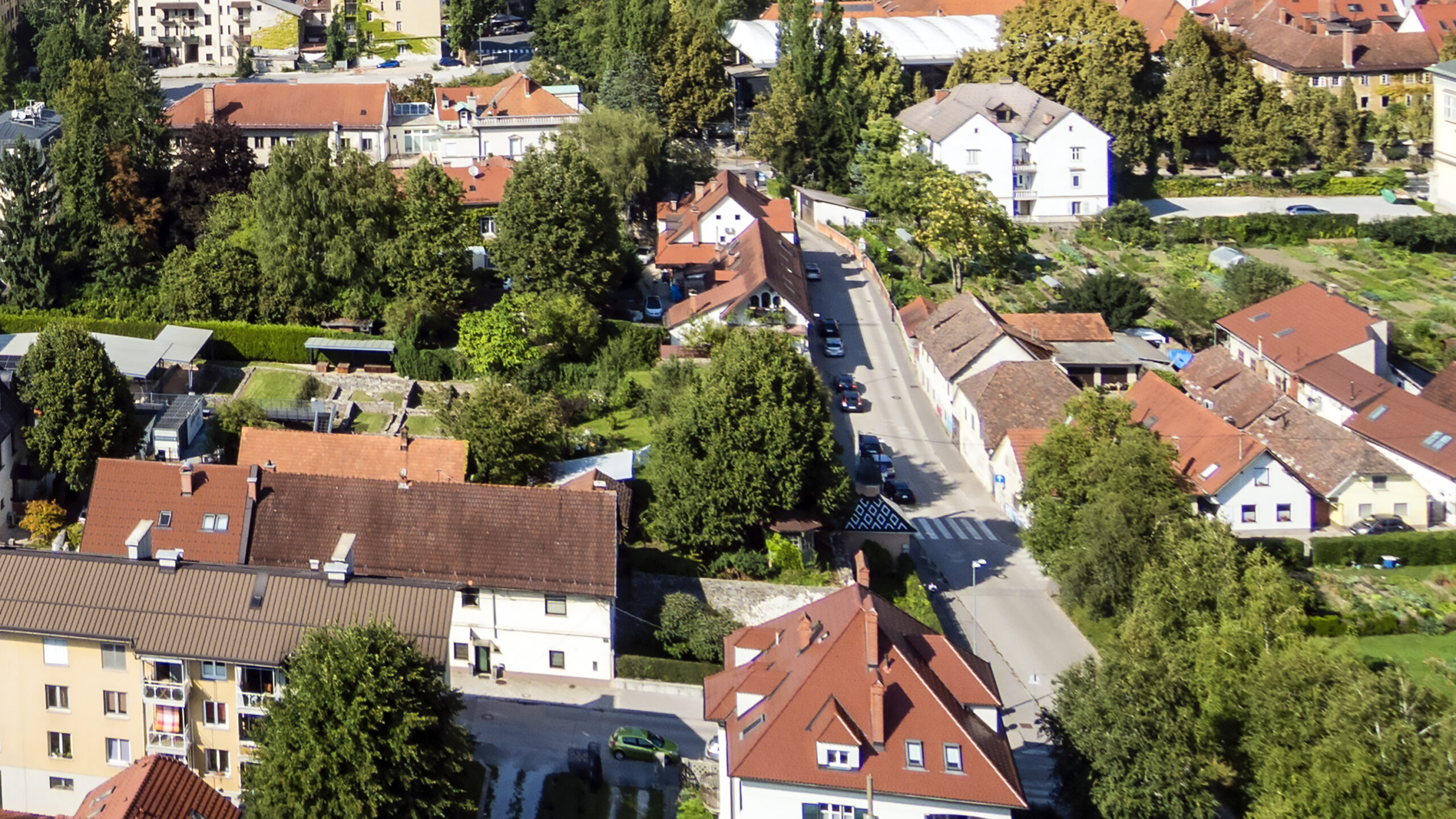
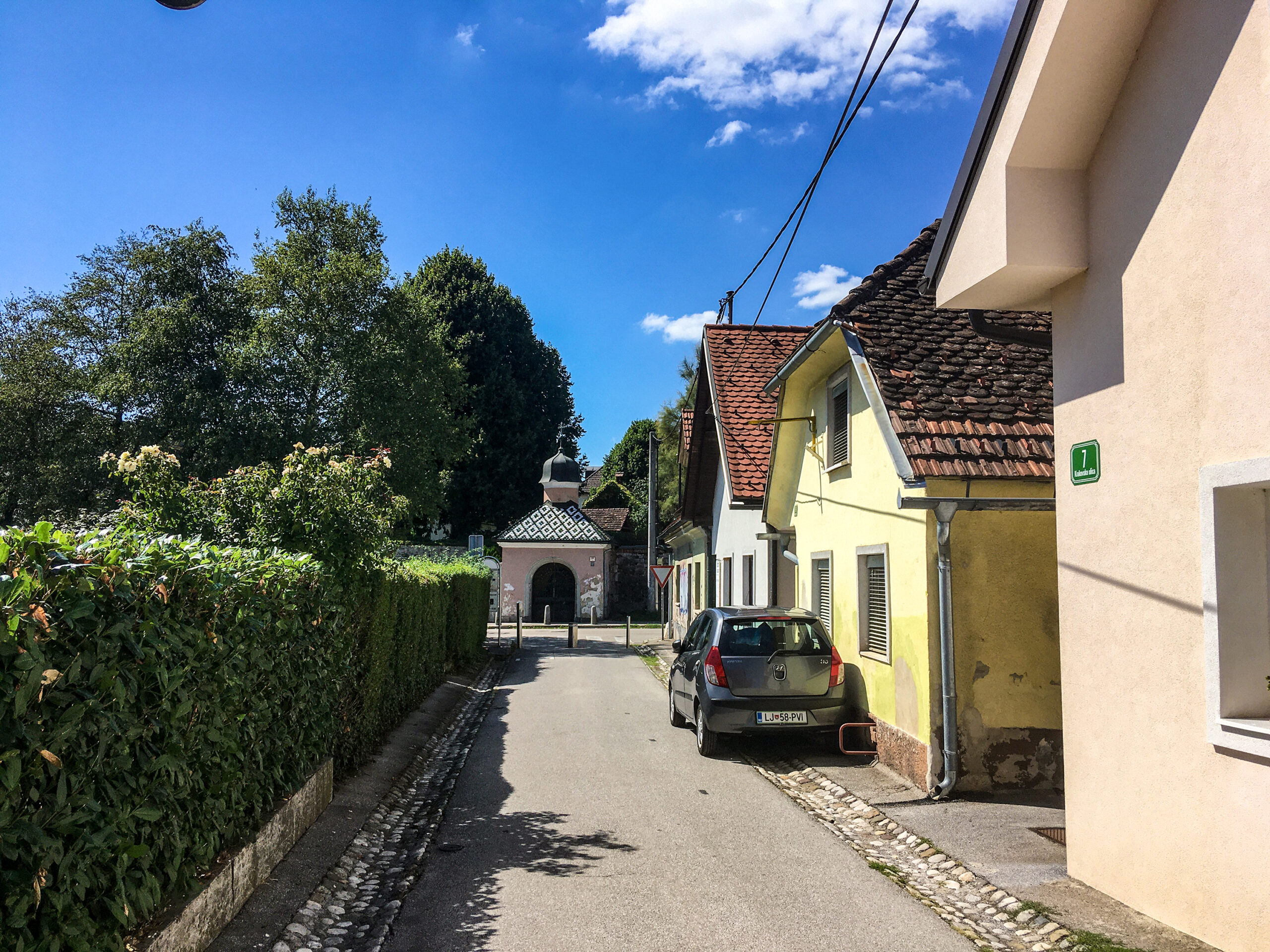
But … could it be something else pulling the strings around here?
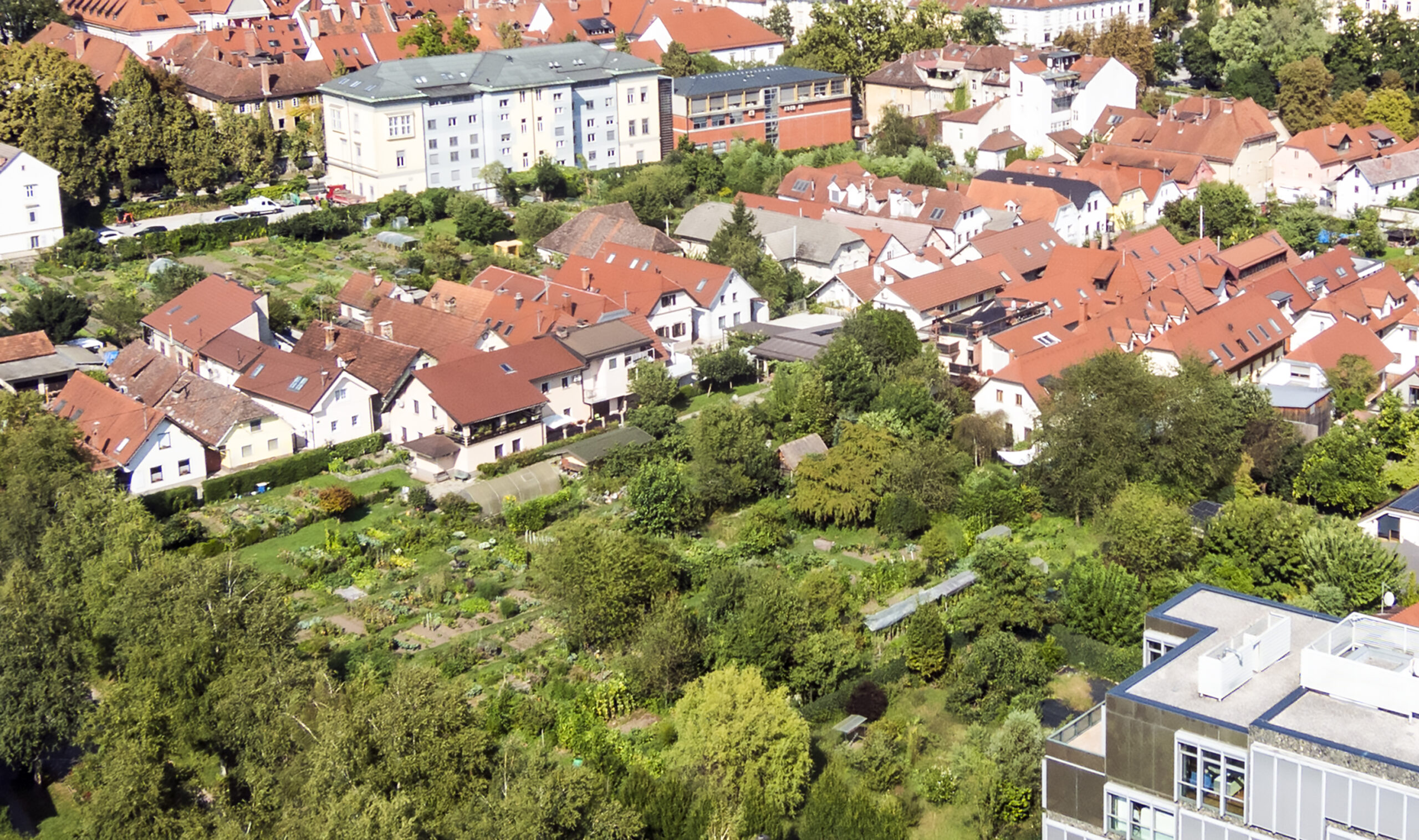
Remember, every good Medieval story starts with the Templars, and the story of Krakovo surely does. Could the stone relief of Mary and her child be a couple of decades older than it is thought to be (they say no, it’s the work of the Master of the Mary of Solčava, but what do they know)? Could the Protectress of Krakovo once have adorned the entrance to the first church, the Templar one?
And there is more. The Templars brought the fishermen of Ljubljana together, and the Teutonic Knights relocated them to Krakovo. The fishermen organised into a guild, and their guild had its Grand Master … a king of sorts.
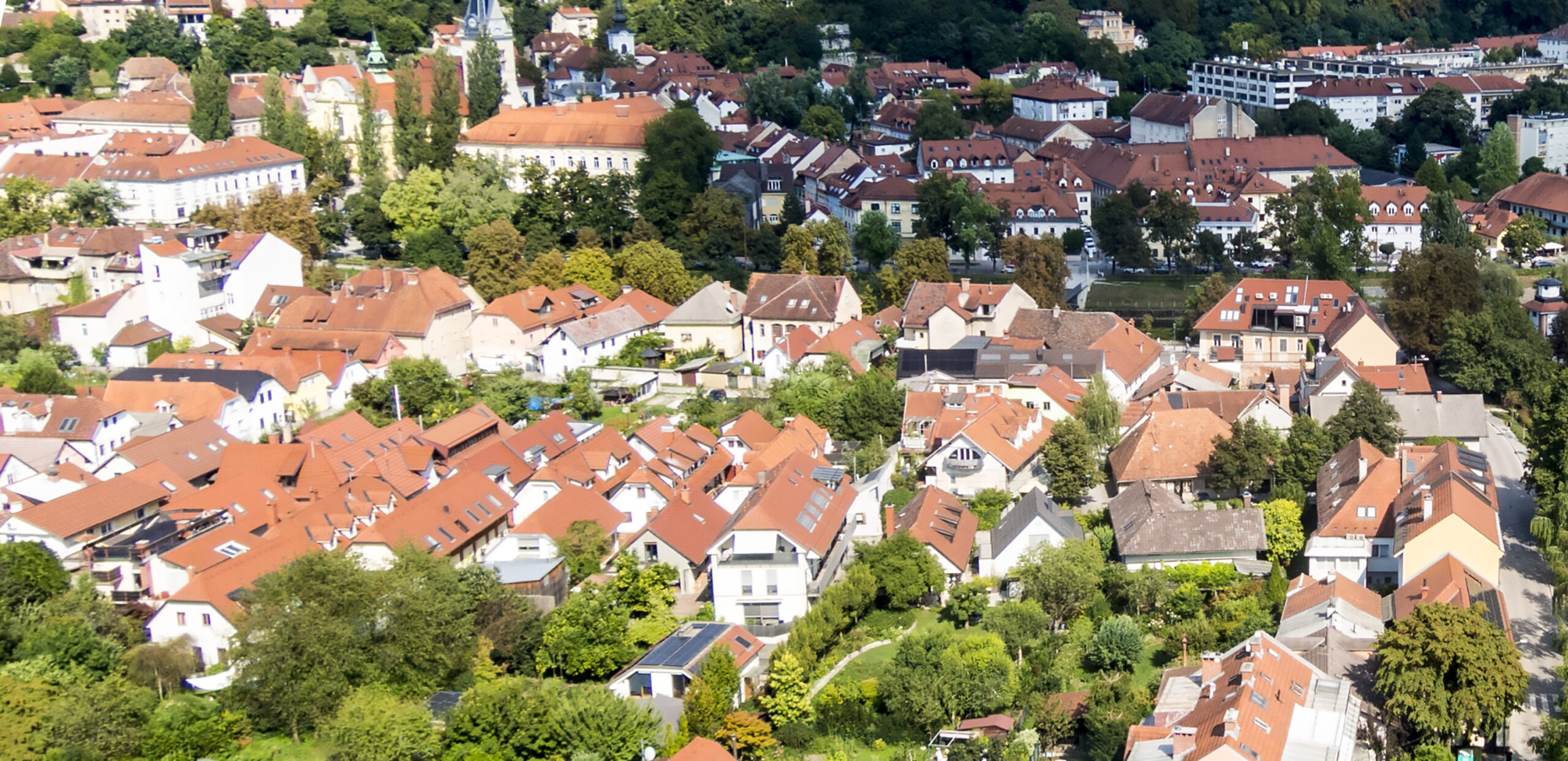
See where this is going? Mary the Protectress, her child, the Templars, the Fisher King …
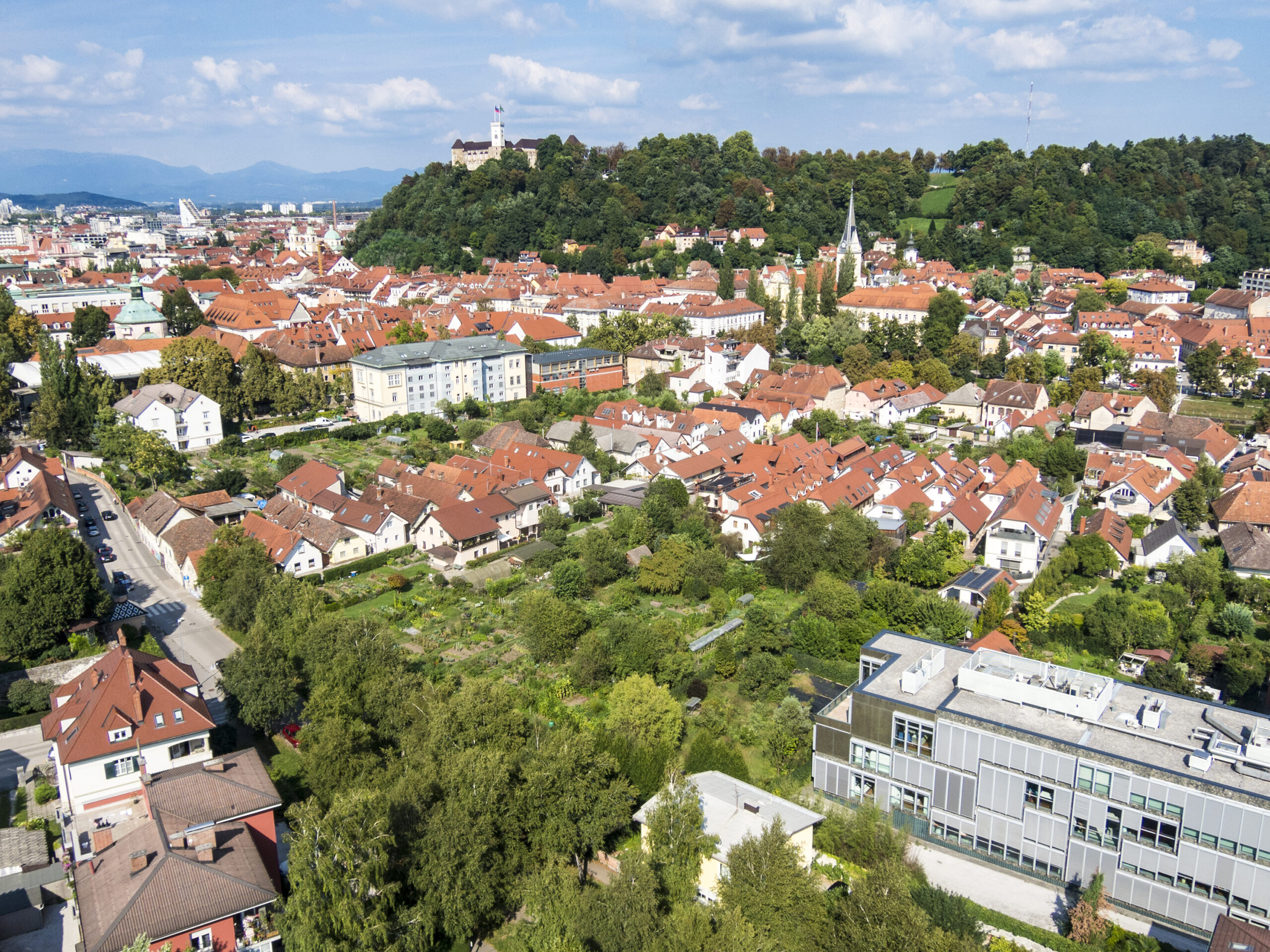
Yeah, okay, okay … a step too far, perhaps, too deep into a silly conspiracy theory. But if a very special cup (maybe a humble one, made from wood; Krakovo is a reverse Baudolino, a pilgrim in time staying still in space) was to be found here, we definitely wouldn’t be surprised.
Kite aerial photos shot with Nikon P330 on the Original Blue Rokkaku made by master Janez Vizjak.

BRAVO BRAVO
Thanks, István 🙂