
(This is the first of kite aerial stories about the forštats (Vorstadts, faubourgs) of Ljubljana; now integral parts of the city that were built just outside of city walls. Ljubljana has seven forštats: Saint Peter’s, Poljane, Carlstadt, Trnovo, Krakovo, Gradišče, and Capuchins’ forštat. This one is about Saint Peter’s.)
This kite aerial photography session started on a bridge – one of those very unique love bridges that are on the verge of collapse from all those locks. It’s aptly and very romantically called Butchers’ bridge.
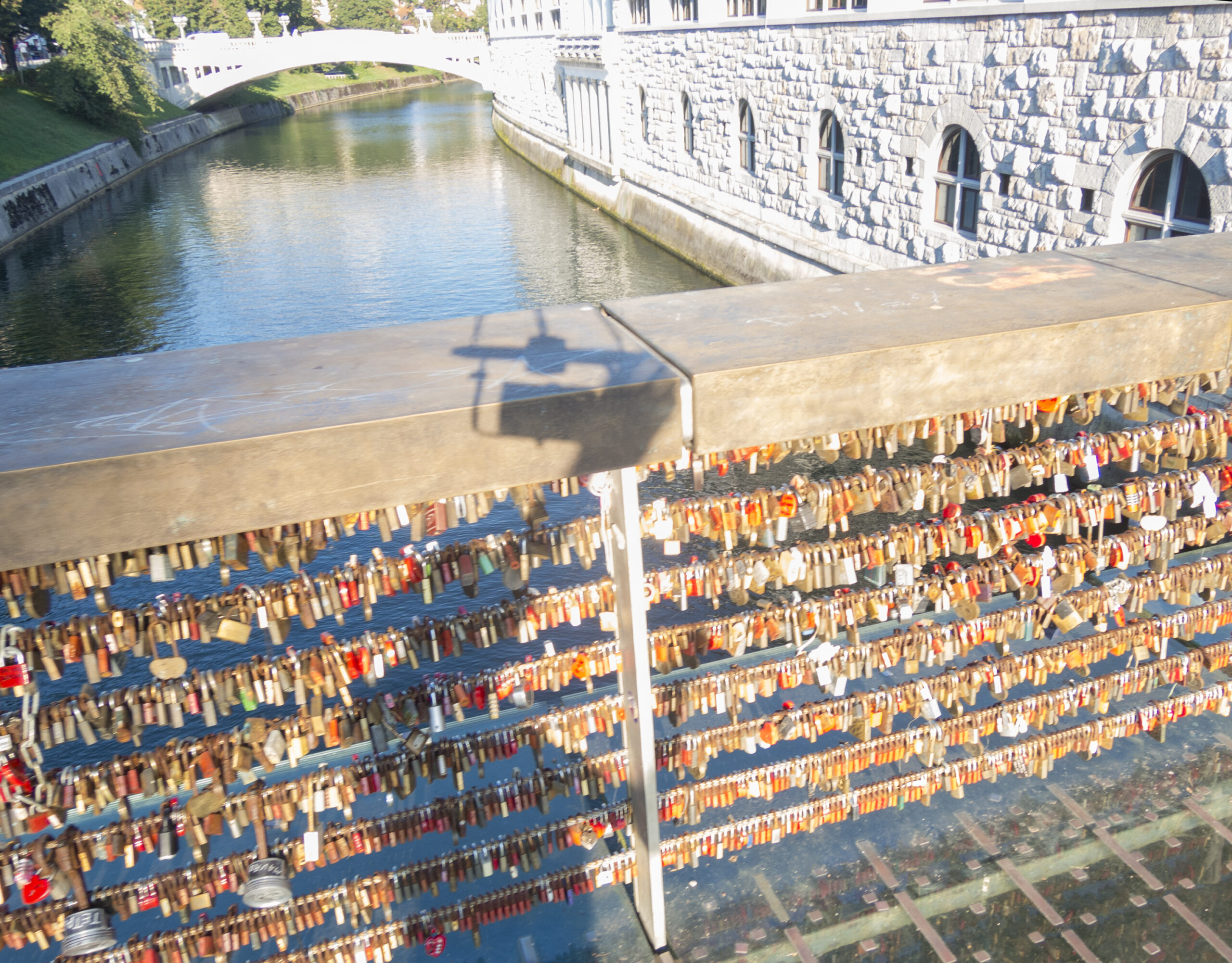
While a bridge in general can be a nice kite lifting spot, being open and windy, this one definitely isn’t. Rather tall buildings and even taller trees along the banks of Ljubljanica and the river itself being confined in a deep canal create a sort of a wind tunnel with all sorts of crazy turbulences – and the forced direction of the wind does not always correspond to the general flow higher above.
And those trees always look terribly hungry …

Anyway, after a harrowing take off and some wild dancing through the turbulent layer the venerable Original Blue rokkaku stabilized and the view opened to the east, across the Saint Peter’s suburb.

Technically it’s not a true suburb; it became a part of Ljubljana proper when the city walls were removed in the 17th century, and was an integral part of the economy of Ljubljana long before that.
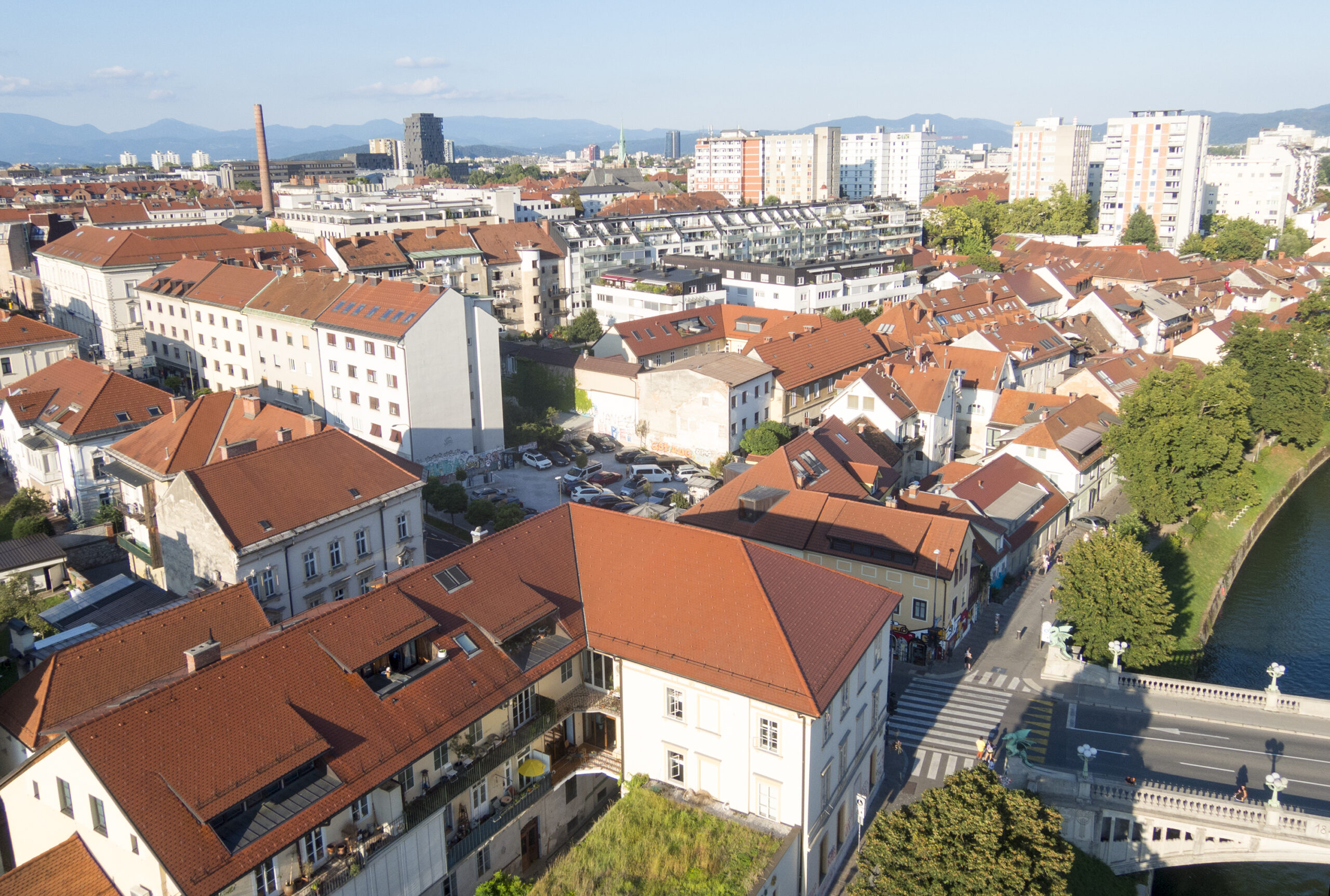
Saint Peter’s is a vorstadt, a faubourg – the oldest and in all effects the best preserved forštat of Ljubljana. While most of the houses are from the late 18th century and later, it still retains the basic Medieval street grid, dominated by Trubar’s road (the main thoroughfare to the east, used to be called Saint Peter’s road) with smaller streets and alleys branching off as they were for hundreds of years.

Saint Peter’s lies by the Ljubljanica downstream of the city centre, so it was a logical placement for those enterprises that need running water and emit various unpleasantries – like tanneries, soapmakers, and breweries. It was a smelly, dirty, proto-industrial quarter, a tough, no-nonsense place.

And it was a place to party; in the hazy darkness of its many shady bars and disreputable institutions like The Golden Lamb one could find pretty much everyone, even (or especially) the greatest Slovenian poet France Prešeren.

Trubar’s road – yes, it’s a road, not a street; used to be the main route for goods coming to Ljubljana from the river port at Zalog – is still one of the best places to wander, to eat and to party, considered by many (like the one member of our kite team that lives on it) the coolest street in the city. The stretch from Prešeren square to Resljeva road has art galleries, antique and souvenir shops, while its continuation towards the church offers all sorts of bars, pubs, and eateries, passing the renovated Center Rog cultural edifice, and – fitting for the coolest street – ending at the Saint Peter’s with probably the coolest depiction of Jesus on its façade.
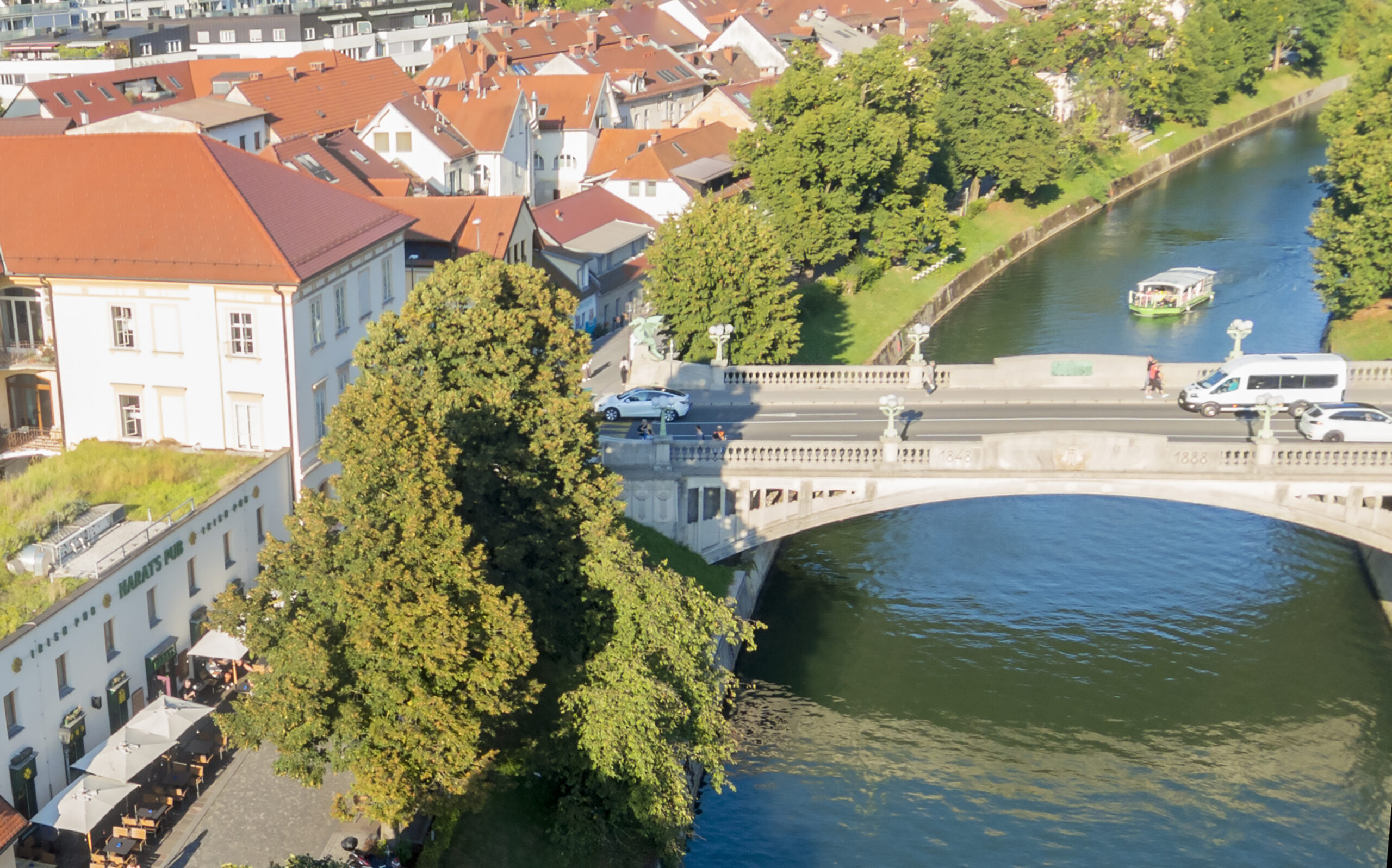
But the crown of Saint Peter’s forštat is a bridge. While there are 19 bridges across the Ljubljanica within the highway ring (plus ten more crossing its Gruber canal branch), and one of them was even designed by the World Heritage master Plečnik, this one is, well, the coolest. The true symbol of Ljubljana itself: Dragon bridge.

Regarded as one of the Vienna Secession style triumphs, Dragon bridge was the first reinforced concrete bridge in Ljubljana and one of the first in Europe. It was built between 1900 and 1901 as Kaiser Franz Josef I. Jubiläumsbrücke, Jubilee bridge of the Emperor Franz Joseph. It is slick and stylish by itself, the balustrades and the chandeliers are exceptional – but the dragons (four large ones and 12 little ones) are something else.

Echoing the legend of Jason and the Argonauts, this bridge is an apt tribute to Ljubljana, city of dragons.

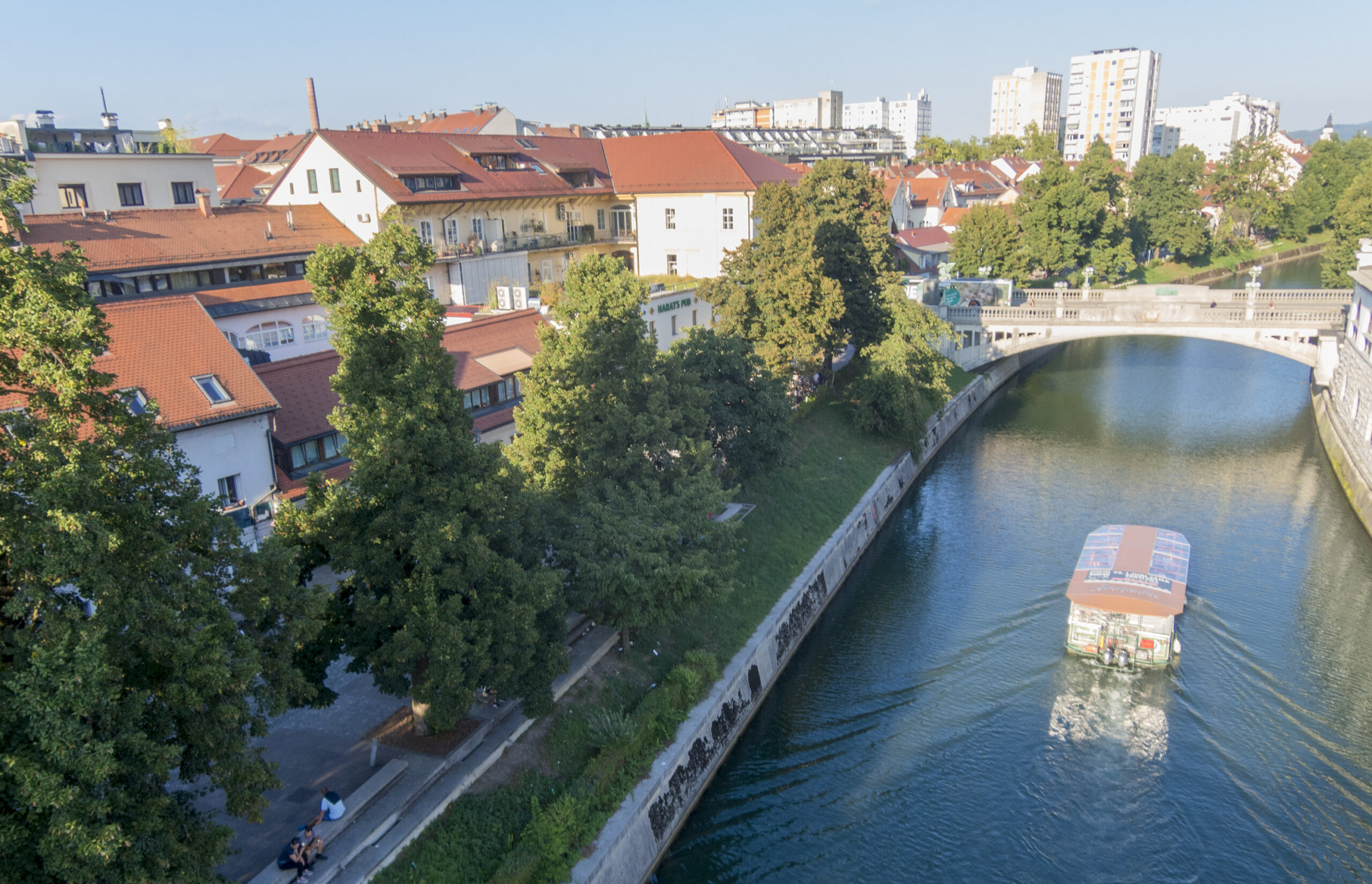
Kite aerial photos shot with Nikon P330 on The Original Blue rokaku, made by dr.Agon kites.

2 thoughts on “Saint Peter’s Vorstadt – and Dragons on the Bridge”