
Cyclops were never cool.
Κύκλωπες, circle-eyed, one-eyed monsters, relics of a strange and magical past, giants different and bizarre, quintessential Others. Polyphemus of the Odyssey was a Neolithic man, a pastoralist, dabbling in sheep transhumance, having nothing in common with Bronze Age long-distance trading farmers, artisans, boar-helmeted warriors.
Cyclopes inhabit strange, scary, inaccessible places – so there is no wonder one of them resides in Ljubljana Marshes landscape park.
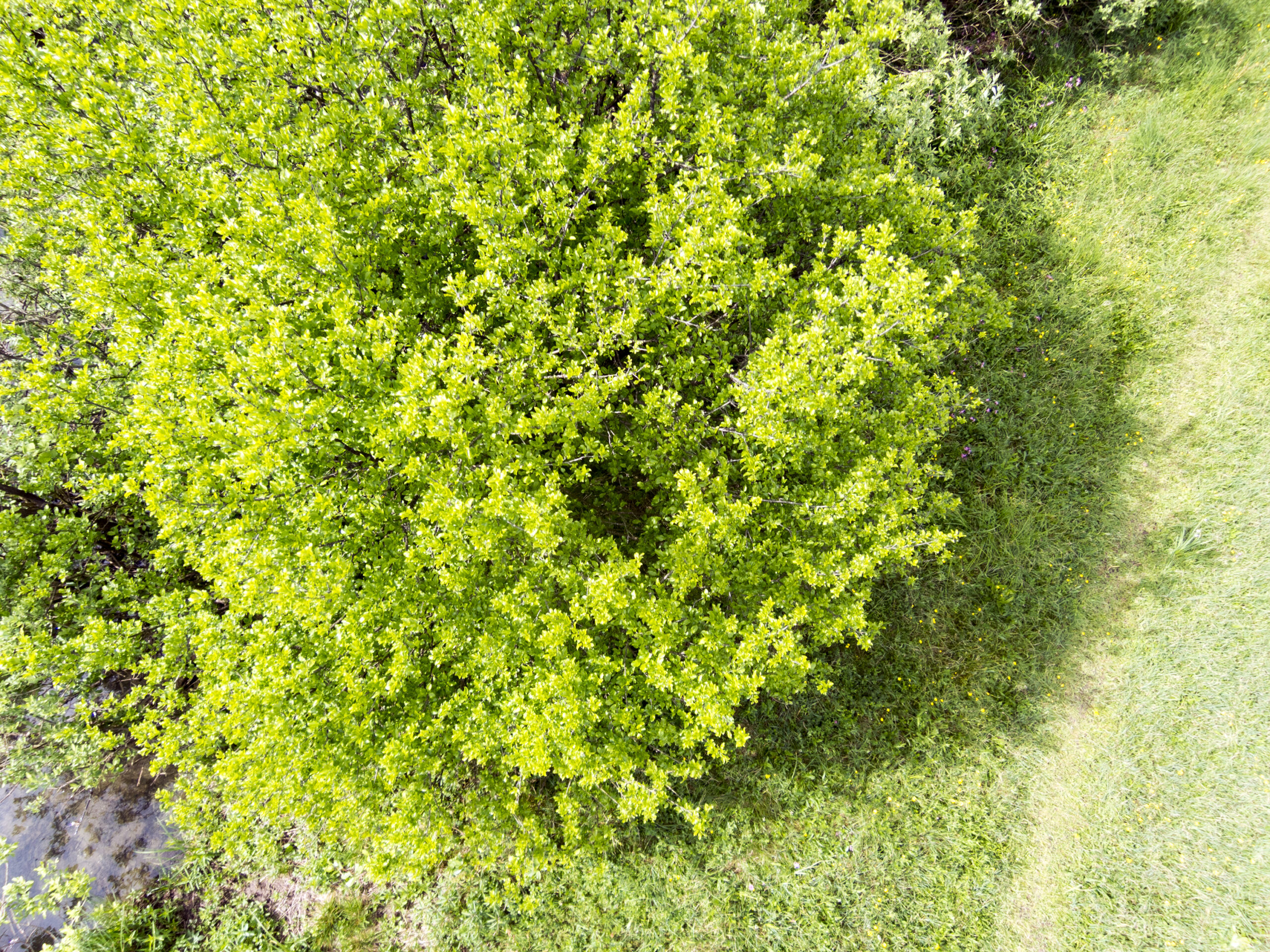
When this bush tried to snatch the kite and the camera – it managed to grab the picavet and almost didn’t let go – we thought it was just being annoying, as bushes often are: but no, it was trying to warn us. Don’t rise too high!
We had to launch the kite a couple of times, as the winds were far from being cooperative. As it finally rose on, as Verlain said so well, un vent mauvais, it swayed wildly, pulled like hell at one moment, diving flatly the very next. It was a wild ride.
The winds tried to warn us too … Don’t wake the Eye of the Marshes!
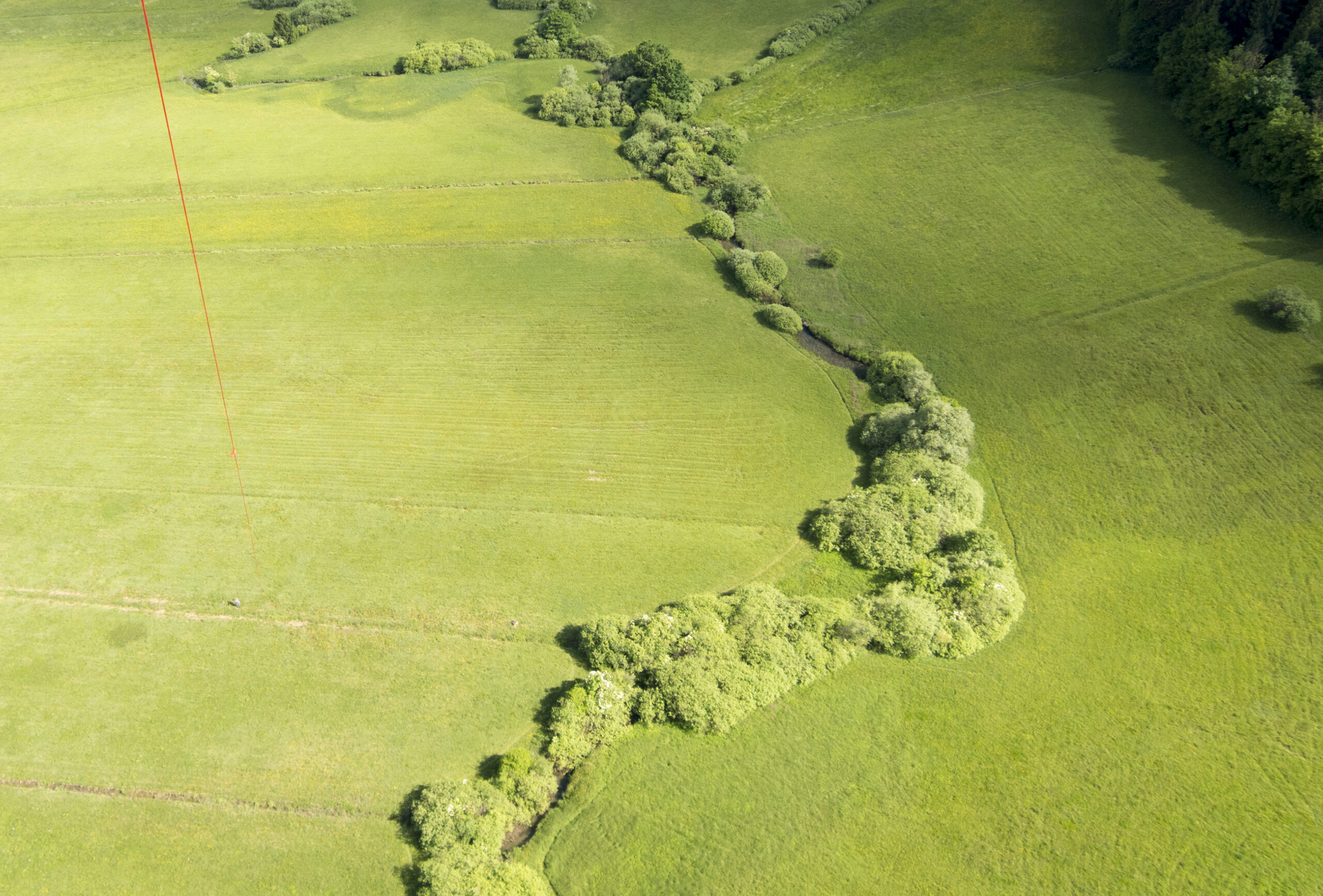
The bush grows by the Mill stream, Mlinski potok, a short but proudly meandering creek that springs out from beneath the Jurassic mountains onto the secluded valley of Zajezero.
The valley is marshy, as is everything around here. Tall grasses and wild flowers cover wet soil that threatens to swallow a kite flyer. Don’t tread on me, don’t fly, don’t annoy the giant!
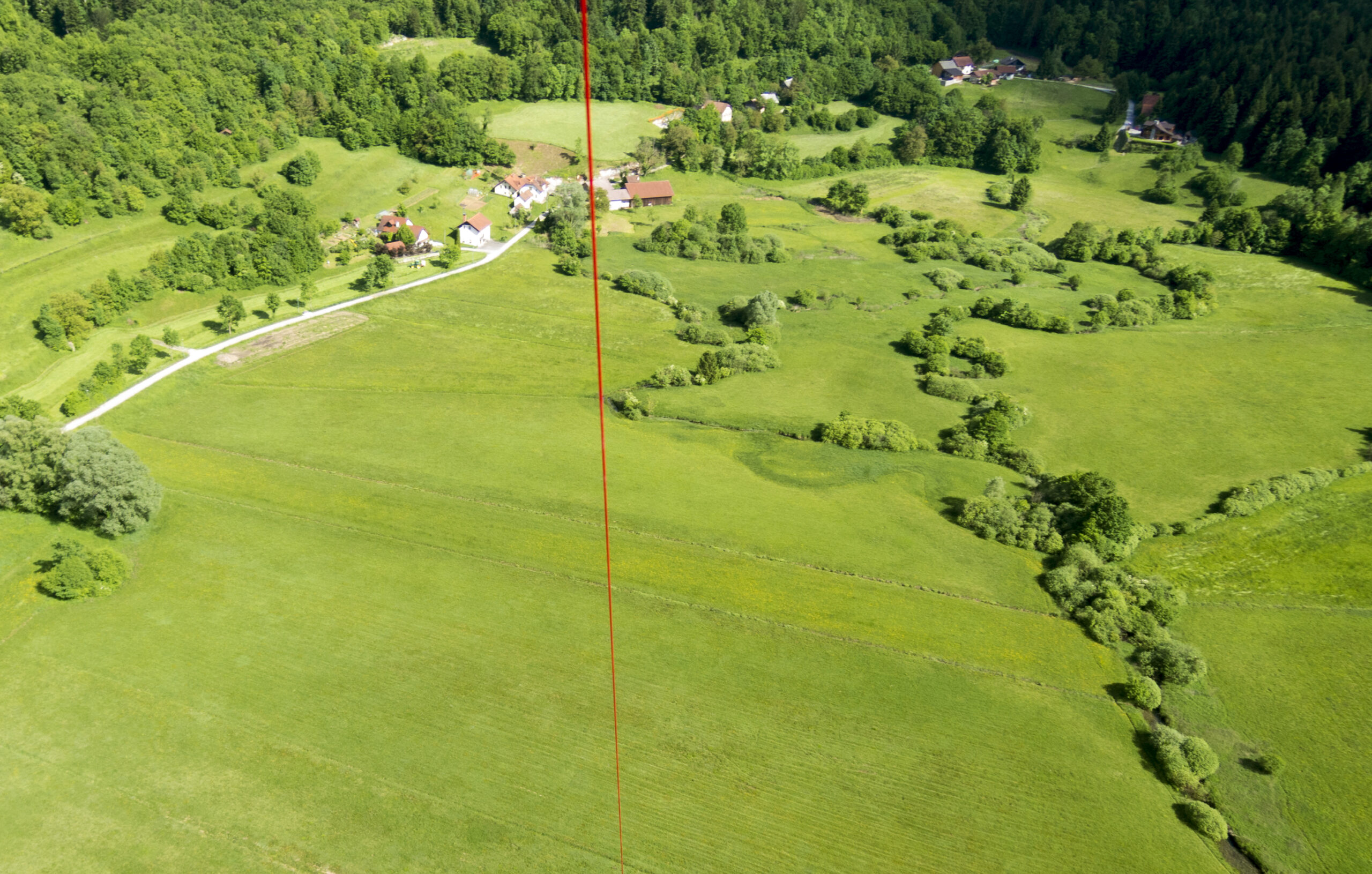
As the kite and the camera were rising in terrible winds – beware, flyer! sang the Muses – more and more of the valley came into view, and the forests thick and dangerous were flashing their green canopies.
And slowly but surely something else was creeping onto the pixels of the camera sensor.
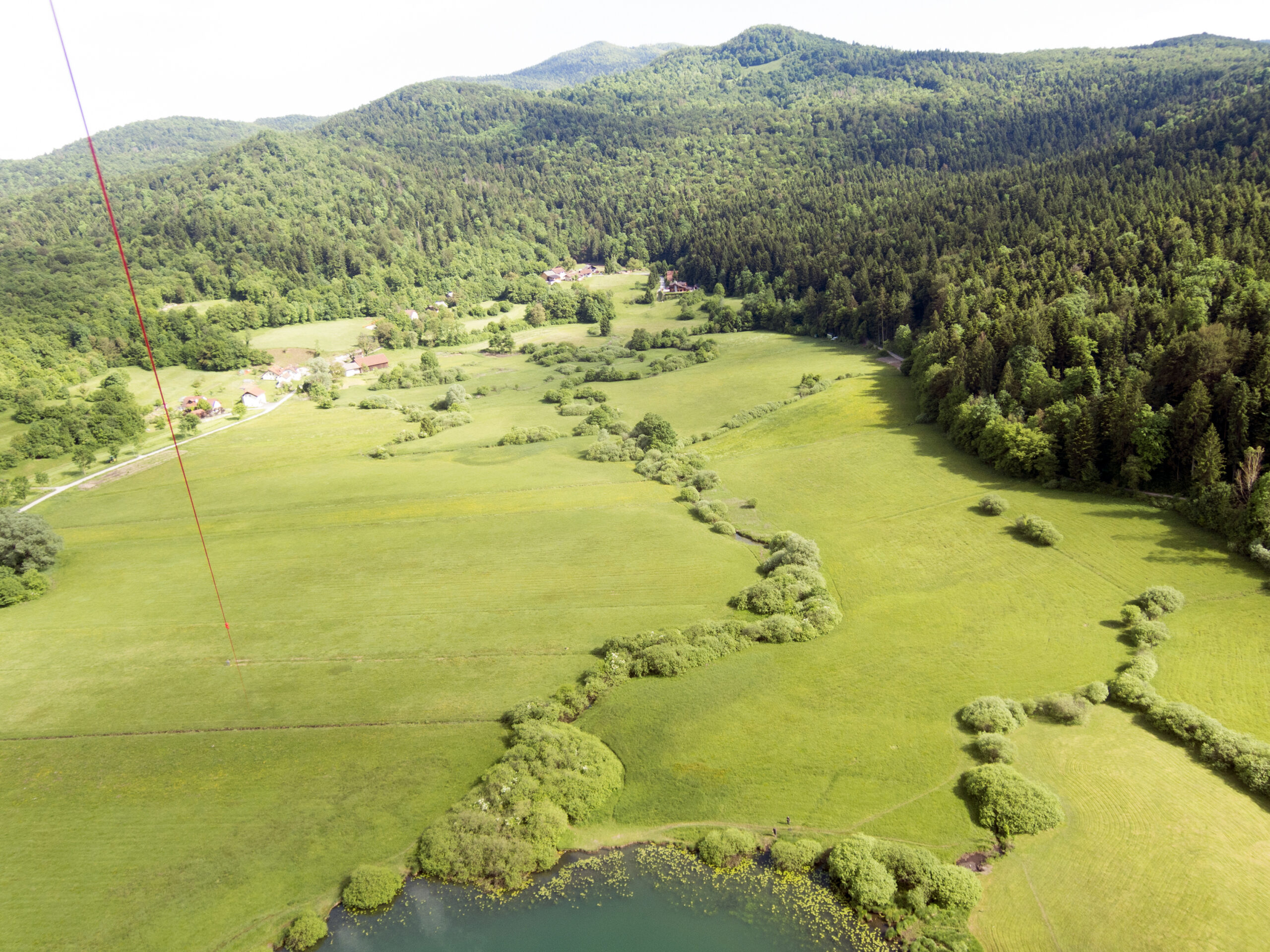
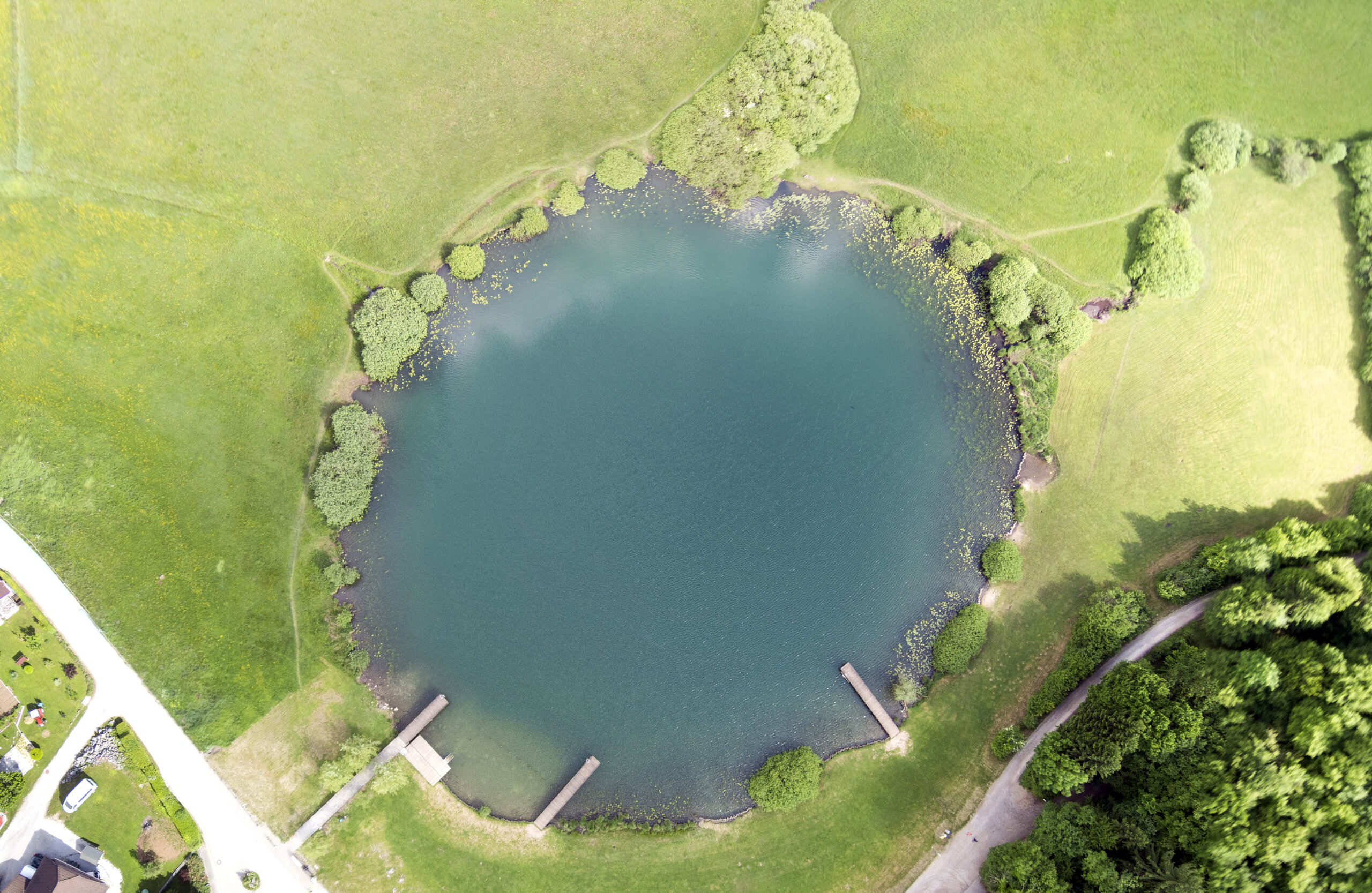
An almost perfect circle. Κύκλος.
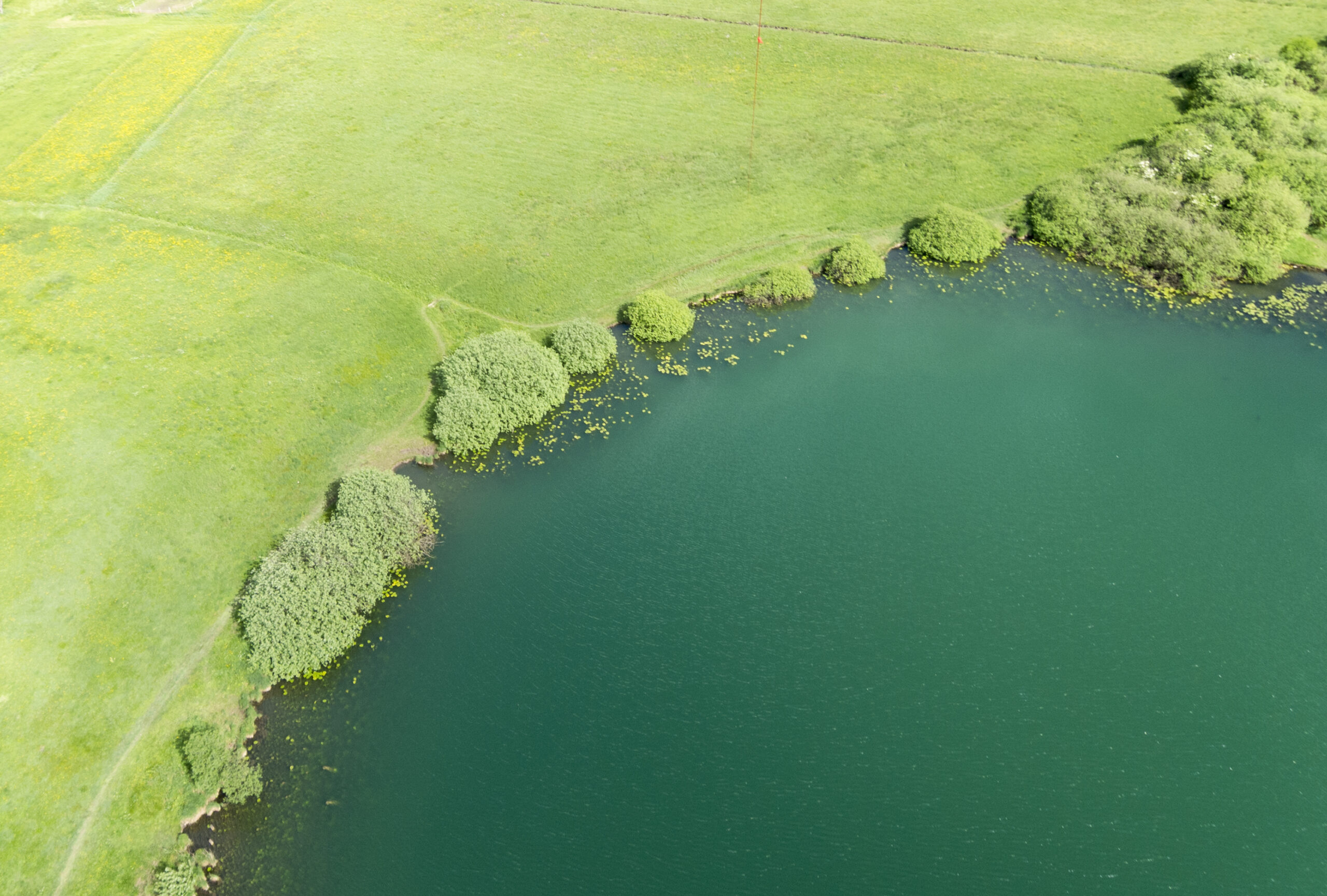
An eye of a giant. Κύκλ-ωψ, Cyclops.

Like Odysseus we almost pierced the Eye with a camera, and then a mighty gust of wind grabbed the kite and took it high above it …
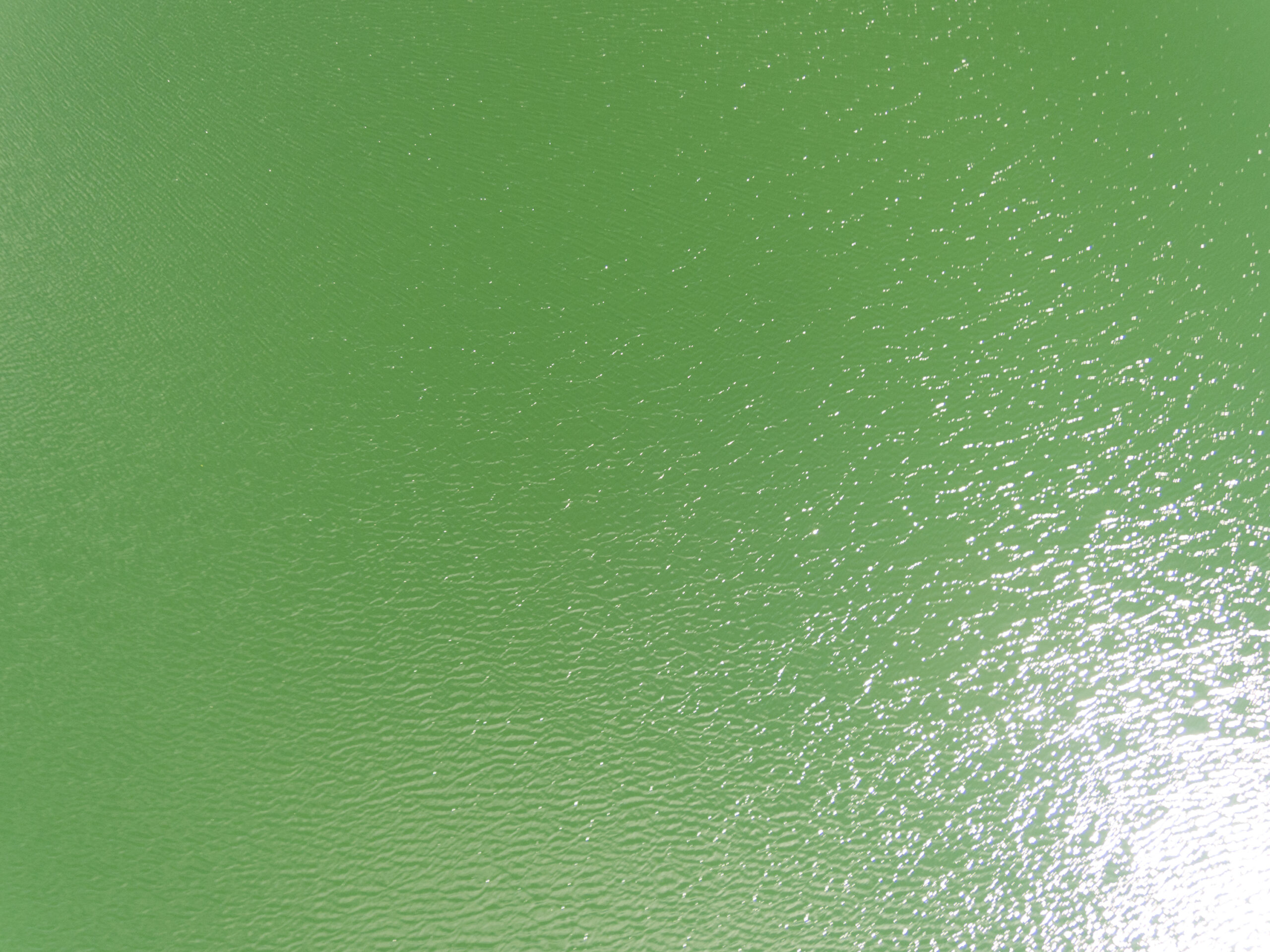
The camera looked straight into the Eye, and the Eye of the Marshes was staring back.
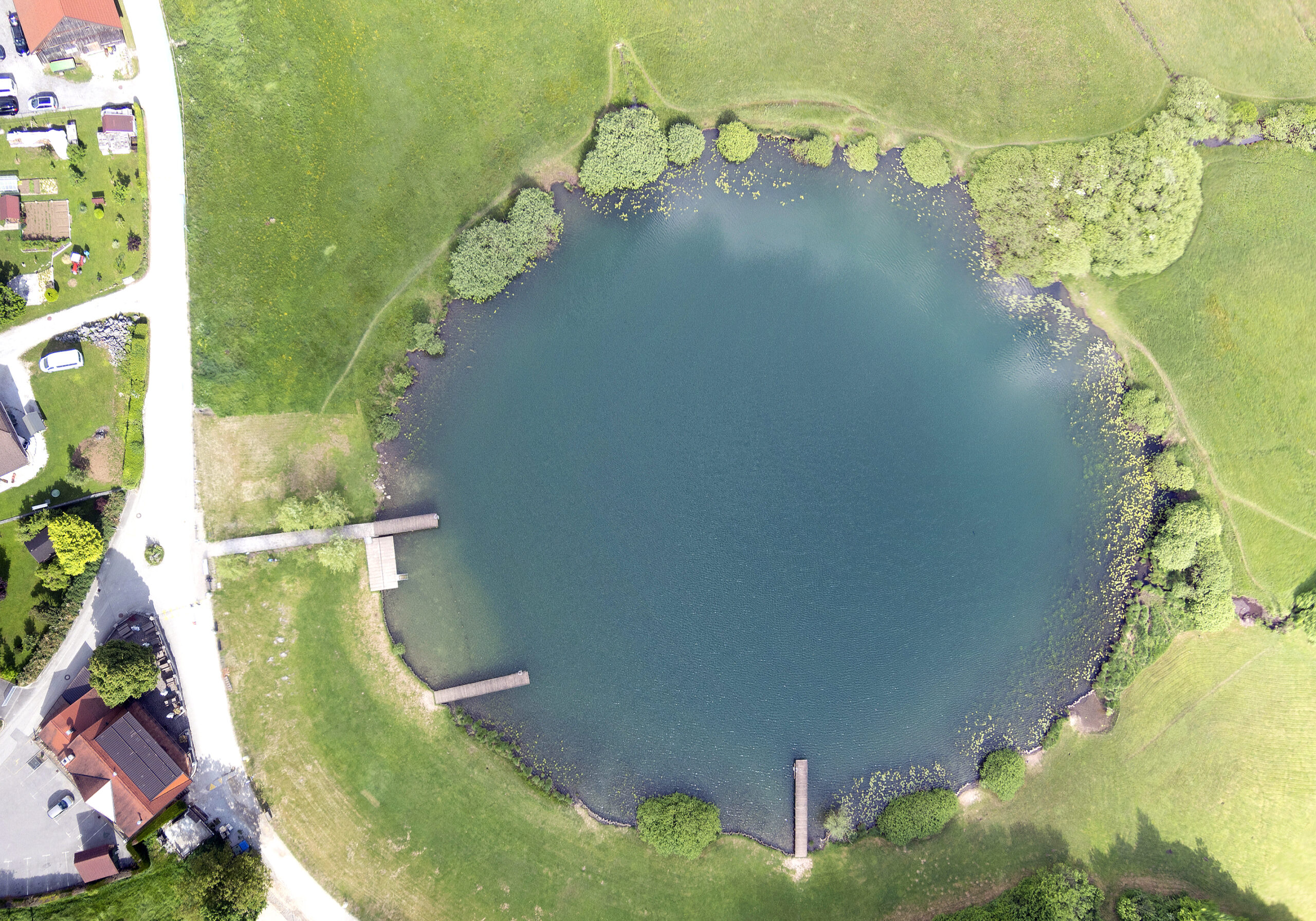
Then we noticed a storm brewing and we blinked.
The Eye never did.
Okay, okay … Cyclops is not a round-eyed monster, and its name does not derive from Greek words kuklos for a circle and ops for an eye – a Cyclops is a cattle thief, its name stemming from Proto-Indo-European *peku, cattle, and *klep, to steal (as in kleptomania): *p’kuklops, kuklops, … Cyclops.
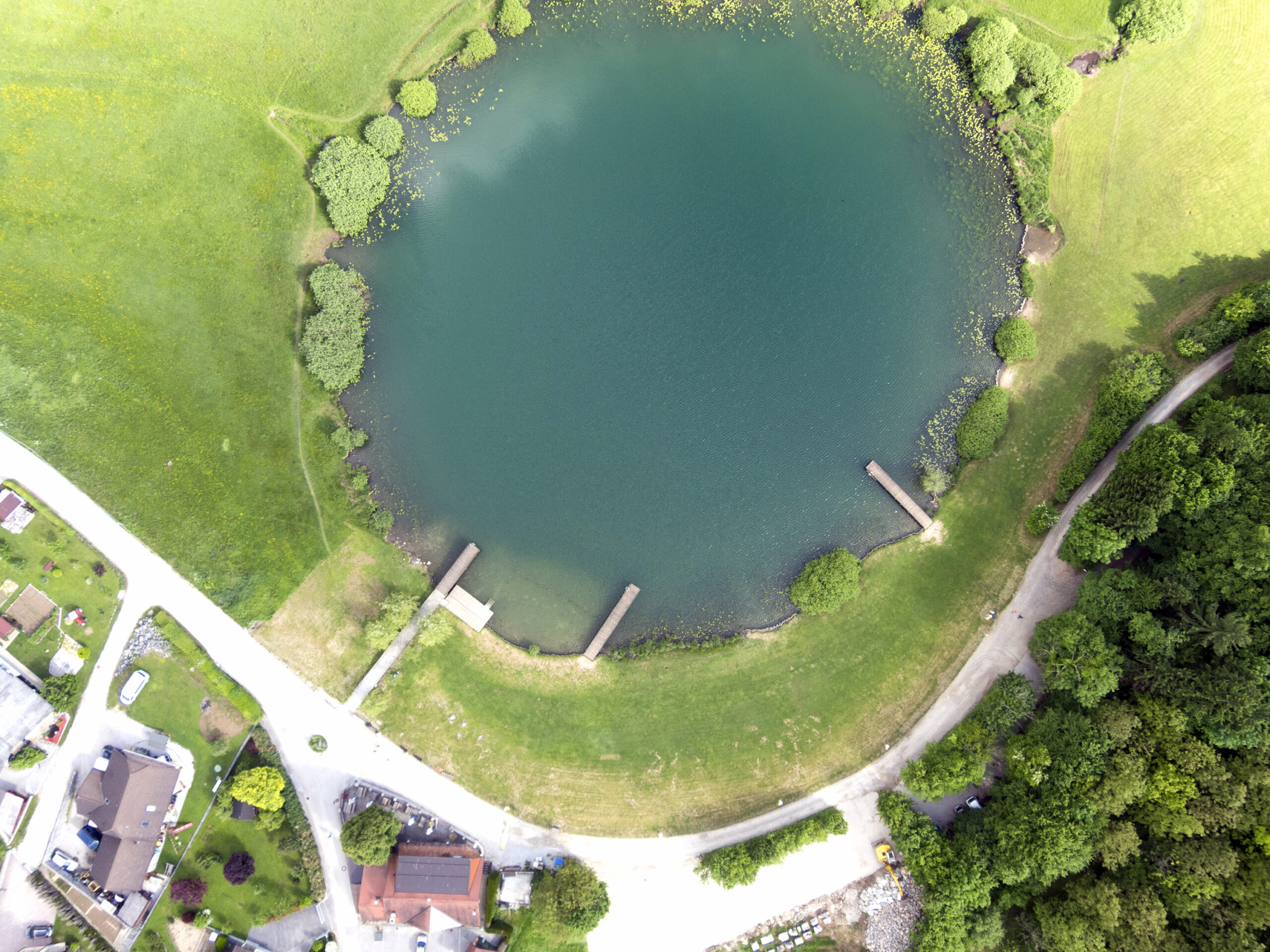
And this lake, while almost a perfect circle, is not an eye of a monster of the Marshes. It is a small, serene lake in a lush, wet meadow; a popular picnic spot, a haven for fishermen, a welcome relief in the Summer heat.
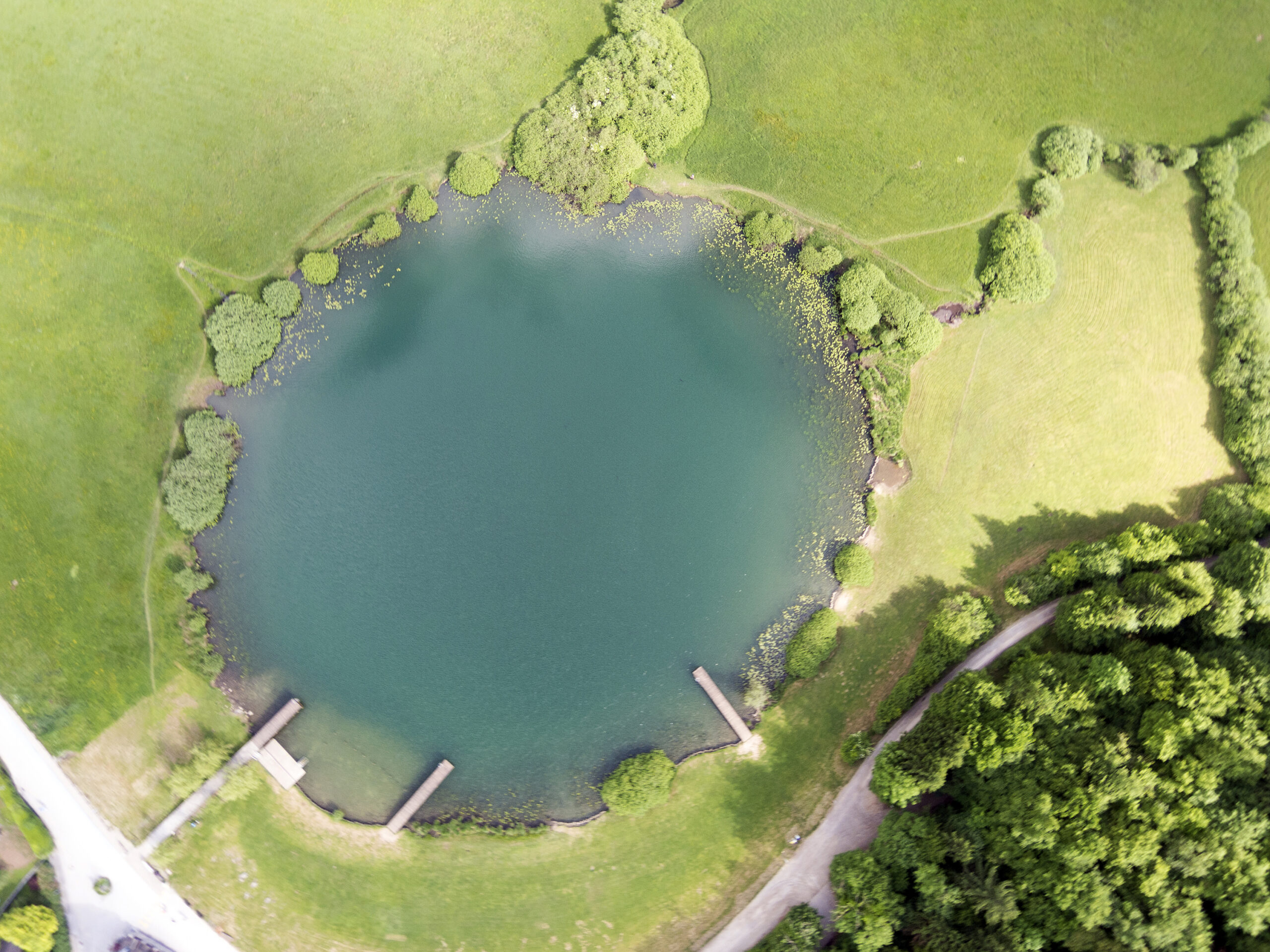
But while it is not monstrous, the lake does harbour a secret or two. For example, as small this lake is – barely 130 m across – it is one of, if not the deepest natural lake in Slovenia.
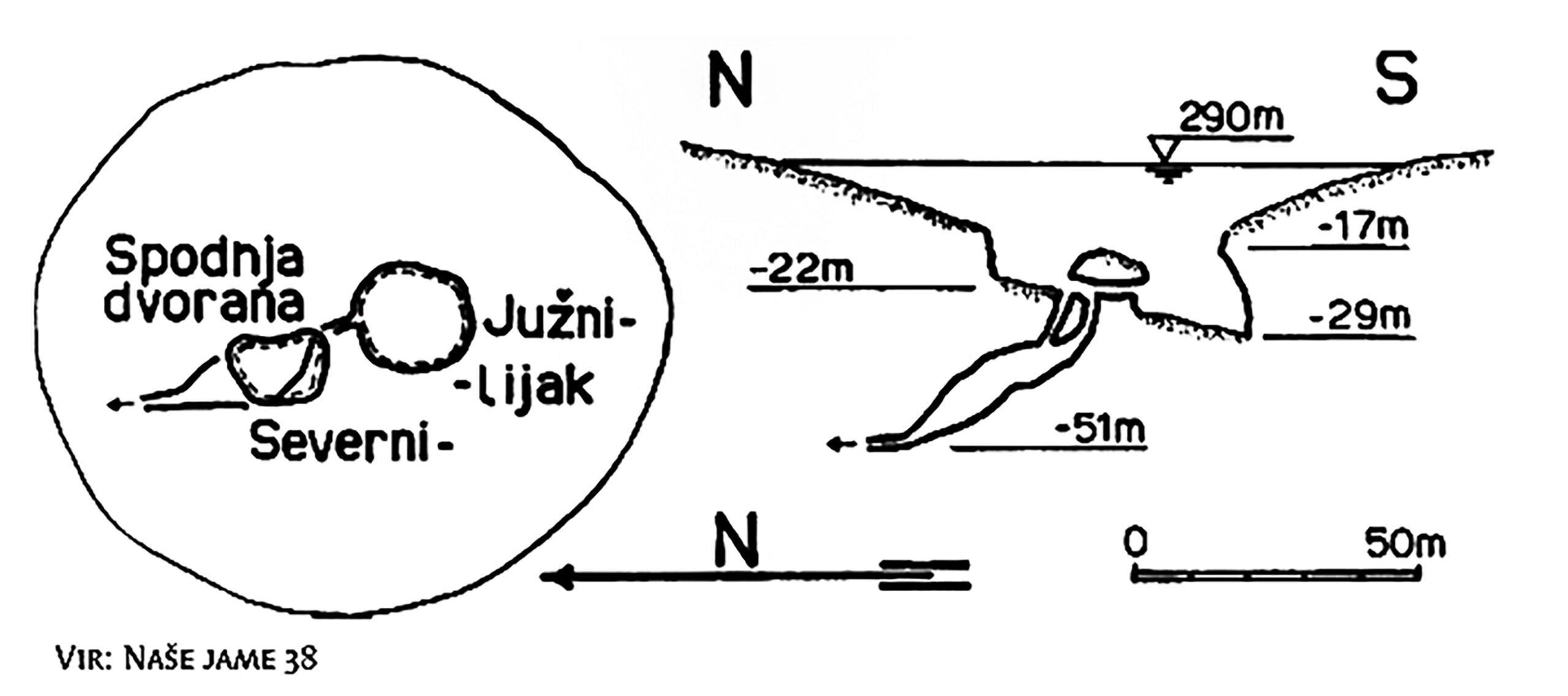
The legends say it’s bottomless, but cave divers established that ‘bottomless’ means ’51 meters deep’. The waters of the lake disappear into an impassable narrow crack leading to the northwest.

It’s a flooded abyss – a sinkhole, formed at the outflow edge of a true (if small) karst polje: the valley of Zajezero was, as Aljaž Šimon established a couple of years back, never a part of Ljubljana Marshes: a low barrier (barely a couple of meters higher than the bottom of the valley) of carbonate rock prevents Mill stream to reach the Marshes, so its waters were forced underground, slowly digging and dissolving the dolomite – until it collapsed into this beautiful round cenote.
Incidentally, this was not the first time we caught the lake with a kite – here is a shot from 2020 when gusty winds above St. Lawrence church swayed the camera so far that it got the village of Jezero sitting on the step between the polje and the Marshes, and its circular lake.
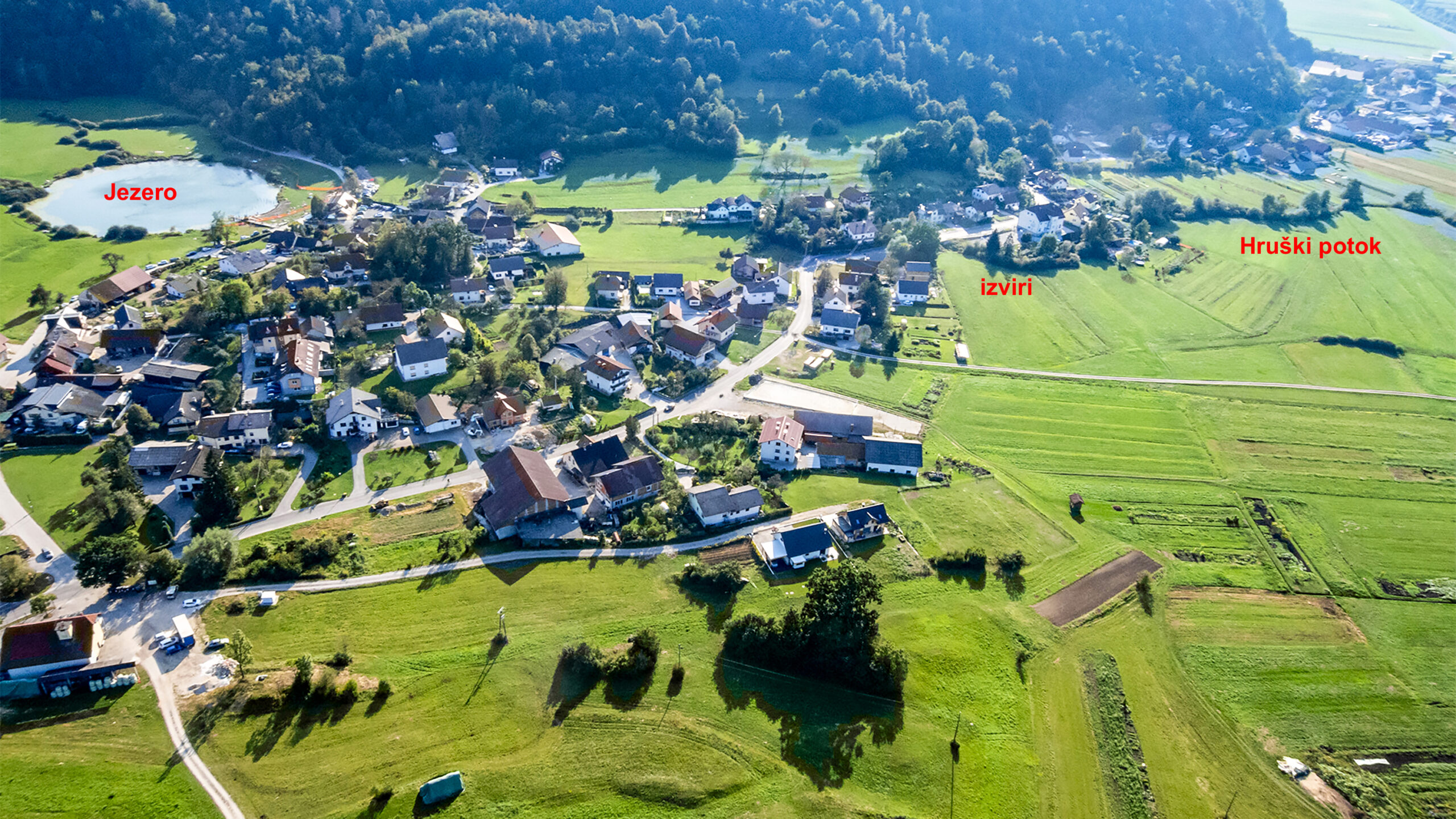
The springs (izviri) of its outflow and the stream Hruški potok emerging from them can be seen on the right, barely 300 m from the lake.
The lake is simply called – Lake, Jezero; to distinguish it from other lakes people give it a geographical label: Krim lake, Krimsko jezero, as it lies beneath the Krim massif, or Podpeč lake, Podpeško jezero, after the nearby village of Podpeč.
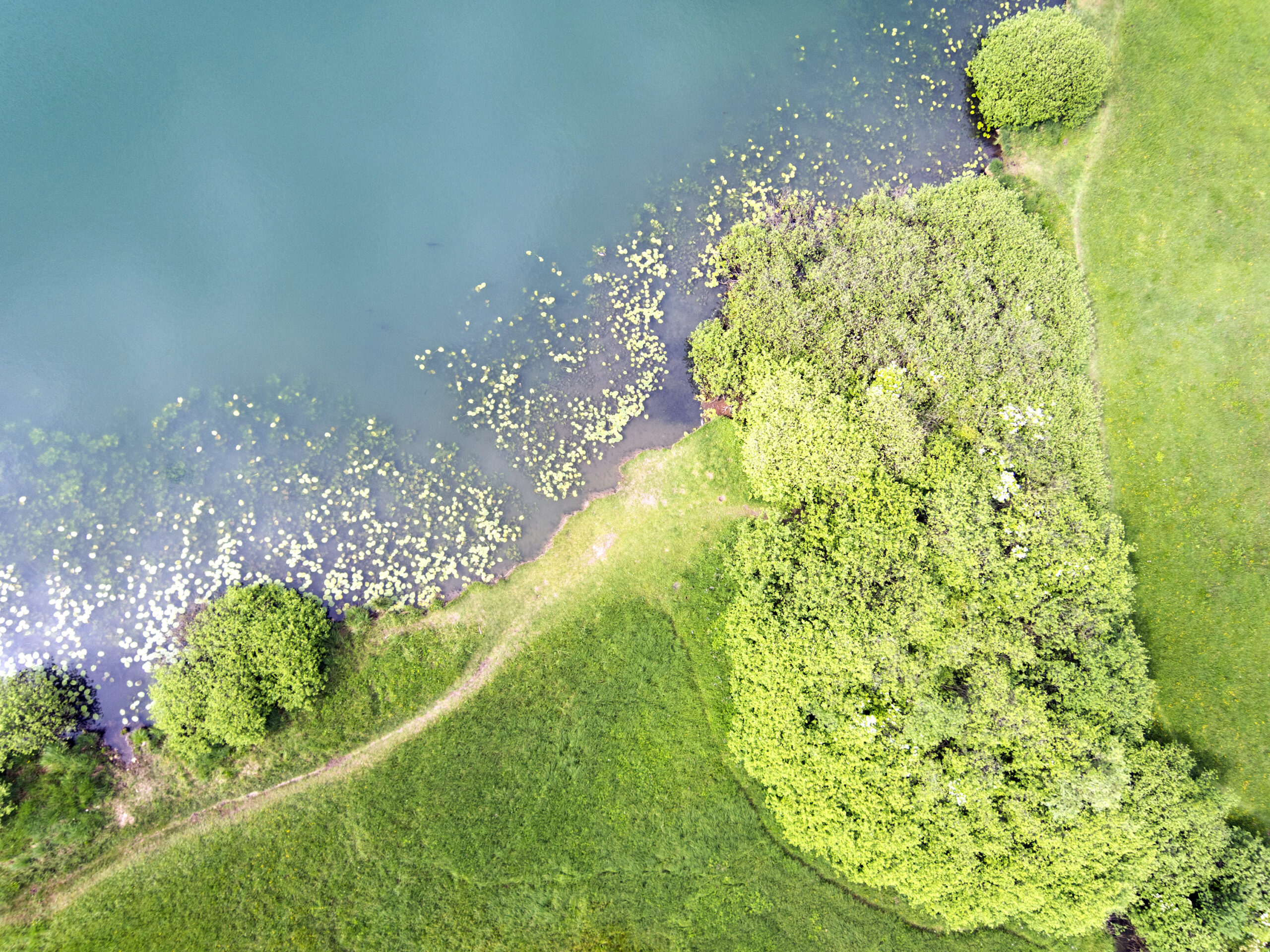
The meadows on the southern and eastern side of Lake are wet and marshy – not of much use except for (not very nutritious) hay, and home of many rare and endangered plants.
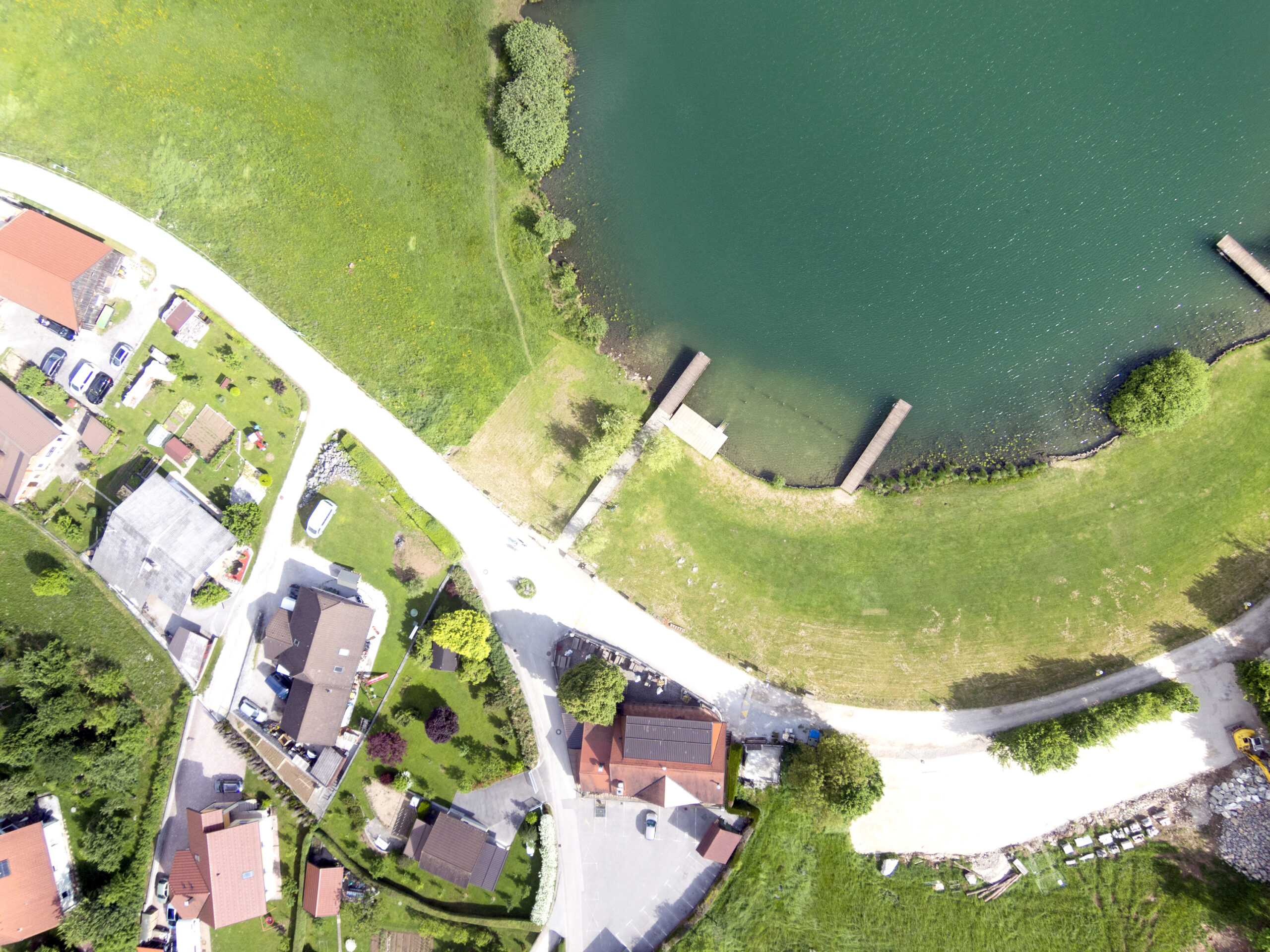
The northern edge of the lake was filled with gravel and sand to make it more solid, and a couple of piers jut into the lake; for fishers to stare into the bobbing bait (they are like us kite flyers, just looking down the line into the water while we look up the line into the sky), and for kids to jump into the cool waters below.
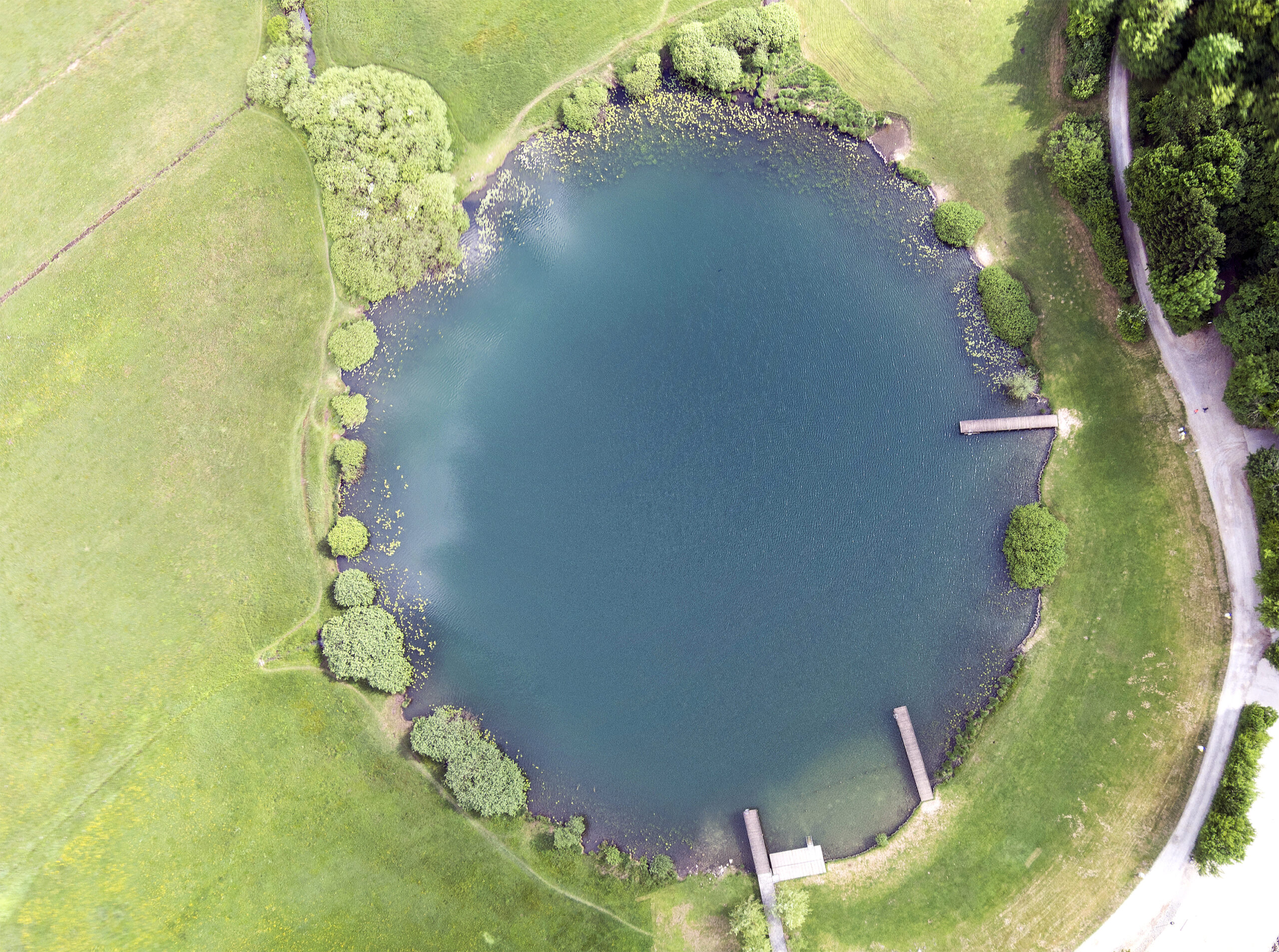
It’s really nice here – but the true beauty of the Eye of the Marshes is only visible to birds … and kites.
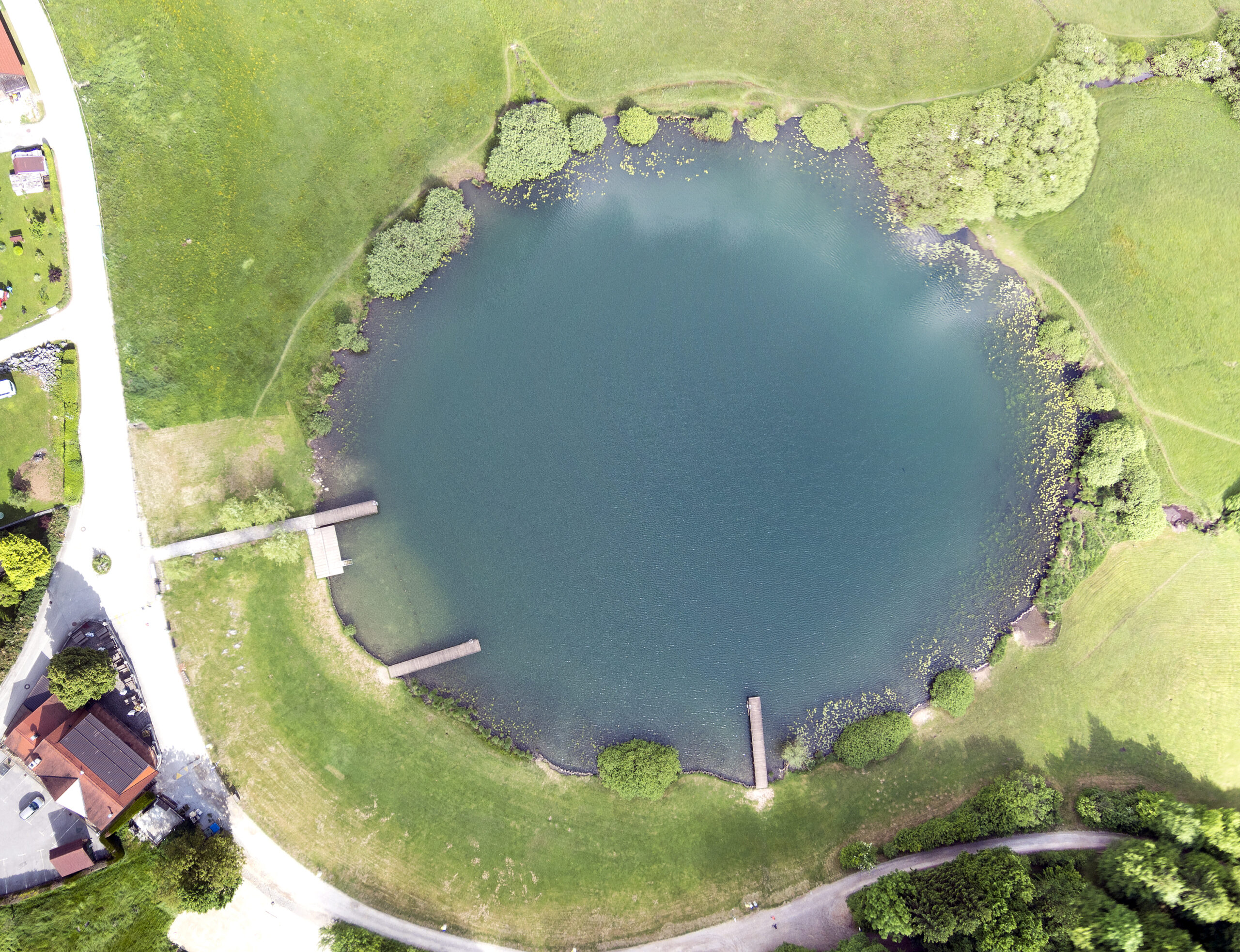
Kite aerial photos shot with Nikon P330 on The Original Blue rokkaku by dr. Agon kites.
1 thought on “Eye of the Marshes”