
This is the the second article in the series of kite aerial stories about the forštats (Vorstadts, faubourgs) of Ljubljana; now integral parts of the city that were built just outside of city walls. Ljubljana has seven of them: Saint Peter’s, Poljane, Carlstadt, Trnovo, Krakovo, Gradišče, and Capuchins’ forštat. The first one was about Saint Peter’s forštat, this one is about Trnovo.
Why, when taking photos of the place – the place! – about which our greatest poet wrote his (arguably) best poem, would anyone think about a completely different verse from a completely different universe:
Cidade maravilha
Purgatório da beleza e do caos
It was August alright, but it was not that hot, and, frankly Trnovo has very little in common with Rio.

Rome was built in one day and on seven hills, and every self respecting city tried to emulate this ever since. As gods and goddesses these days seldom bother themselves with urbanism, the built-in-one-day-like-Rome part is rarely claimed, but the seven hills on which a proud city stands is much more common. From Yaoundé to Chicontepec, from Dubuque to Veszprém to Brisbane to Barcelona to Mumbai and Kyiv (but not, for example, Rio) … these and many more cities all boast of seven – and some even of nine and more – hills they were built on, thus basking in the same glory Rome does.
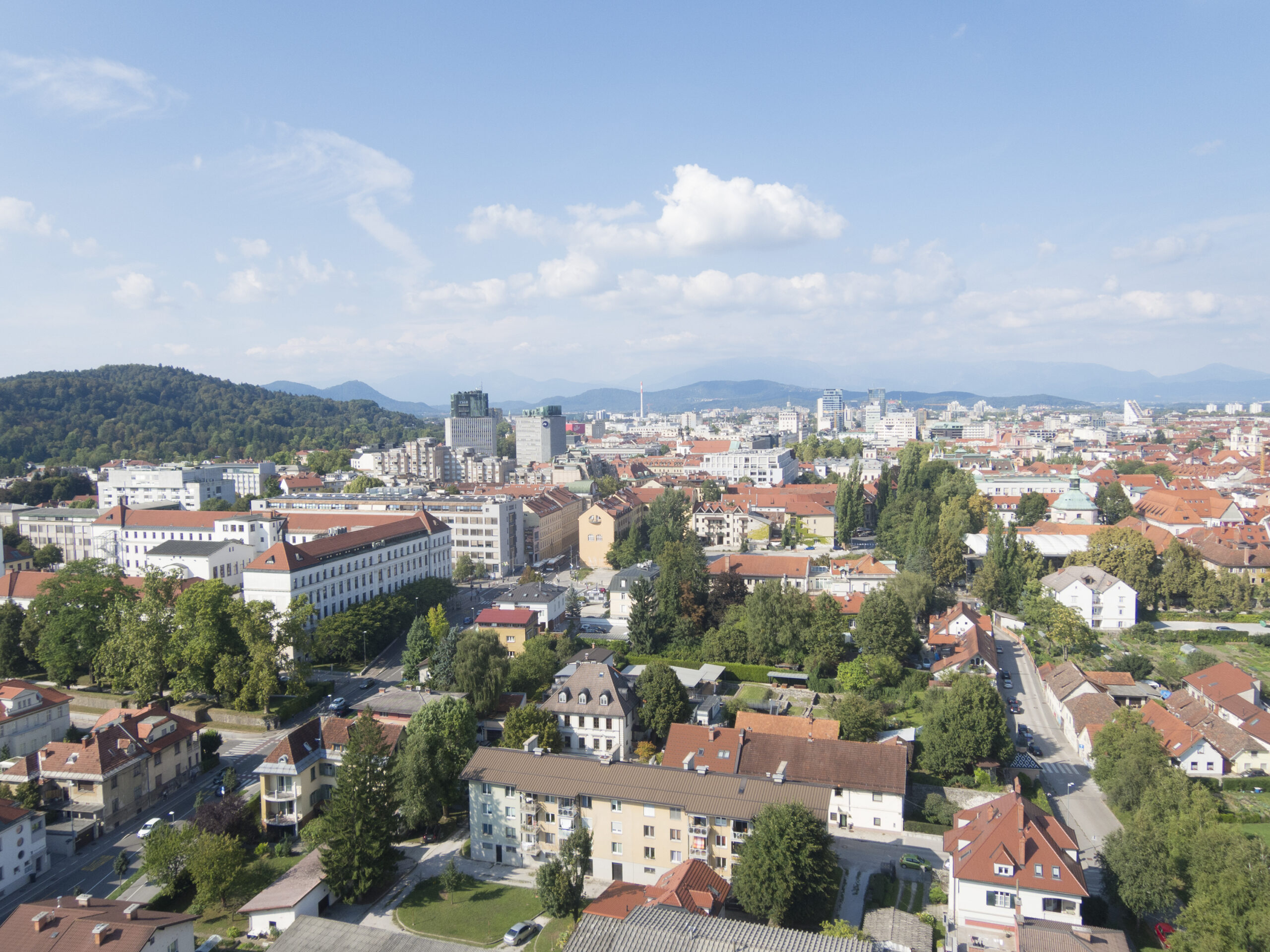
Ljubljana could somehow put together a set of seven hills too, but it would be a stretch – and in any case the town was built on the plain below them, so it can’t really compete with Rome on geographical terms. Therefore the good people of Ljubljana did something else: they built seven forštats – vorstadts, faubourgs, extra-mural settlements – just outside the city walls. Eat that, Rome!
A forštat is not a suburb. Suburbs are a modern invention; a modern city grows outwards by gobbling up the villages around it, filling the space between them and forcibly incorporating them as quarters, or by metastasizing out with banlieues (or equally cancerous suburbias) into which its surplus people are deposited. But a Medieval city like Ljubljana can’t really grow – because Medieval urbanism (rightly) put so much emphasis on security.

Some eight or nine centuries ago most people lived in villages strewn around the land. Towns were few, far apart, and rather small – but compared to their hinterlands they were rich. While agricultural production takes a lot of space, selling and buying that produce doesn’t – and neither does a bank, a smithy, or a barrack. Thus most of the high-margin activities (trading, financing, manufacturing, fighting) congregated in a place that was well connected, had ample (and nearby) supply of energy, and was easily defensible, as growing richness begot even faster growing envy.
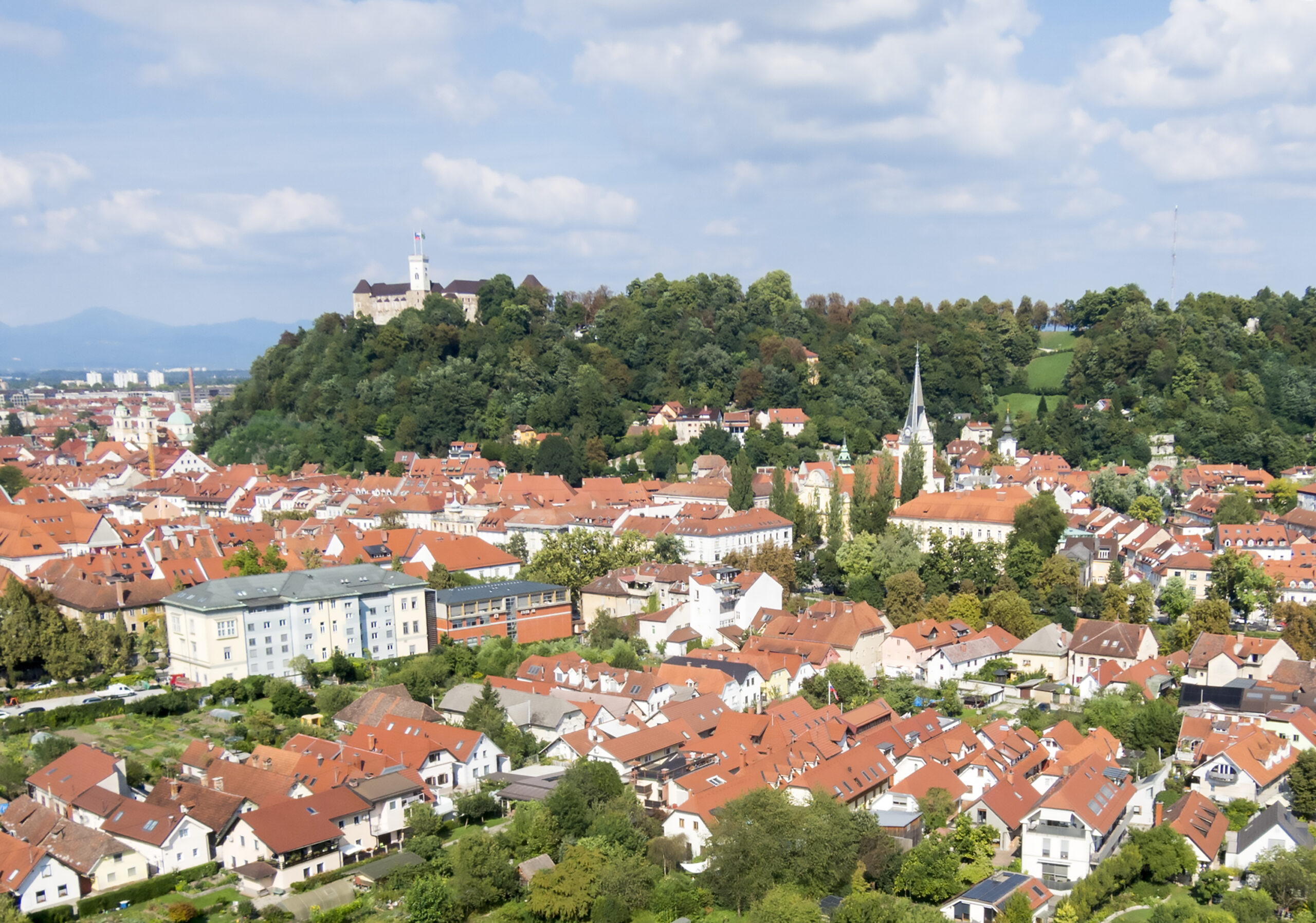
So … a castle on the hill for the lord and his soldiers, a couple of large buildings beneath it for traders, bankers, and manufacturers, and a market place. Add the clergy (they need the powerful, and the powerful need them), and voilà: a Medieval city.
One last ingredient: massive, imposing, impenetrable city walls.
And this last ingredient of a Medieval city is why vorstadts and faubourgs sprung around it almost immediately after the city closed itself in. The problem of a massive, imposing, impenetrable wall is that it works both ways: it’s hard to get in, sure – but it’s equally hard to get out.
A walled city can’t grow, yet its population does: people have kids, the nouveau riches settle in it, the city demands ever more traders, bankers, manufacturers, soldiers … Okay, houses can grow upwards, but only so much (few Medieval buildings had more than three floors) – one can either expand the walls (very expensive), or let at least some of those pesky but much needed newcomers settle right outside the walls.
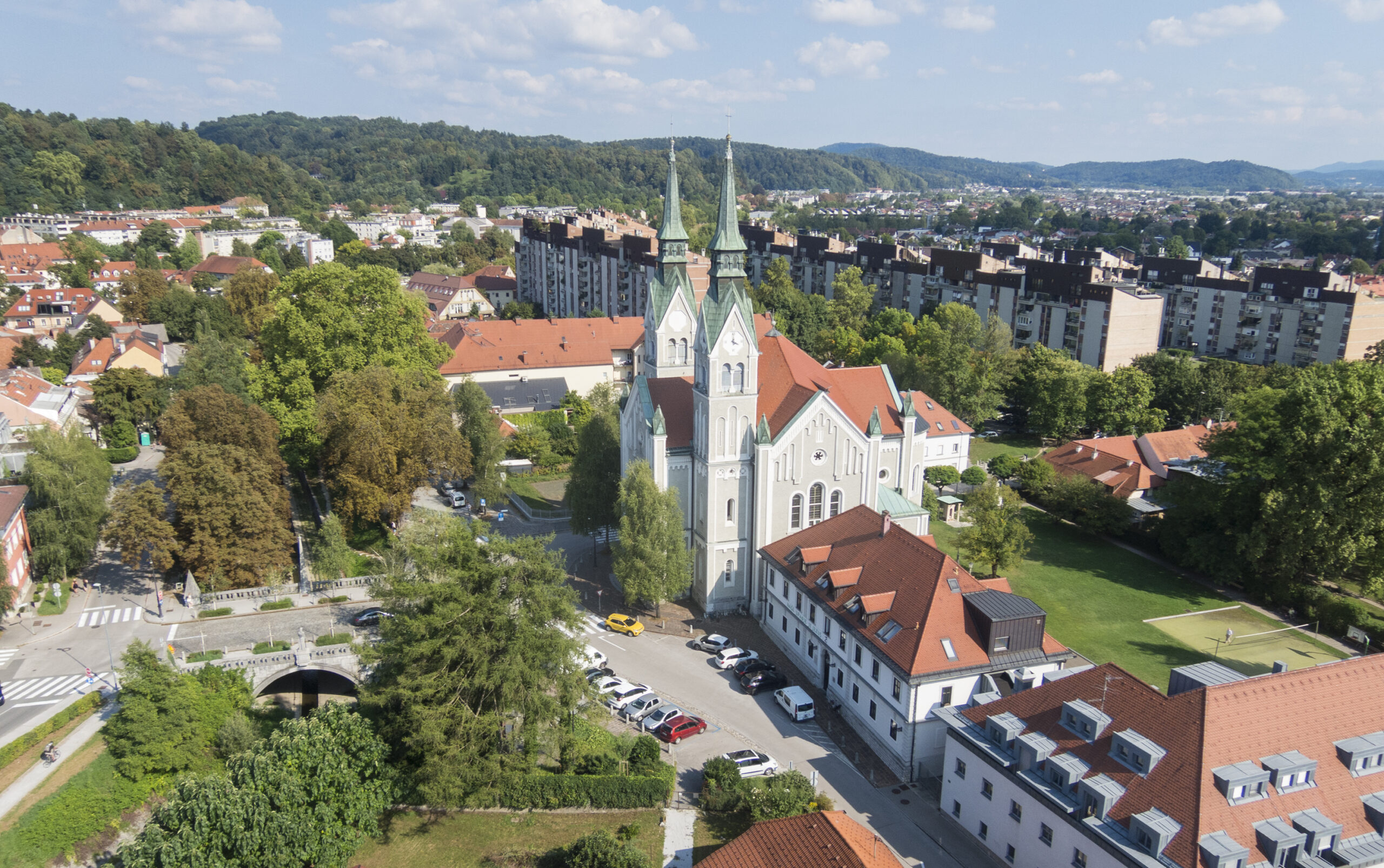
And thus a forštat was born. Outside of the walled city proper, but close enough that people living there enjoyed at least some protection from the city, and benefited from forštat’s organic connection to it.
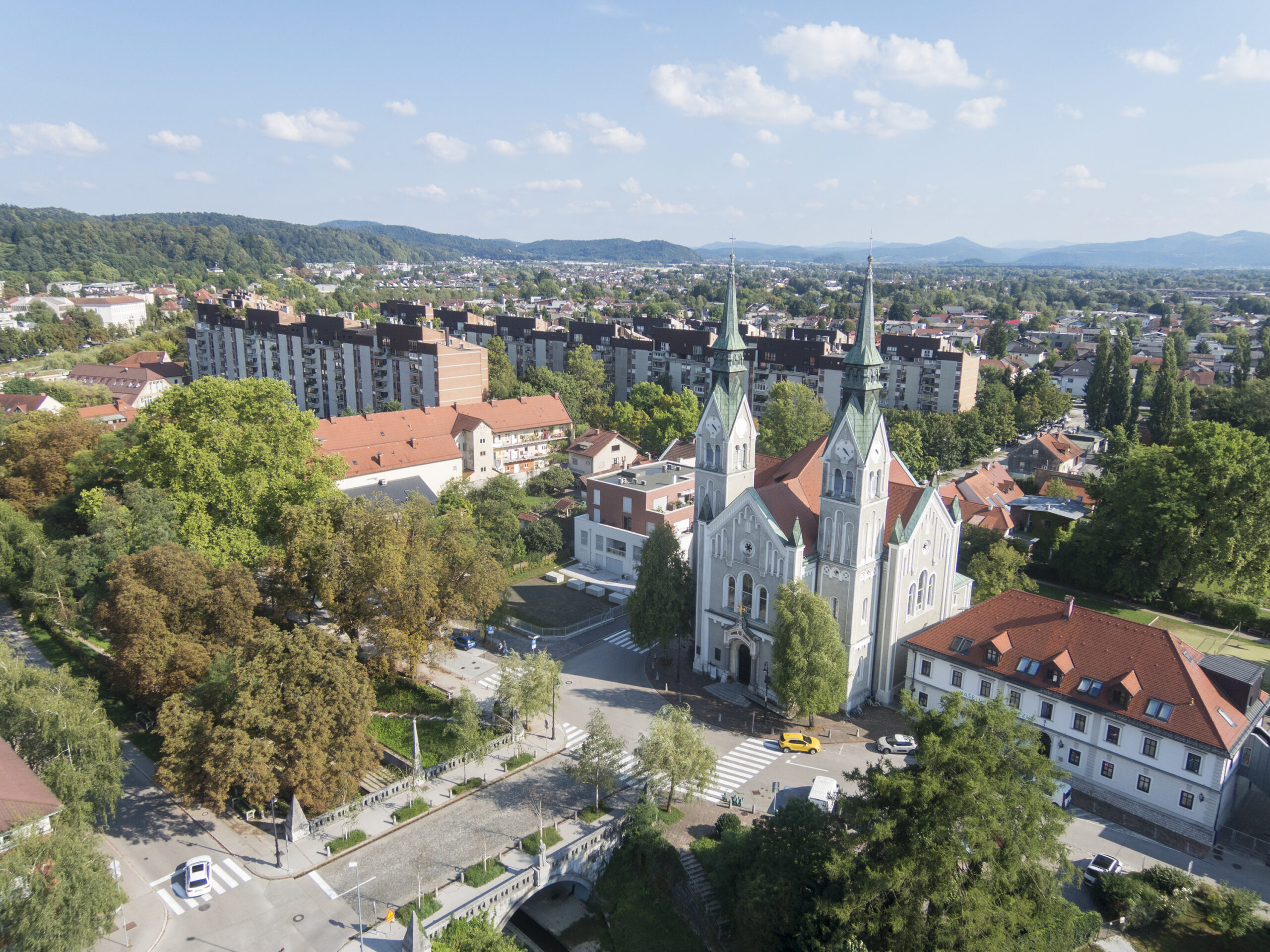
So, Trnovo. One of seven original forštats of Ljubljana. A thorny place, as its unfortunate name suggests, but with a distinct per aspera ad astra attitude. A place bounded by two rivers, Ljubljanica and its major left tributary, Gradaščica.
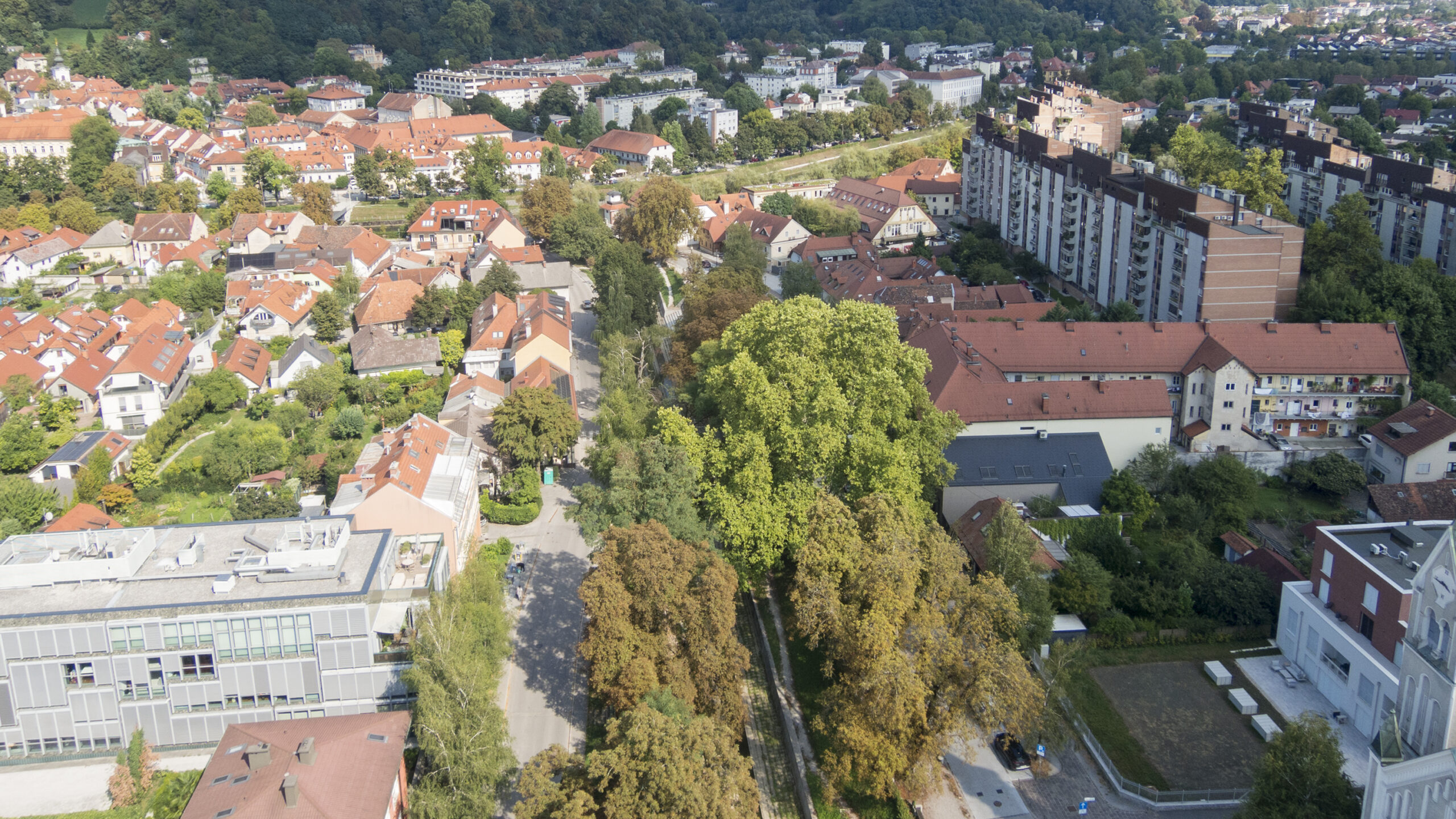
Just behind the ugly blocks of flats flows Ljubljanica (coming from the right), and Žabjak lies on the other bank
Trnovo wasn’t really extra muros (Krakovo was closer to the walls of Novi trg), but Ljubljana was a quirky medieval city and made the river a part of its walls: from the so-called Water gate on Žabjak (just across the Ljubljanica from Trnovo) a special river barrier stretched across to the main port of Breg on the other bank. If a calamity appeared on the horizon – the Turbaned Turk, or the raging hordes of Johann Witowetz ze Hrebene – the good people of Trnovo just crossed the Ljubljanica to safety.
And they had ample means of crossing the river in numbers, because their main specialty was – shipping.
Ljubljanica was a very important trade route (connecting the riches of the East and the northern plains of Europe with the Mediterranean) during the Roman empire, during the Medieval times and well into modernity – because south of Ljubljana lie the terrible Marshes that basically prevent all land travel from Ljubljana to Vrhnika and to the Adriatic sea beyond.
Untold treasures were carried by ships of Ljubljanica. We know of a certain Julius Fortunatus, an obviously lucky guy, who was an official of Collegium naviculariorum of Emona, a rich (as his tombstone shows) and powerful association of boat owners that controlled the shipping on Ljubljanica between the port of Zalog and the emporium in Nauportus, Vrhnika.
The successor of that Collegium naviculariorum was the Boatmen’s guild of Ljubljana, The Brotherhood of Boatmen, Confraternitas Sanctae Mariae in domo Theothonicorum. Again, one of the richest and most powerful professional asociations of Ljubljana.
The fraternity – bruederschaft der schefflewt – was already up and running in 1351, and the Emperor Frederick III confirmed their old and usual privileges personally (!) when he visited Ljubljana in 1513. And these privileges were, well, extensive. For example, in case of any dispute neither the City of Ljubljana nor the Vizedom (the ducal official) had jurisdiction over them. They were in imperial service, obliged to transport the imperial goods, but free to line their pockets whenever they had time and space on their boats. And line their pockets they did.
The boatmen and the stevedores of Trnovo were, well, rich and powerful, very proud, and very annoying (even today the Slovene word for a stevedore, fakin, is a slur, meaning a immoral, loud, rowdy, unpleasant person), walking around the town like they own it. But …

But it was not to last. The competition was relentless, and more and more cargo bypassed Ljubljanica entirely. In the 17th century the guild was split into “Little boatmen” and “Big boatmen”, but the decline was terminal. The Ljubljana Marshes were drained, the imperial road from Vienna to Trieste was completed in 1720, and river transport was losing its importance fast. In 1794 Emperor Joseph II dissolved all the guilds – and when the first train completed its journey from Vienna to Trieste, the boatmen of Trnovo were gone forever.
But by then the boatmen’s despair was already morphing into something else: Trnovo was to become Ljubljana’s Montmartre: an artists’ quarter.
At ten o’ clock in the morning of April 6, exactly eighteen hundred and thirty three years (or so the myth goes) since the Hosana! of the angels in Bethlehem announced the night is over, an aspiring lawyer entered the church of Trnovo – and everything changed. A fire was started that consumed the young man, spread out fast, enlightened the country and the nation, and still shines over Trnovo, Ljubljana, Slovenia, and the world.
A fire instigated from two eyes of pure flame, the blue eyes of a girl, the sixteen years old Julija Primic.

France Prešeren was then working as a lawyer, and was also a poet. A good one, probably the best Slovenia ever had until then – but on that fateful morning in Trnovo he became The Poet. As poets do, he perished in those flames mere fifteen years later (a boring but high-status bureaucrat snached Julija for her wealth), but managed to almost single-handedly elevate the Slovenian language into a language of the world, showing that anything any wordsmith can compose in Latin, French, German, Spanish, or English, one can do in Slovene.
Prešeren is the Poet Saint of Slovenia. And in his hagiography a straight line runs from Trnovo in 1833 to the fight for the nation, its language, freedom, and sovereignty through the Kingdom of Yugoslavia to the Partisan resistance in WWII to the “socialist” Yugoslavia to the War of independence to Slovenia joining the EU – and Slovenian language becoming an official language of the largest union of free nations in the world.

We heap praise upon The Poet incessantly, vaingloriously, hypocritically: his face was on our paper money and is punched onto a Euro coin, the day of his death is a public holiday here, the most important artists prize bears his name, there are uncountable streets and squares named after him, and his poem – A Toast – is the official anthem of the Republic of Slovenia, the only national anthem with, well, drinking as its subject matter.
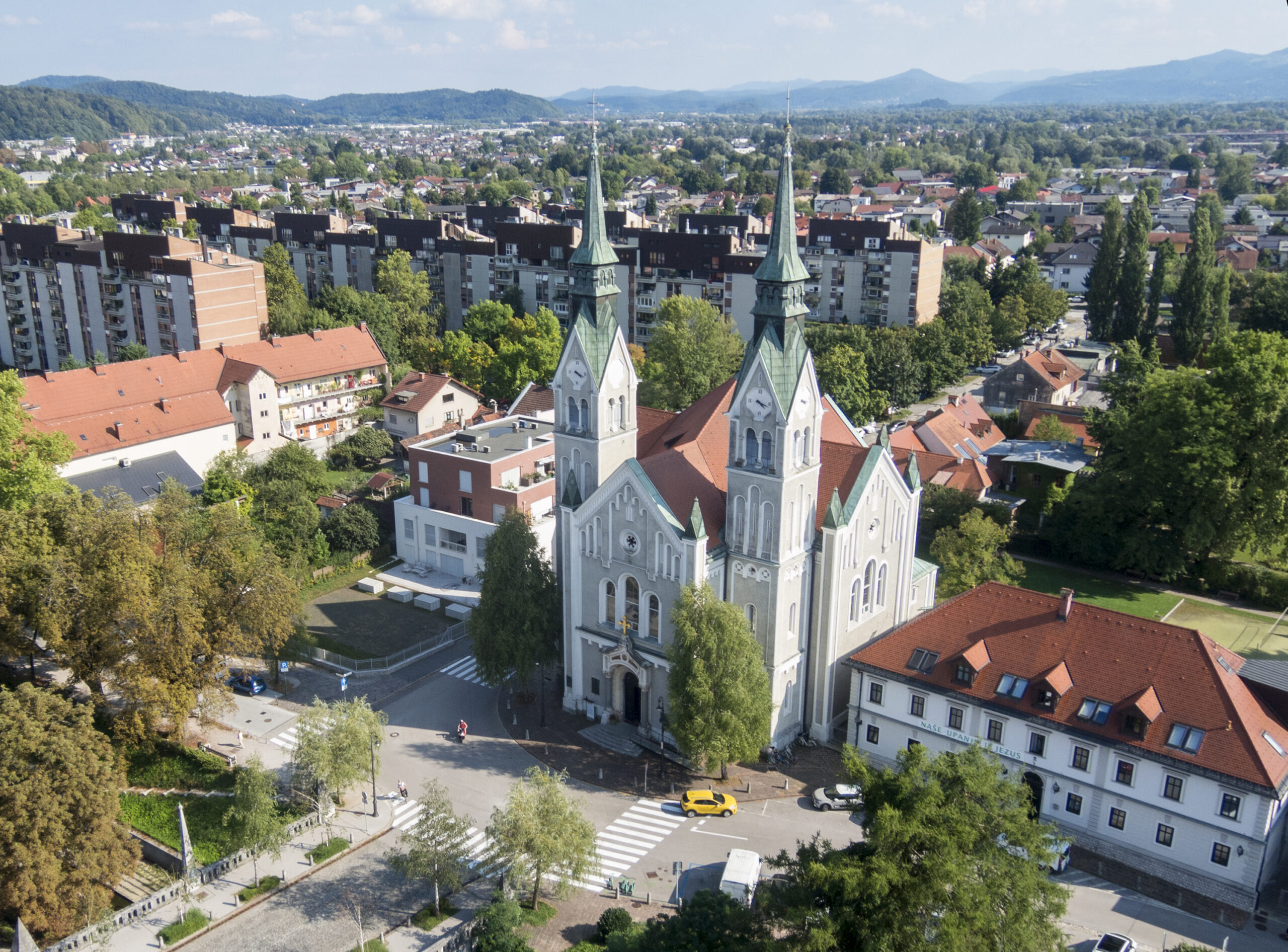
But, to be honest – lifting a language from a backward sprache of the backward peasants in one the most backward parts of Austria-Hungary to one of the official languages of the European Union in a century and a half? And it all started right here, in the doorway of Trnovo church.
The mysterious appeal of Trnovo – perhaps the lingering lights of those flames – attracted other artists to Trnovo like moths. Impressionist painters were waxing lyrically about “the light of Trnovo”, sculptors, writers, musicians and rappers descended to this strange forštat in droves. The list of those who lived and/or worked in Trnovo is a veritable Who’s Who of Slovenian Artists: Jakopič, Finžgar, Sternen, Jalen, Grohar, Kralj, Kogoj, Stupica, Klemen, Pirnat, Jama, Drinovec …
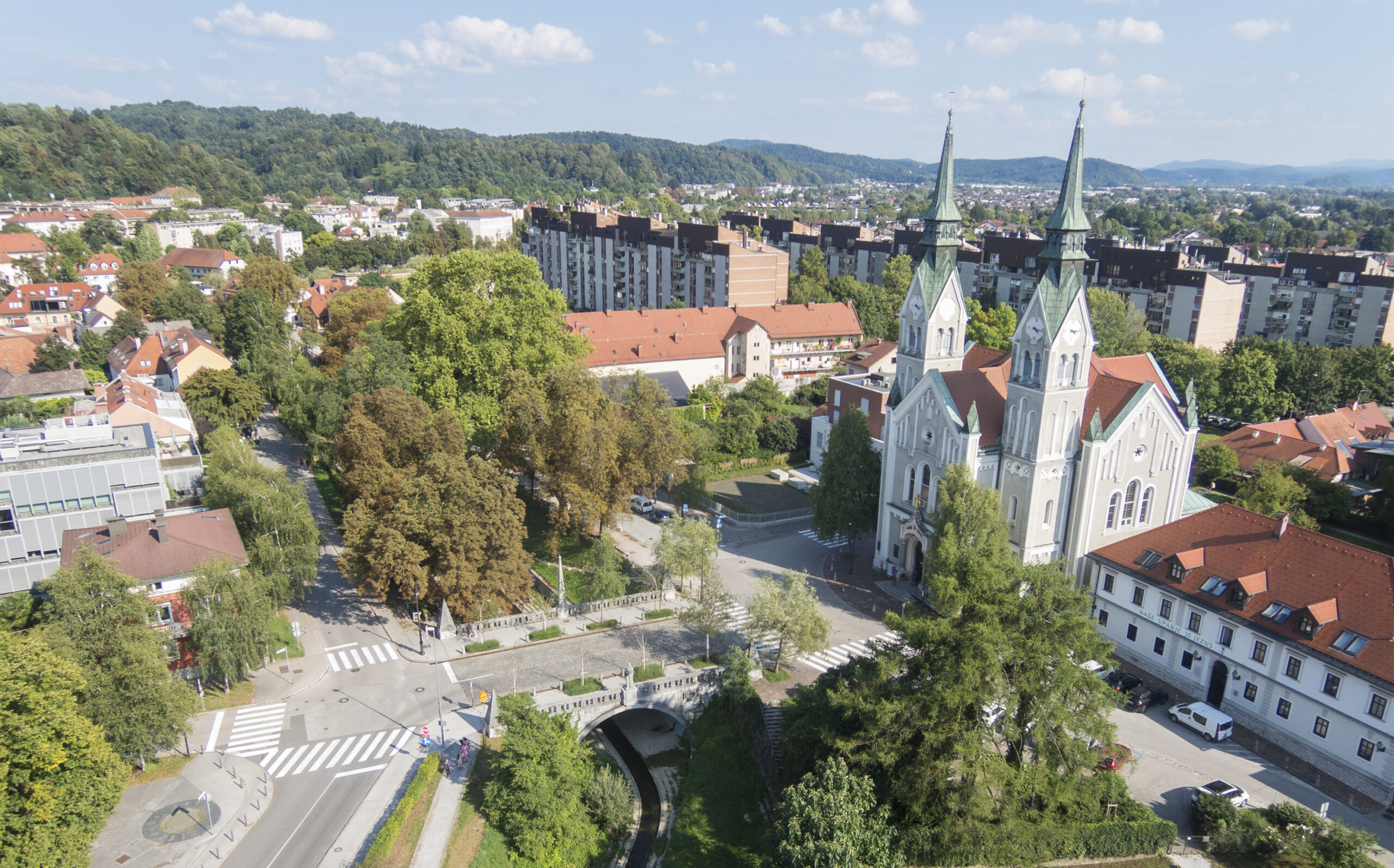
And in a modest house behind the church in Trnovo lived a man who grabbed Ljubljana by the scruff of its neck and dragged it into modernity. An architect – again, The Architect, the Great Builder, the Saint of Architecture: Jože Plečnik.
Saint Poet and Saint Architect … the builder of souls and the soul of building. They couldn’t be more apart: Prešeren was a freigeist, a bohemian, a party animal and a drunkard, dying of liver cirrhosis at 48; Plečnik was a quiet Catholic, a family man, living to his 87th year.
Plečnik famously quipped, referring to the ruins of Colonia Ivlia Aemona nearby: “In this soil Roman columns were sown, so it’s obvious what kind of architecture can grow from it: an architecture like mine.”

His architecture grew well; it transformed the towns and cities he worked in. Vienna with the Zacherlhaus and the Heilig-Geist-Kirche (if Prešeren was a freigeist, Plečnik was a heiliggeist), Prague with Hrad, the castle which he basically de-Kafkaised – and Ljubljana.
Plečnik infused Ljubljana with his vision. Unassuming yet monumental, quiet yet firm, larger than life and humble, manifold and total, unique and familiar. But above all respectful: to life, to people, to the place and its layered history, to the future. He took Ljubljana, that poor fledgling, and cared for it, nurturing the town until it was able to join the flock of true, modern cities: what Plečnik did for Ljubljana, the capital of Slovenia, reflect what Prešeren did for Slovene language.

Plečnik re-composed the basics, the fundamentae of Ljubljana: its past as Roman Emona; its blood vessel, Ljubljanica; its heart, the Central Marketplace; its connections, the bridges; its brain, the National Library; its spirit, the churches; and its eternity, Žale cemetery.
Two of his masterpieces now define Trnovo: the astonishingly virtuoso reimagining of the old river port on Ljubljanica (the nicest place in Ljubljana to sit down and enjoy life), and the banks of Gradaščica with a unique bridge connecting Trnovo and Krakovo: the one with his signature pyramids and obelisks – and trees.
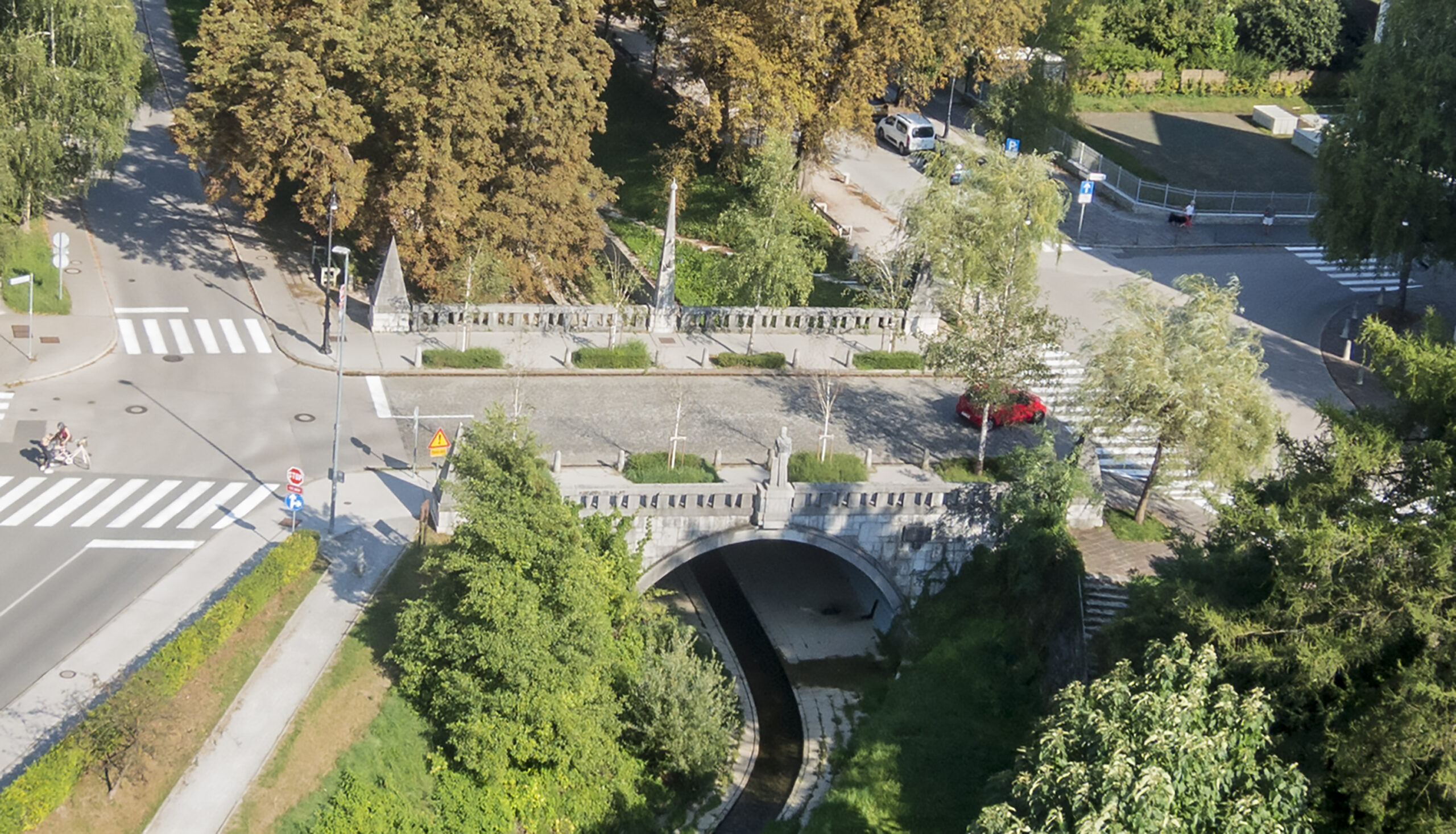
How many bridges have trees growing on them?
Trnovo: thorny, unfortunate in name, chaotic in time, forsaken and redeemed and forsaken again.
Today Trnovo is quiet, cozy, soft … The tree-lined banks of Gradaščica, the willows over Ljubljanica on Plečnik’s vision of the old Trnovo port, the remaining old houses hosting pubs and eateries, the melancholic park by the river upstream of Plečnik’s bridge, adorned by a fascinating sculpture of one of the best contemporary Slovenian sculptors:Tree Particle by Boštjan Drinovec.

Not much remains of the times of the Boatmen’s Guild, and the houses on Eipper and Karun streets with the renovated Trnovo church is all that we have left from the times of Prešeren. The high blocks of flats that look like The Great Wall block the views towards the expansive Marshes and sever the connection of Ljubljana with her mythic past. A couple of old (and a couple of new, hideous) villas, the best drinking spot in Ljubljana, the cute little houses by architect Kristl – and that’s about it.
Wandering around Trnovo today belies its tumultuous, chaotic, hotheaded history. But when you sit under the willows on the banks of the river and listen closely, you might hear its whispers. All that happened in Trnovo is still here.
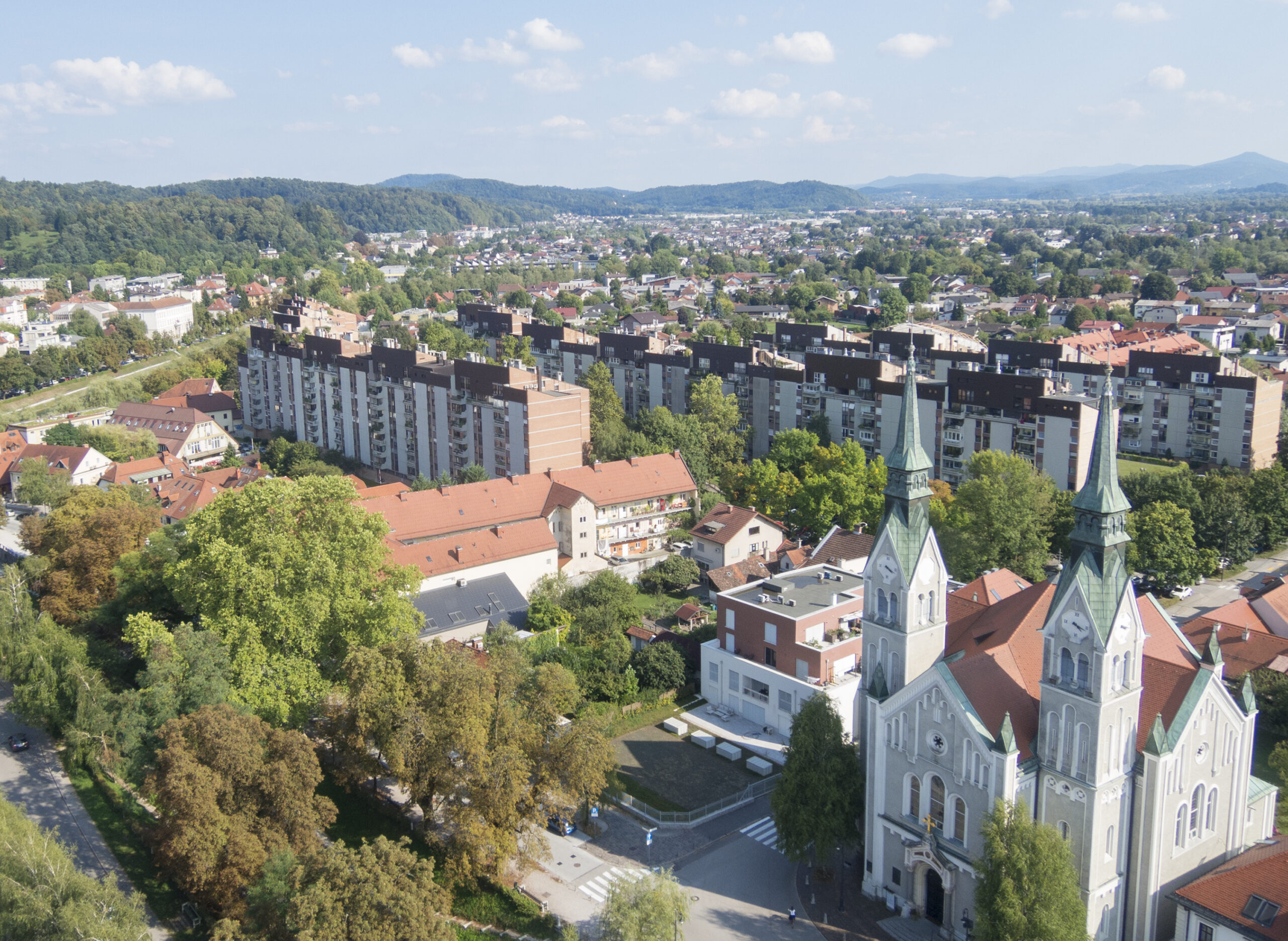
Place of an unfortunate name.
Cidade sangue quente
Maravilha mutante
Trnovo.
2 thoughts on “Trnovo, Place Forsaken and Redeemed”